Hawaiʻi Won't Solve Its Housing Crisis Until It Solves Its Wage Crisis
We should establish a pathway to a minimum wage of at least $30 per hour
June 30, 2026 · 5 min read

About the Author

The United States now has its first trillionaire, and the ranks of the ultra-wealthy continue to grow. Some of today’s ultra-wealthy wield economic and political power much like the Robber Barons of the Gilded Age, while the gap between the richest Americans and everyone else has reached levels not seen in more than a century.
As wealth becomes increasingly concentrated at the top, millions of working Americans are falling further behind. Federal policies that reduce taxes for higher-income households while cutting social programs are likely to widen that divide even more.
Hawaiʻi provides one of the clearest examples of this growing inequality. Luxury tourism is thriving, and industry leaders expect demand from affluent visitors to continue growing. Yet the people who make that industry possible — hotel workers, restaurant employees, retail clerks, healthcare workers, teachers, construction workers, and countless others — increasingly cannot afford to live in the communities they serve.

Ideas showcases stories, opinion and analysis about Hawaiʻi, from the state’s sharpest thinkers, to stretch our collective thinking about a problem or an issue. Email news@civilbeat.org to submit an idea or an essay.
The cost of housing, food, utilities, transportation, and healthcare has risen far faster than wages. For many working families, earning a paycheck is no longer enough to achieve financial security. Despite years of discussion, there has been little progress toward policies that would fundamentally improve their standard of living.
Hawaiʻi’s economy makes it uniquely suited to adopt a true living wage. Unlike most states, Hawaiʻi is geographically isolated and depends primarily on tourism and the military. Those industries cannot relocate to another state in search of lower wages. Our economic structure makes Hawaiʻi more insulated from many of the negative consequences that critics often predict would result from higher minimum wages.
Nearly everyone agrees that Hawaiʻi’s current minimum wage bears little relationship to the state’s actual cost of living. Even the scheduled increases enacted by the Legislature fall far short of what is needed for a worker to live with dignity and independence. While politically convenient, they do not come close to providing a living wage.
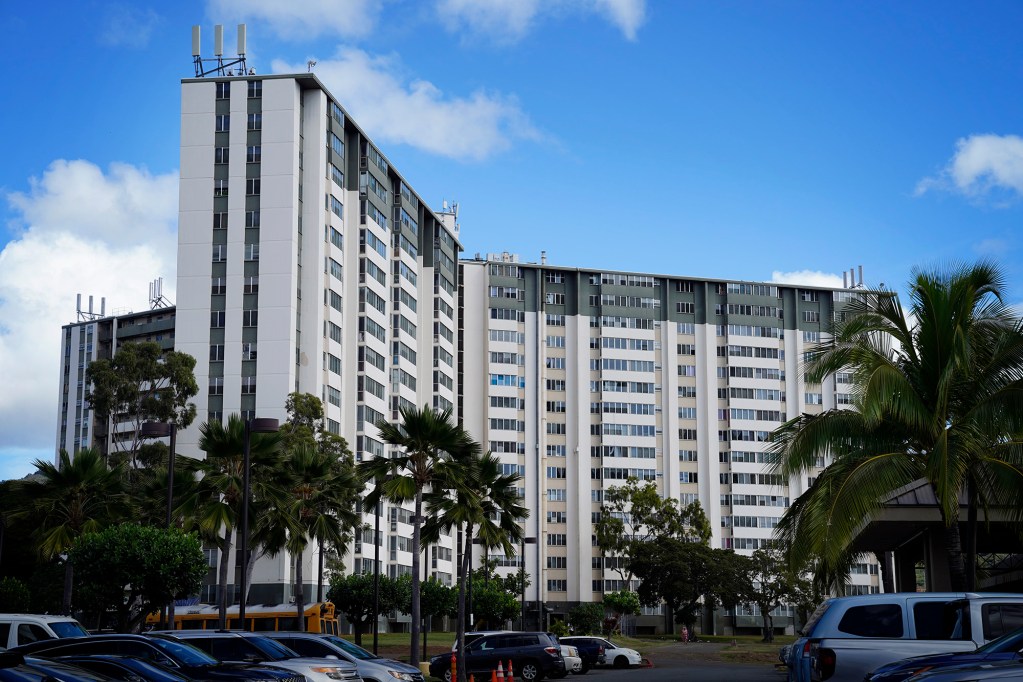
Visitors from West Coast cities are often astonished by the disparity. They find housing costs comparable to Los Angeles, Seattle, San Francisco, and San Diego, yet discover that Hawaiʻi’s minimum wage is thousands of dollars per month below what is needed to live here. Many cannot understand how a state that embraces the spirit of aloha asks its essential workers to survive under these conditions.
Hawaiʻi should establish a pathway to a minimum wage of at least $30 per hour, indexed annually for inflation over the next five years. Such a transition would require businesses to adapt, and some industries would experience temporary adjustments. But preserving the status quo imposes far greater costs on working families, local businesses, and the state’s long-term economic health.
One important fact is often overlooked in the minimum wage debate: workers spend their earnings. When lower- and middle-income households receive higher wages, they buy more goods and services from local businesses. That increased spending circulates through the economy, creating more demand, more business activity, and, ultimately, more jobs. Higher wages are not simply a business expense; they are also an investment in Hawaiʻi’s economy.
For decades, Hawaiʻi has focused almost exclusively on building more affordable housing.
The greatest beneficiaries would likely be housing. As incomes rise, more families can afford market-rate rents, qualify for mortgages, and reduce their dependence on government housing assistance. Developers would have a larger pool of financially qualified renters and buyers, while taxpayers would face less pressure to subsidize housing costs.
For decades, Hawaiʻi has focused almost exclusively on building more affordable housing. Increasing supply is important, but construction alone cannot solve the problem. Affordable housing projects require years of planning, financing, permitting, and construction, while public funding is nowhere near sufficient to meet the state’s enormous housing needs.
The uncomfortable reality is that Hawaiʻi’s housing crisis is not simply a shortage of homes. It is also a shortage of incomes that allow working families to afford them.
For nearly 40 years, wages have failed to keep pace with inflation and housing costs. Unless Hawaiʻi addresses that imbalance, the state will continue chasing an ever-growing affordable housing deficit that it can never fully overcome.
A living wage will not solve every economic problem facing Hawaiʻi. But it is the fastest, most equitable, and most effective policy available to reduce inequality, strengthen the middle class, improve housing affordability, and preserve the local workforce that keeps our islands functioning.
If Hawaiʻi truly wants to remain a place where working families can build a future, raising wages must become just as important as building more housing or subsidizing the cost of living. Hawaiʻi cannot subsidize its way to prosperity. It must enable people to earn a living wage.
 Sign up for our FREE morning newsletter and face each day more informed.
Community Voices aims to encourage broad discussion on many topics of community interest. It’s kind of a cross between Letters to the Editor and op-eds. This is your space to talk about important issues or interesting people who are making a difference in our world. Column lengths should be no more than 800 words and we need a photo of the author and a bio. We welcome video commentary and other multimedia formats. Send to news@civilbeat.org. The opinions and information expressed in Community Voices are solely those of the authors and not Civil Beat.
Read this next:

Local reporting when you need it most
Support timely, accurate, independent journalism.
Honolulu Civil Beat is a nonprofit organization, and your donation helps us produce local reporting that serves all of Hawaii.
ContributeAbout the Author