A Stunning Hawaiʻi Supreme Court Opinion Was The Right Thing To Do
A sitting judge putting his own reputation and his court’s credibility on the line to publicly challenge the nation’s highest court is a big deal.
July 26, 2026 · 10 min read

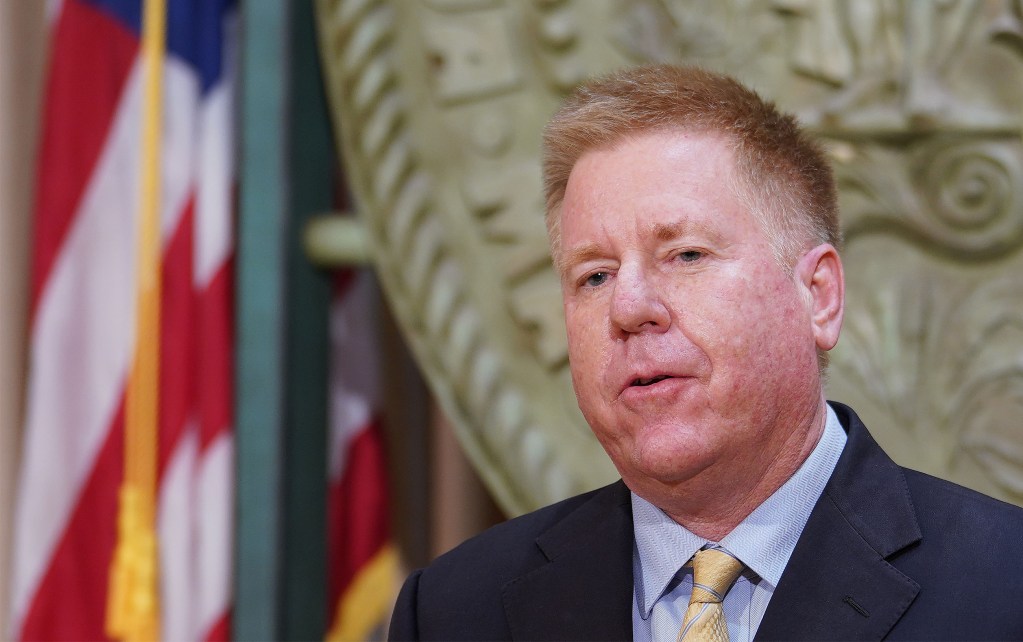
About the Author

On July 15, the Hawaiʻi Supreme Court issued a 91-page ruling in State v. Granillo. The case ordered a new trial for a man convicted of kidnapping and sexual assault back in 1990. His conviction rested mostly on hair and fiber evidence from an FBI analyst, evidence that has since been proven unreliable, more junk science than real science.
At its core, this is a simple due process case: you can’t keep someone in prison based on evidence that turned out to be scientifically worthless.
But the case itself isn’t really the point. The judge who wrote the opinion, Associate Justice Todd Eddins, used it as a launching pad for something much bigger: a lengthy argument that Hawaiʻi’s own due process protections don’t have to follow the U.S. Supreme Court’s version of due process. It’s drawing national attention, especially in legal circles.
This is not a new concept. States can always give people more rights than the federal Constitution requires, they just can’t give people fewer. It’s how Eddins goes about employing this legal doctrine that is important.
Here, eight of the opinion’s 91 pages read less like a ruling about old forensic evidence and more like a direct challenge to the current U.S. Supreme Court — on due process, voting rights, campaign finance, gun laws and presidential power.

The most interesting part of Eddins’ opinion isn’t the anger in it, it’s the strategy. For years, the conservative majority on the U.S. Supreme Court has told states, again and again, that federal courts should back off and let states run their own affairs: on abortion, on guns, on elections, on how government agencies operate. States’ rights and federalism, the idea that states and the federal government each have their own separate authority, have been core arguments the court’s majority leans on, especially when it helps produce the outcome they want.
Eddins takes the court at its word. If Hawaiʻi’s constitution defines its own due process protections, then Hawaiʻi gets to decide what that means, without being tied to a federal version of due process that Eddins argues has been stripped down and weakened. He isn’t asking the U.S. Supreme Court for permission. He’s simply using the same states’ rights power the court has spent years telling everyone that states have.
The crux of Eddins’ argument as to why Hawaiʻi’s due process clause stands apart from its federal counterpart as it is now being interpreted is that the Fourteenth Amendment was never meant to be “colorblind” in some abstract, general sense. It was written for a specific reason, at a specific moment in history: to guarantee citizenship and equal protection for formerly enslaved people and their descendants after the Civil War. Treating it instead as a neutral, catch-all rule, he argues, lets the court use “colorblindness” as an excuse to strike down the very remedies the amendment was designed to allow.
In making this argument, Eddins doesn’t just say the court has changed course, he says exactly where he thinks it’s headed. He writes that the court “does not honor the work of 1954” — a reference to Brown v. Board of Education, the ruling that ended legal school segregation — and instead “revives the work of 1857,” meaning Dred Scott v. Sandford, the ruling that said Black Americans could never be citizens. He also cites “the work of 1896,” a reference to Plessy v. Ferguson, the case that upheld “separate but equal.”
That’s about as direct a criticism as a sitting judge can make: that today’s court, no matter what legal language it uses to justify itself, is acting in the spirit of two of the most infamous and widely condemned rulings in American history.
It’s a comparison meant to sting, and it does. But Eddins backs it up with real examples, not just strong language. He points to the court gutting a key part of the Voting Rights Act in Shelby County, weakening another part of it in Brnovich, and rolling back protections against racially unfair voting maps in the Callais and Milligan cases.
His argument: the Supreme Court’s legal philosophy, called “originalism,” isn’t really about following the Constitution at all. It’s picking the outcome first and building the legal justification around it afterward. Again, others have said this, but a sitting judge saying this plainly, instead of just hinting at it, is the kind of blunt honesty rarely put in writing in an opinion.
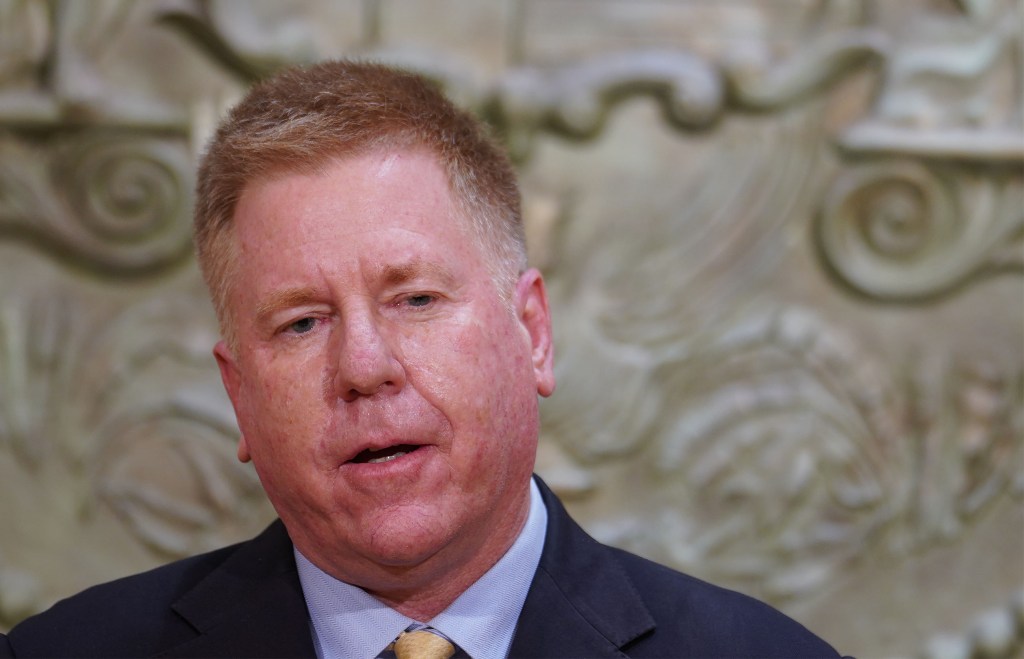
To some extent, Eddins took a free shot at the Supreme Court because the case will most likely never reach the Supreme Court. When a state supreme court interprets its own state constitution, and that ruling doesn’t depend on federal law, the U.S. Supreme Court has no legal path to review or overturn it. And, because Eddins is a state judge, he is somewhat protected from the wrath of the U.S. Supreme Court.
Federal judges, whatever they privately think about where the Supreme Court has taken the law, must follow it. They’re bound by the rules of the appeals process, by the requirement that they follow the higher court’s precedent, and by the plain fact that the Supreme Court can overturn their rulings — and can trigger ethics complaints against them. A federal judge who wrote what Eddins wrote would basically be writing a formal rebuke of their own boss.
State judges don’t face those same concerns, particularly when interpreting their own state constitutions. But even they can only speak up when an actual case gives them the chance. Judges can’t just publish opinion pieces whenever they feel like it. A real case must land on their desk first.
That’s what makes Granillo matter: not that a sitting judge held this opinion in his head, but that a judge had the opportunity to openly criticize the highest court in the land, in writing, and took it. Eddins certainly isn’t the first judge to do this, but he may have made the most pointed and direct attack to date while doing so.
Speaking Out Can Come With A Price
It’s worth pausing a moment to consider what this costs a sitting judge. Eddins didn’t write an anonymous blog post or give a speech he could later downplay. Eddins makes his case in writing, with reasoning that can be read, checked, and argued with. He put his name on an official, permanent, published court opinion, the kind that lawyers and law students will read for decades, the kind that will follow him into every future case, every introduction for the rest of his career. He knew exactly what backlash was coming: being called unhinged, undisciplined, an embarrassment to the bench, by well-known conservative commentators.
Was it a wise move? That is a question that can be fairly debated. Many sitting and former judges may disagree with Eddins take-no-prisoners attack on the Roberts Court and find it alarming for a Hawaiʻi Supreme Court justice to be so confrontational. After all, the U.S. Supreme Court is the most powerful court in the country, often has the last say in a case, and states are legally obligated to follow its rulings. But there is a great difference between being deferential and being silent, particularly in the face of what many believe is a Supreme Court that is actively gutting due process rights gained since the Civil War.
Judges who want an easy, quiet career don’t do this. Eddins did it anyway, and that says something, regardless of whether every single word he chose was perfectly measured. Make no mistake, it’s an unusual move for a sitting judge to make. It’s also, however, a necessary one. Importantly, Eddins does not stand alone. The opinion was signed off on by two other sitting Hawaiʻi Supreme Court justices, including our new chief justice.
At a time when public trust in the Supreme Court is slipping, when critics from across the political spectrum have pointed to a pattern of rulings that shrink rights, hand more power to the president, and roll back civil rights protections built over 60 years, it matters that this criticism didn’t come only from newspaper opinion pages or law journals. It came from the bench itself, from someone whose actual job is to apply the law, not just talk about it.
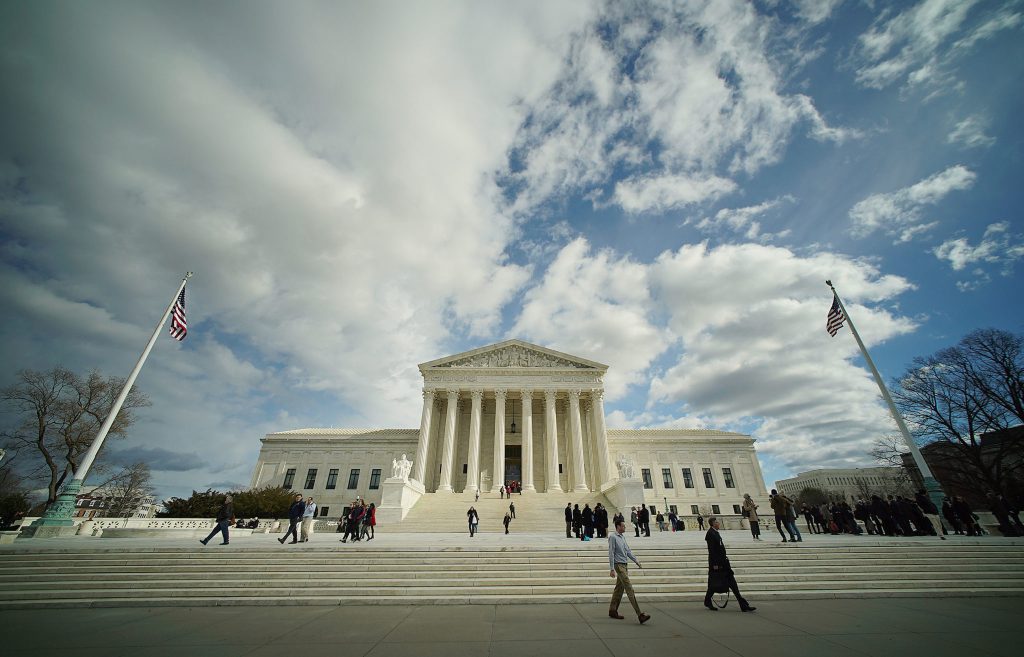
That’s a real difference. Anyone can write an opinion piece. A sitting judge putting his own reputation and his court’s credibility on the line to publicly challenge the nation’s highest court is a much bigger deal. It tells the public that concerns about the direction of the law aren’t just political noise, they’re shared by people inside the justice system itself.
Viewed in this light, Eddins’ gratuitous comments look less like a one-time outburst and more like a sign of something bigger: state courts and state constitutions once again becoming the last line of defense for rights the Supreme Court is no longer reliably protecting anymore. Again, this is not a new concept, but it is striking that 150 years after the passage of the Fourteenth Amendment, we find ourselves fighting a legal battle most thought was long over, and we’re fighting it against our own Supreme Court.
None of this means every single line in the opinion deserves a pass. George Washington University law professor Jonathan Turley, a conservative-aligned legal commentator, called the opinion an “appalling departure from judicial restraint and decorum.” He’s not alone in that reaction. Critics argue that spending eight pages of a 91-page ruling attacking a court whose decision wasn’t even part of the case in front of him is exactly the kind of judicial overreach conservatives have long accused liberal judges of, regardless of whether the underlying legal reasoning holds up. That criticism isn’t baseless, and a fair reader should take it seriously instead of brushing it off.
Eddins’ sharpest passages, comparing the court’s legal reasoning to Dred Scott and Plessy, or writing that “the Roberts Court sees only white,” are the lines that will get quoted the most, and not kindly. Partly that’s because they are being quoted out of context. But Eddins’ actual points hit the mark, and while he may have chosen better words in making his argument, that kind of bluntness is understandable when the very framework of our democracy is under attack by the Supreme Court itself.
As Eddins explains in his own words:
“Our constitutional system was designed for times like these. Federalism is not a formality. It is the architecture. The framers built dual sovereignty into the structure of American government as an independent check against concentrated federal power. A Supreme Court driven by agenda and intent on swiping power that belongs to the people is exactly what that check was built for.”
At a moment when a lot of people are wondering whether anyone with real institutional standing is willing to say plainly that something has gone wrong, Eddins’ opinion is a bright, shining beacon of hope that our judicial system of checks and balances still works.
 Sign up for our FREE morning newsletter and face each day more informed.
Read this next:

Local reporting when you need it most
Support timely, accurate, independent journalism.
Honolulu Civil Beat is a nonprofit organization, and your donation helps us produce local reporting that serves all of Hawaii.
ContributeAbout the Author