Less than 3 days left in our summer campaign to raise $125,000 by September 4. Support Civil Beat today!
Does The Hawaiʻi AG Have The Will Or Ability To Finish What She Started?
Managing civil litigation and negotiating settlements takes one set of skills. Successfully prosecuting a sweeping criminal corruption case takes another.
July 5, 2026 · 10 min read

About the Author
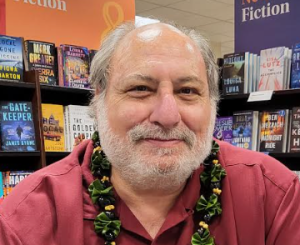
In April, Hawaii Attorney General Anne Lopez did something unusual for a Hawaiʻi attorney general: She issued target letters.
These weren’t subpoenas or requests for interviews. A target letter is one of the strongest signals prosecutors can send to a potential criminal defendant. It tells someone the government believes they may have committed a crime and should consider hiring a lawyer.
According to news reports, three target letters were sent. Two recipients have been identified: Lt. Gov. Sylvia Luke and Leo Asuncion Jr., the former chairman of the Public Utilities Commission and one of Luke’s campaign treasurers.
Its still not clear who got the third letter. But Department of Human Services Director Ryan Yamane resigned his position in the administration amid acknowledgements from the governor that he was part of the AG’s investigation.
Regardless, the results were immediate. Luke took a leave of absence that continues today, and Yamane resigned shortly afterward.
Then everything seemed to stop.

Months have passed without criminal charges or any public explanation. That raises an obvious question: If the evidence was strong enough to justify target letters and to push senior public officials out of their jobs, why has nothing happened since?
There are really two questions hanging over this investigation.
First, does Attorney General Lopez have enough evidence to bring criminal charges? Second, if she does, does she have both the political will and the ability to follow the investigation wherever it leads, no matter who is involved?
‘Play-To-Pay’
The legal background helps explain why these questions matter.
Hawaiʻi’s attorney general, not federal prosecutors, is leading this investigation most likely because of a 2024 U.S. Supreme Court decision, Snyder v. United States. The court ruled that federal bribery law covers only traditional bribery: payments made to influence an official’s actions before those actions happen. It does not cover payments or rewards given afterward, when there was no advance agreement.
In simple terms, federal law still punishes “pay-to-play.” But it no longer reaches what many call “play-to-pay,” the unspoken understanding that someone who helps you today will be rewarded later. Fortunately, Hawaiʻi law is broader and covers “play-to-pay” too.
Hawaiʻi’s bribery statute does not separate bribes from gratuities. Instead, it focuses on whether the public official intended to be influenced. That means conduct the federal government can no longer touch can still count as bribery under Hawaiʻi law. That difference matters a lot right now.

It likely explains why the U.S. Attorney’s Office, after years of investigating this matter, handed part of its case to the state in January. And we now know the investigation goes beyond the original $35,000 given to an unknown influential legislator in a paper bag.
It also includes Yamane’s ties to the state’s Covid-19 testing contract with the National Kidney Foundation, through which Tobi Solidum’s consulting firm allegedly made off with more than $7 million. The state’s investigation may be even broader than that, since no one knows how much of the federal investigation has actually been handed over to the AG’s office.
This also explains why the stakes are so high.
Because of the gap the Supreme Court’s decision created, Hawaiʻi’s attorney general may be the only prosecutor with the authority to fully investigate what lobbyists Milton Choy and Tobi Solidum’s money actually bought. If her office lacks the ability, or the will, to follow the evidence wherever it leads, even to an uncomfortable political conclusion, there may be no one else who can.
Give Attorney General Lopez her due. Her office was designed primarily as a civil law office, not a criminal prosecution agency. In that role, she has compiled an impressive record, securing hundreds of millions of dollars in multi-state pharmaceutical settlements and successfully leading a large legal department.
A Complex Criminal Case
But this is not a civil case. Lopez herself acknowledged in a recent press release that this is a complex public corruption prosecution.
Lopez’s own legal background is almost entirely in civil practice. Before becoming attorney general, she worked in private civil litigation, served as a special assistant attorney general in non-criminal matters, and later became the top lawyer for a major healthcare system. None of those jobs gave her the kind of criminal trial experience an investigation this big usually requires.
The investigation is being handled by the Special Investigation and Prosecution Division, a unit inside the AG’s office created in 2022. So far, SIPD has prosecuted cases like a corrections employee accused of stealing an inmate’s credit card, a Kauaʻi employee accused of falsifying timesheets, and a witness-tampering case referred out to avoid a conflict of interest. Those are legitimate prosecutions.
But none of them come close to the size of a multi-year, multi-defendant public corruption case involving millions of dollars and a fugitive lobbyist at its center. SIPD has never publicly handled a case like this.
It’s also troubling that the attorney general had the option of bringing in experienced outside help and turned it down. Particularly when the AG’s office contracts out complex civil cases to larger, more experienced firms.
In written testimony before the Senate Ways and Means Committee in March 2024, Lopez’s own department opposed a bill that would have clearly given her the power to appoint special counsel. The department argued the bill was unnecessary because the attorney general already had that authority, including the ability to assign cases to county prosecutors or the Department of Law Enforcement. But when called upon to use this authority, the AG flatly refused any suggestion to seek outside counsel with more in-depth criminal law experience.
Gov. Josh Green backed her decision to keep the investigation in-house, arguing that bringing in an outside prosecutor would mean starting over and delaying the case by several months.
But that was never what critics were asking for. The goal was never to restart the investigation. It was to have an experienced criminal prosecutor review the evidence, guide the case and make the final charging decisions free from political pressure, or even the appearance of it.
Lopez’s decision to keep the case entirely inside her own office was a choice, not a legal requirement. And having made it, she owns whether her office is able and willing to prove the case.
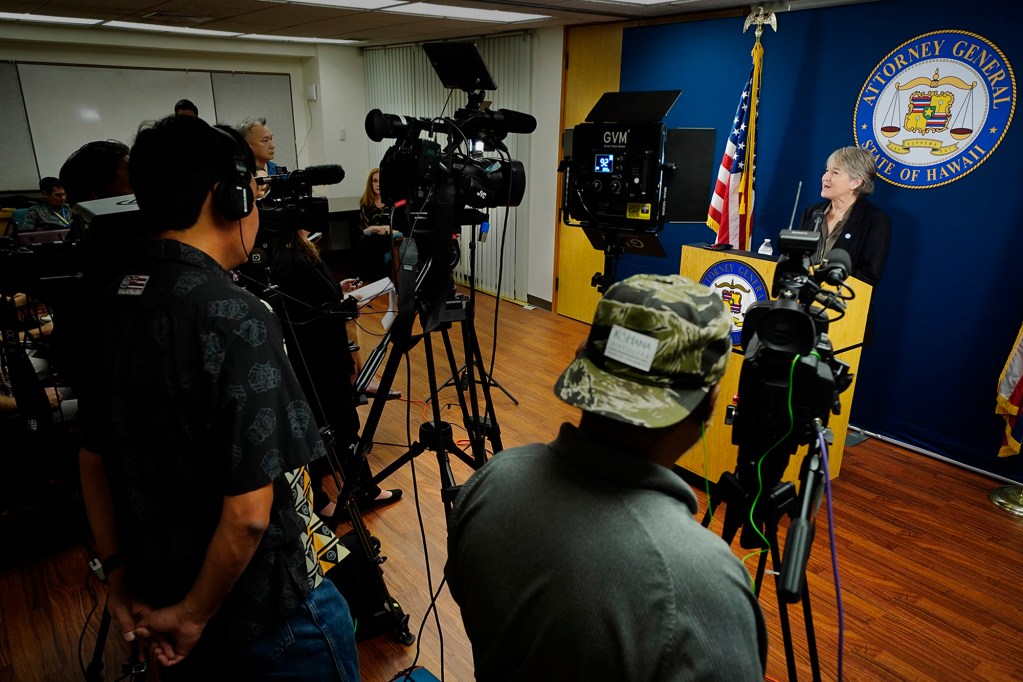
This is not an argument that Anne Lopez is bad at her job.
It’s a recognition that the job in front of her now is very different from the work she and her office have always done. Managing civil litigation and negotiating settlements takes one set of skills. Successfully prosecuting a sweeping criminal corruption case takes another. Whether her office can do that remains an open question. It didn’t have to be.
Which brings us back to where this story began. A subpoena simply tells someone prosecutors want information. A target letter tells someone prosecutors believe they committed a crime. Issuing a target letter is a very significant event in a criminal prosecution.
If the evidence was strong enough to justify such an extraordinary step, it’s fair to ask why months have passed without any criminal charges. And if the evidence wasn’t strong enough, an equally troubling question follows: Were target letters sent before the case was actually ready, ending two careers with no legal resolution to show for it?
Either possibility deserves an explanation. What Hawaii doesn’t need is an investigation that quietly ends after two high-profile departures, Luke gone, Yamane gone, case closed, while the broader trail of political money goes unexplored and unexplained.
We’ve seen this movie before.
After the Kealoha corruption scandal, Hawaii’s political establishment largely accepted the idea that a few “bad apples” had been removed and nothing more needed to be done. No one seriously examined the state and county failures that let the misconduct happen in the first place. We simply moved on. Years later, the Honolulu Police Department still struggles, cycling through police chiefs while many of the underlying problems remain unresolved.
Were target letters sent before the case was actually ready, ending two careers with no legal resolution to show for it?
Notably, the Honolulu Police Commission recently looked outside the department for new leadership for the first time in more than 90 years. It hired a veteran San Francisco police official because the public wanted someone free from HPD’s internal culture.
If the Police Commission concluded that real accountability sometimes requires outside leadership, it’s fair to ask why Attorney General Lopez reached the opposite conclusion in a case of equal, or perhaps greater, public importance.
Earlier this week the Campaign Spending Commission made public a 12-count complaint against Sylvia Luke and others in her campaign organization, dating back to 2021-22. The complaint alleges false reports were filed and that campaign funds were mishandled. It’s not yet clear whether the commission will refer the complaint to the Attorney General’s Office for criminal prosecution, or simply settle for fines, which is a civil penalty. Even if it is referred to the Attorney General’s Office, prosecution may still be declined.
Either way, the criminal investigation already underway at the AG’s office is separate from the Campaign Spending Commission’s complaint, even though the two may cover some of the same ground. The commission’s action doesn’t have any impact upon the AG’s current investigation, although it may add to it.
The attorney general needs to answer questions about where her investigation stands. She keeps saying she can’t comment on an ongoing investigation. But that doesn’t stop her from explaining why target letters were sent, or why she turned down help from an experienced outside criminal prosecutor.
Hard questions need to be asked about the experience of the attorneys inside SIPD. Who is running the investigation? What courtroom experience do they have? What cases have they actually litigated and won? Answering these questions wouldn’t compromise the investigation or reveal its status. It would only strengthen the public’s confidence in it.
The people of Hawaiʻi deserve answers, especially with primary elections approaching, especially after two public officials were forced from their jobs, and especially after one candidate withdrew from seeking reelection.
At this point, silence is no longer enough. The press and the public need to push for real answers, not a press release from the AG’s office repeating the same mantra that they can’t answer any questions without jeopardizing their investigation.
 Sign up for our FREE morning newsletter and face each day more informed.
Read this next:

Local reporting when you need it most
Support timely, accurate, independent journalism.
Honolulu Civil Beat is a nonprofit organization, and your donation helps us produce local reporting that serves all of Hawaii.
ContributeAbout the Author