It’s Time To Re-Envision The Aloha Stadium District
Hawaiʻi taxpayers deserve an independent legal and financial review.
July 17, 2026 · 4 min read

About the Author

The New Aloha Stadium Entertainment District was supposed to be Hawaiʻi’s bold leap into the future — a 98-acre mixed-use development anchored by a new stadium. Instead, it has become a cautionary tale of secrecy, delay and mounting evidence that the state has committed to a deal that may not be completed.
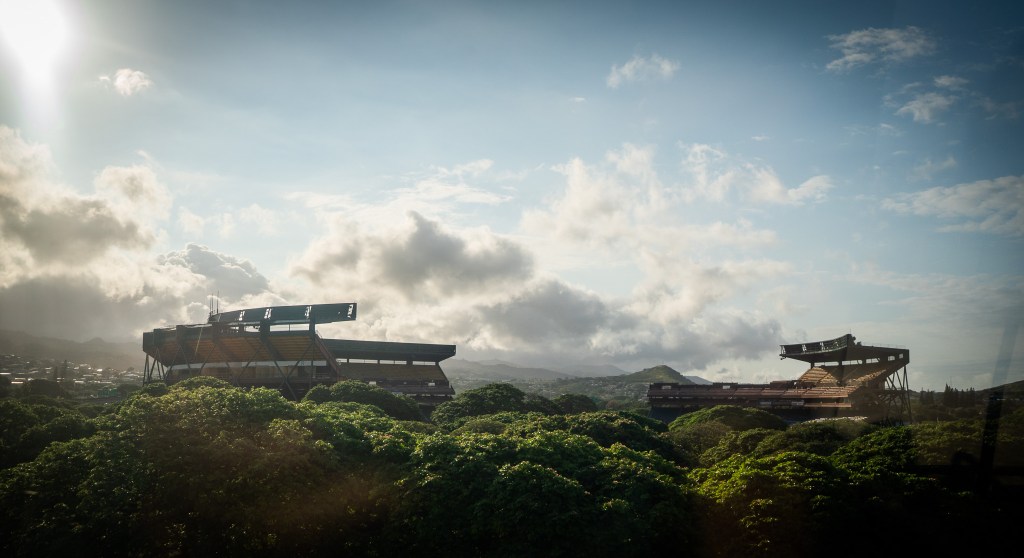
Construction has not begun, although the old stadium is being demolished. No rendering of the new stadium has been made public, and the state still hasn’t confirmed that the master development agreement — the project’s cornerstone — has been fully executed.
The Stadium Authority has repeatedly missed its own targets. Two years ago, it announced a framework agreement with developer Aloha Hālawa District Partners and set a June 30, 2025, deadline for full contract execution.

Ideas showcases stories, opinion and analysis about Hawaiʻi, from the state’s sharpest thinkers, to stretch our collective thinking about a problem or an issue. Email news@civilbeat.org to submit an idea or an essay.
That slipped to July, then August. In September 2025, the authority reported partial progress but left the two most consequential pieces unsigned.
In May 2026, the authority approved execution of the contract but withheld the terms. It’s now July, and neither the agreement nor any confirming announcement has surfaced. This isn’t a string of minor delays. It’s a track record.
The financial picture is worse. The Legislature appropriated $350 million for construction — a hard cap on the state’s commitment — far short of what’s needed. AHDP spokesperson Stanford Carr has called the stadium a financial “black hole” requiring $300 million more.
Without additional public money, AHDP must cover remaining construction costs itself, plus the costs of decades of stadium operations and maintenance, and building out the rest of the mixed-use district — a private obligation estimated in the billions. Those costs are rising, too, as construction material prices climbed at an annualized rate of 12% in early 2026.

The problem runs even deeper. The law appropriating the $350 million included a drop-dead date of June 30, 2024. No contract was signed by then. By the statute’s plain language, the money is gone.
Officials may cite administrative memoranda to argue otherwise, but memoranda can’t override statute. If the appropriation lapsed, the state’s financial commitment doesn’t exist.
Facing financing issues, the project has turned to unconventional funding. A 2025 bill would have allowed casino gambling on site. Carr warned that the gap had grown to $550 million and that without casino revenue, AHDP might “walk away.” It didn’t pass.
A 2026 bill allowing digital outdoor signage, called “a vital step” for viability by the Stadium Authority, also failed.
One financing idea took a step forward, although property taxpayers may not welcome it. It combines Tax Increment Financing and Community Facilities District bonds, under which the City and County of Honolulu would issue bonds for infrastructure, which would be repaid through increased property taxes from the Stadium District site.
This requires a constitutional amendment, which will be decided by voters at the next general election, then uncertain county approval. The concept is troubling because the Stadium District would receive county police and fire services without contributing to the tax base that funds them, meaning everyone else who pays property tax would subsidize those services.
Through it all, the public has been kept in the dark. No stadium design, no disclosed contract terms, no accounting of whether AHDP has financing in place for a deal that is already more than a year overdue.
Hawaiʻi taxpayers deserve better. Governor Green and the Legislature should commission an independent legal and financial review — including whether the $350 million has legally lapsed — and make the findings public. If it confirms what the delays and silence already suggest, the state should cut its losses, stop the project, and put those 98 acres in Hālawa to work for Hawaiʻi.
 Sign up for our FREE morning newsletter and face each day more informed.
Community Voices aims to encourage broad discussion on many topics of community interest. It’s kind of a cross between Letters to the Editor and op-eds. This is your space to talk about important issues or interesting people who are making a difference in our world. Column lengths should be no more than 800 words and we need a photo of the author and a bio. We welcome video commentary and other multimedia formats. Send to news@civilbeat.org. The opinions and information expressed in Community Voices are solely those of the authors and not Civil Beat.

Local reporting when you need it most
Support timely, accurate, independent journalism.
Honolulu Civil Beat is a nonprofit organization, and your donation helps us produce local reporting that serves all of Hawaii.
ContributeAbout the Author