Moviegoing In Hawaiʻi Shouldn’t Take An ‘Odyssey’ For Rural Audiences
The state once had hundreds of movie theaters. Now there are less than two dozen commercial movie houses.
July 31, 2026 · 7 min read

About the Author

Disney’s “Moana,” starring Pacific Islanders Catherine Laga’aia as the wayfinder Moana and Dwayne Johnson as the demigod Maui, opened this month in movie theaters around the world. For many in places like Tonga, American Samoa, the Independent State of Samoa, and, yes, even here in Hawaiʻi, rural moviegoers were unable to find and see the film at all.
Many island nations, and Hawaiian Islands, have only one commercial cinema left — a sad fact as true in Tonga and American Samoa as it is on Kauaʻi and Lānaʻi — severely limiting what can be screened and who can readily attend given the vast distances between these cinemas and their audiences.
It wasn’t always like this. Hawaiʻi once had hundreds of movie theaters across its eight largest islands; today, there are less than two dozen commercial movie houses remaining across the entire state. Nearly all are located in the main cities of each island and more than half are on the island of Oʻahu. Even on Hawaiʻi’s more populous islands such as Maui and Hawaiʻi, rural movie houses have almost entirely vanished.

Ideas showcases stories, opinion and analysis about Hawaiʻi, from the state’s sharpest thinkers, to stretch our collective thinking about a problem or an issue. Email news@civilbeat.org to submit an idea or an essay.
Last week, congressional Reps. Claudia Tenney, Mike Carey and David Kustoff introduced the “Supporting Cinema Renewal, Enhancement, and Enriching Neighborhoods (SCREEN) Act,” legislation that “establish[es] a 30% federal tax credit for qualified movie theater revitalization projects” and “encourage[s] private investment in movie theaters” to “help revitalize the Main Streets and commercial districts they support.”
The legislation is supported by the nation’s largest film exhibition trade organization, Cinema United, whose CEO, Michael O’Leary, noted that, “This timely and important legislation will spur re-investment in one of America’s great Main Street enterprises — the local cinema. Jobs will be created, including local contractors and vendors that do the work, surrounding businesses in the community will benefit, and the result will be a better experience for fans that love seeing their favorite movie on the big screen. … Because of their leadership, towns of all sizes, in all 50 states, will see a tangible and positive cultural and economic impact in their local communities.”
Hollywood, currently sailing on the backs of “The Odyssey,” “Toy Story 5,” and many other films, is enjoying its strongest summer in seven years, “on track,” Deseret News reported “to generate $10 billion in ticket sales for the first time since the pandemic.”
The SCREEN Act and other national and local initiatives are essential to restoring the importance of movie theaters, and the multigenerational, communal act of moviegoing, here in Hawaiʻi. These cinemas provide employment, engagement, entertainment, and connection through a shared cultural conversation.
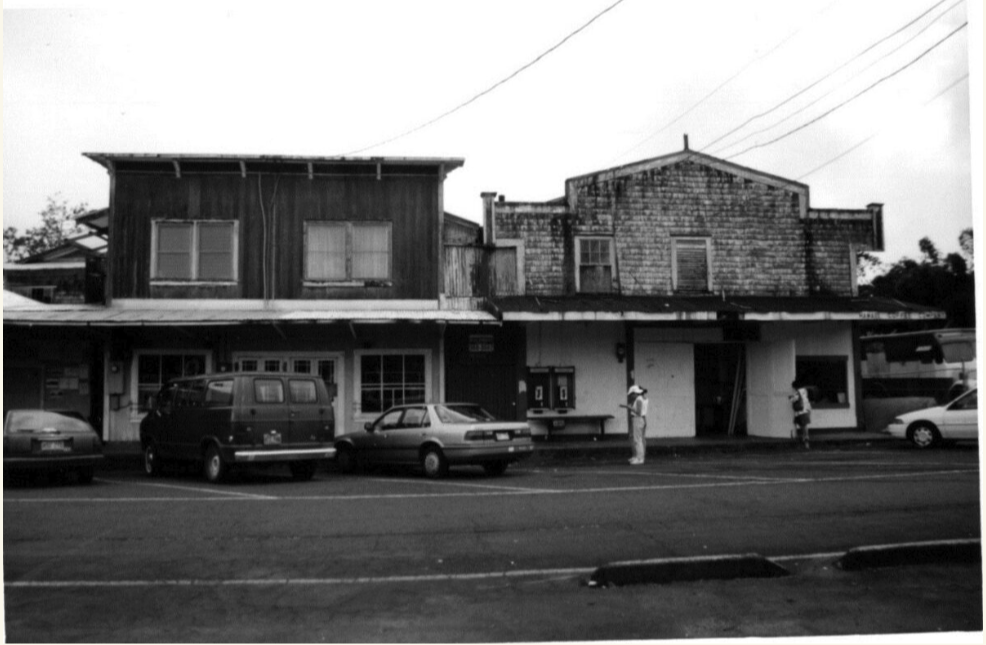
“Cinema deserts” — geographical regions devoid of operating movie houses — are every bit as real here as they are across much of the rural United States (and Polynesia). Variety reported in March 2025 that 5,691 U.S. movie theater screens had gone dark since the pandemic, with both rural drive-ins and hardtop cinemas included in that list.
Rustin Thompson’s new documentary, “The Last Picture Shows,” currently screening across the mainland, highlights this troubling phenomenon and the film exhibitors and local theaters trying to hang on in small towns across the American west. In Hawaiʻi, these cinema deserts prevent rural moviegoers from experiencing the social cohesion of going to the movies and joining in shared cultural conversations.
By contrast, during the agricultural boom across the Hawaiian Islands in the early to mid-20th century, when sugar cane, pineapple, bananas, and other goods were grown, packed, and shipped off, hundreds of movie theaters proliferated in small towns, big cities, and in rural areas.
On the Big Island, to entertain the Native Hawaiian population and the workers that flowed in from across the Pacific Rim, the U.S. mainland, the Caribbean, and Europe to work the sugar cane fields, there were more than two dozen movie houses there by 1927, stretching from the rural towns of Hāwī and Honokaʻa to the north, across Hilo, and down to Pāhoa and Nāʻālehu in the south. Whether mauka or makai, the island’s highly diverse residents had an equally diverse set of theaters to choose from featuring “American,” Japanese, Filipino, Portuguese, Chinese, and other films.
Movie Deserts
These movie theaters did not just exhibit motion pictures; they created and amalgamated community and social relations at a time of tremendous demographic change, fostering engagement, empathy, enlightenment, and entertainment.
However, as rural audiences dwindled and theaters closed during the decline of the sugar industry in the 1980s and 1990s, the drive to the next surviving cinema on the Big Island became an hour or longer. In recent years, movie theaters in Hāwī, Mountain View, Hōlualoa, Nāʻālehu, Pāhoa, and other areas have been shuttered, sold, burned, and/or demolished.
This scarcity resonates in Kauaʻi as well where the distance from the island’s only remaining movie house, the single screen Waimea Theatre, to Hanalei is well over an hour. In Maui’s rural Hāna District, the closest movie theater is now the Regal Maui Mall in Kahului, roughly two hours from the town of Hāna. Even in Oʻahu, there are virtually no movie houses in rural areas, whether in Haleʻiwa or Kahuku.
While some might posit that this absence of theatrical availability of Moana in rural Hawaiʻi created a strong argument for making the film available day-and-date on Disney+, this misses a crucial aspect of what moviegoing has meant for many Hawaiians: a place for community and ‘ohana, the kind movie theaters have been generating for over 125 years.
You could watch “Moana” later this year when it’s available on your laptop, smartphone, or HDTV. Content is certainly everywhere, but it’s the context that matters. The opportunity to discuss the new film’s representation and impact, and for local families to “talk story” about it, will require hours of roundtrip driving for many at a time when gas prices — Hawaiʻi has the second highest in the United States — will make a long drive to the movie theater a financial burden.
Theatrical moviegoing fosters community, care and concern for others in a public space.
It is time for national, state, and local officials to treat cinematic infrastructure in rural areas such as Hawaiʻi with the same urgency in which they treat the lack of broadband and other access to technology and infotainment. Feature-length films don’t just nourish young minds at a formative moment with narratives and characters that create multi-generational engagement, but they also help build attention and patience at a moment when we seem to be losing both.
Theatrical moviegoing fosters community, care and concern for others in a public space, and the ability to focus, something that may hold long-term benefits for educational environments and for both parents and teachers. The construction, renovation, and/or operation of movie theaters in rural towns would also generate much needed employment and drive foot traffic to local, surrounding businesses.
Economic incentives and public-private partnerships are essential to (re)create a place for local families and for social engagement. That’s good for filmgoers, filmmakers, film distributors, and film exhibitors. It’s even better for cultivating both dreams and community.
The last time I drove by the empty field where the muraled Nā’ālehu Theater had stood until 2023, kids were darting in between cars carrying tourists to and from the Punalu‘u Bake Shop. There was nothing else to do downtown on a Thursday, it seemed, but play in traffic. We owe future generations an opportunity to gather, to dream, and to cohere. It shouldn’t take Maui, the demigod, or a literal odyssey to make that happen.
 Sign up for our FREE morning newsletter and face each day more informed.
Community Voices aims to encourage broad discussion on many topics of community interest. It’s kind of a cross between Letters to the Editor and op-eds. This is your space to talk about important issues or interesting people who are making a difference in our world. Column lengths should be no more than 800 words and we need a photo of the author and a bio. We welcome video commentary and other multimedia formats. Send to news@civilbeat.org. The opinions and information expressed in Community Voices are solely those of the authors and not Civil Beat.

Local reporting when you need it most
Support timely, accurate, independent journalism.
Honolulu Civil Beat is a nonprofit organization, and your donation helps us produce local reporting that serves all of Hawaii.
ContributeAbout the Author