Philippines National Development: The Prospect Of An Engaged Middle Class
More fundamental structural change of the country’s political system is needed to achieve broad-based prosperity over the long term.
July 12, 2026 · 9 min read

About the Author

Hawaiʻi’s connections to the Philippines date back to a time when both island groups were part of the United States.
As the number of Filipino sugar and pineapple workers venturing to Hawaiʻi grew, a new term was invented to describe these men: “Hawayano.” The Hawayano were pioneers in seeking overseas employment as a means of helping their families back home. They established a pathway to greater economic security and over time spurred the creation of a truly global Filipino community.
Today, there are some 12 million to 15 million hard-working overseas Filipinos. Only China and India surpass the Philippines in numbers of overseas workers. To a greater extent than ever before, globalization connects the ever expanding number of overseas Filipinos to their homeland.

Filipinos sending significant remittances play a large role in propelling the Philippine economy and are driving the emergence of a growing Philippine middle class. As we see in Hawaiʻi, this population ranges from those working in the trades and maritime industry to professions including doctors, nurses, lawyers and engineers.
A recent World Bank publication examining the past 15 years reports that “the Philippines has become one of the world’s fastest growing middle-income economies.” While cautioning that continued growth is contingent upon policies that unleash growth and job creation, it suggests a path forward toward a nation free of far-reaching poverty. The World Bank has also reclassified the country as “upper middle income,” based on annual per capita gross national income reaching $4,850. Importantly, however, this reclassification does not reflect how income is distributed geographically or across households.
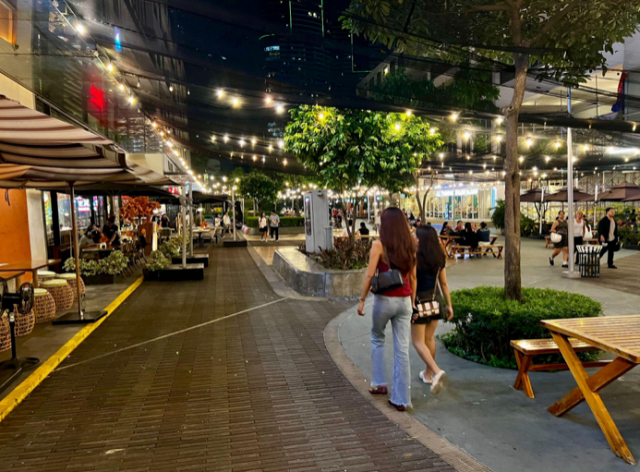
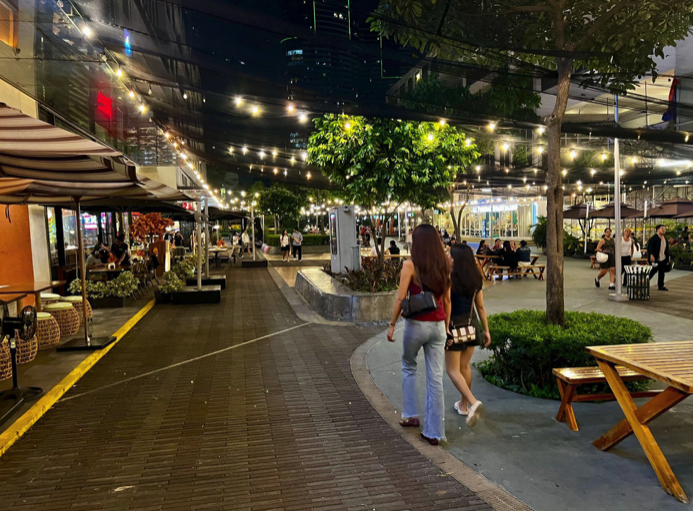
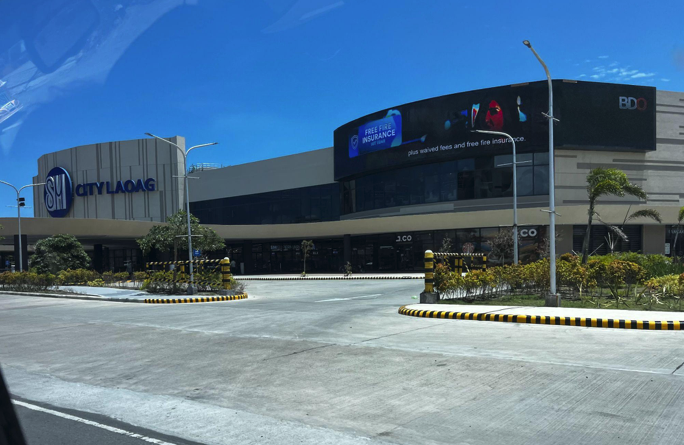
Signs of dynamism are observable nationwide. With a growing population of some 118 million (compared to Hawaiʻi’s 1.43 million), nearly 50% of Filipinos are under the age of 25. These highly motivated young people overwhelmingly believe that through hard work at home and abroad the quality of life for their families will improve. For example, in Ilocos Norte, the home province for many of Hawaiʻi’s Filipinos, years of remittances from Hawaiʻi and other parts of the globe have supported widespread construction of modern homes, automobile ownership, private education and high land values. Economic vitality is most visible in the two new large air conditioned malls featuring global brands.
This development has nearly eliminated the tradition of visiting relatives from Hawaiʻi transporting heavy cardboard “balikbayan” boxes containing goods unavailable in the homeland. The venerated family water buffalo (carabao) so critically important to rice production since Spanish times have been replaced by mechanized “kuliglig” tractors.
Another sign of the times is waistlines. While obesity in the 1970s was quite rare, a 2025 government survey found obesity in Filipino adults 20-29 years old has risen from 39.8% in 2023 to 44.5% today.
Rapid Urban Growth
It is interesting to compare the transportation systems in Manila and Honolulu. To be sure, Metro Manila’s population of approximately 20 million creates major transportation challenges. Public buses, private vehicles, jeepneys and tricycles all play an essential role. Manila’s Light Rail Transit, first opened in 1984, has expanded to over 37 miles but is still far from sufficient to avoid major congestion. Even if current population growth slows, fast-paced urbanization is likely to continue, particularly in Metro Manila, Metro Cebu, and Metro Davao.
To address the challenges of rapid urban growth, a remarkable number of transformative infrastructure projects are underway. A steadily expanding nationwide highway system will eventually connect all of the major island groups via expansive bridges.
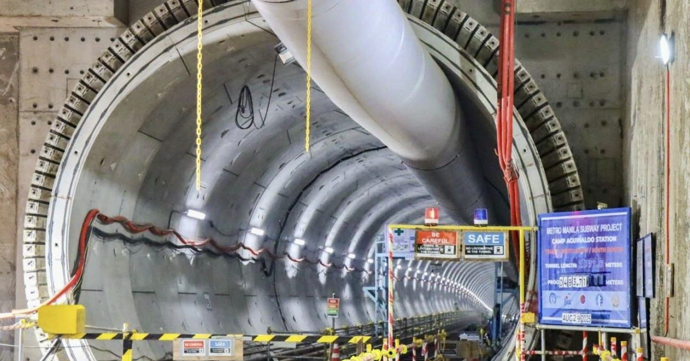
On the main island of Luzon, construction of a 91-mile Luzon north-south commuter railway stretching from Clark Airfield in the north to Laguna province in the south is visible from adjacent roadways. Also under construction is a state-of-the-art Metro Manila subway that will connect suburban Valenzuela to the ultra-modern Singapore-like Bonifacio Global City, with a terminus at Ninoy Aquino International Airport.
Multilateral partners such as the Asian Development Bank and bilateral aid programs are supporting these projects, drawing heavily on Japanese transport technology and engineering expertise. San Miguel Corp., long known for beverage and food products, is currently building a new Manila International Airport on reclaimed land in Bulacan province that is part of a massive planned “Aerotropolis” mixed use community. Frequent power outages and water shortages, a bane of urban residents in the 1990s, are today largely a distant memory.

These impressive transformations of the built environment contrast sharply with a deeply entrenched, elite dominated political system that has endured through Spanish and American colonial rules, and has continued to flourish since formal independence in 1946. The political terrain is characterized by landed, plantation-owning families capable of co-opting democratic institutions through violence, financial manipulations, and political maneuvers. Over more than eight decades tenacious oligarchs have plundered state coffers to advance their private interests.
The legal system has found it all but impossible to successfully prosecute even the most egregious cases of corruption and human rights abuses.
While the father of current President “Bongbong” Marcos declared martial law in 1972 under the pretext of creating a “New Society,” the levels of corruption only expanded. Within a decade of the misnamed “people power” action that deposed Ferdinand Marcos in 1986, Marcos’ cronies, along with other exiled elites, had returned to positions of power.
More recently, under the guise of a war on drugs, then President Rodrigo Duterte (2016-2022) is said to have endorsed the summary execution of more than 7,000 (and possibly as many as 30,000) Filipinos.
Evidence of the Philippines’ inability to bring powerful individuals to justice at home is seen in Duterte’s extradition and prosecution for crimes against humanity by the International Criminal Court in the Hague. Over the past decade it is alleged that billions of pesos have been stolen by politicians taking funds intended for much-needed flood control projects, many of whom remain in office.
One of the main consequences of this entrenched hereditary oligarchy that focuses on preserving its political and economic interests is that the Philippines’ progress in eliminating poverty has been considerably slower than neighboring countries such as Indonesia, Malaysia, Thailand and Vietnam. Similarly, the Philippines ranks only sixth in terms of foreign direct investment when compared to other major ASEAN economies.
Peace Dividend
Perhaps the brightest domestic political development is the 2019 creation of the Bangsamoro Autonomous Region in Muslim Mindanao. After many decades of armed conflict and failed attempts at reconciliation between the overwhelmingly Catholic central government and the nation’s Muslim minority, regional self-governance has brought a peace dividend to nearly 6 million residents in five southern provinces. The BARMM is now working under a Bangsamoro Transition Authority, erecting institutions to peacefully manage regional and local governance that are in keeping with cultural norms.
In the international arena the Philippines faces strong headwinds in the West Philippine Sea. The government has been all but helpless in defending its sovereign territory.
Despite a major international legal ruling in favor of the Philippines, China continues to build fortified islands and prevents Filipino fishers from taking catches in their own territorial waters. Sadly, sand for China’s newly constructed islands has reportedly come from unscrupulous sales in the southern Philippines. There is fear of a creeping mainland Chinese presence in the economy, frequently hidden from view by Filipino citizens acting as “straw buyers.”
In hopes of reinvigorating relations with the United States, the Philippine government has reopened the door to U.S. military training exercises and prepositioned equipment. A crucially important military to military link is the U.S. Indo-Pacific Command based at Camp H.M. Smith. In a manner not seen since the U.S. bases were closed in the early 1990s, large-scale training exercises are bringing increasing numbers of boots on the ground.
President “Bongbong” Marcos has given nearly carte blanche access with only faint hope of U.S. support against Chinese aggression. This stands in contrast to his father, Ferdinand Marcos, whose shrewd bargaining with American diplomats produced large USAID budgets.
While the 1951 U.S.-Philippine Mutual Defense Treaty commits both countries to defend each other against external military attack, there are increasing doubts by Filipinos about how much help the United States would actually provide in a time of crisis. If the anemic U.S. response to Chinese behavior in the West Philippine Sea is any indication, a robust defense is hardly assured.
This has prompted the Philippines to broaden and deepen its security relationships with Asian neighbors such as Japan, Australia and Vietnam. Still, it is not impossible to envisage a time within this century when China effectively controls the islands of Taiwan and the Philippines.
More fundamental structural change is needed to achieve broad-based prosperity.
The current government’s desire to eradicate poverty and create a secure middle class by 2040 is by any measure an ambitious goal. It will require that the Marcos administration, among other steps, do far more to invigorate the sluggish agricultural sector. It will also need to formulate policies to offset the likely loss of as many as one-million business process outsourcing jobs as AI reduces this type of employment.
Beyond these measures, more fundamental structural change of the Philippines’ political system is needed to achieve broad-based prosperity over the long term.
Many Filipinos, including some in Hawaiʻi, remain convinced that if only the right authoritarian figure could be elected to lead the nation it would bring dramatic change, radically altering the political landscape and raising the entire Philippines. Yet this is akin to changing light bulbs in a house that needs rewiring.
Many recall Hawaiʻi’s Democratic revolution of 1954, with the rise of labor unions and a nascent middle class in defeating oligarchic rule. Similarly, the real key to unlocking the Philippines’ unrealized potential is transformation of its entrenched political structure. Prospects for such political reform and democratization calls for serious political engagement by the Philippines’ growing middle class — a group which has thus far shown a preference for remaining on the electoral arena’s margins.
The wide historic divide, which traditionally juxtaposed privileged Filipino elites and proletarian masses, now has a potentially powerful new force composed of middle class citizens. It is the prospect of middle class political engagement that offers hope for the emergence of influential new voices committed to systemic change.
 Sign up for our FREE morning newsletter and face each day more informed.
Read this next:

Local reporting when you need it most
Support timely, accurate, independent journalism.
Honolulu Civil Beat is a nonprofit organization, and your donation helps us produce local reporting that serves all of Hawaii.
ContributeAbout the Author