Kirstin Downey: Book Reveals Splendor, Brutality Of Kamehameha's Court
Puakea Nogelmeier has produced an epic translation of a Hawaiian historian who grew up in the king’s household.
August 28, 2026 · 8 min read

About the Author

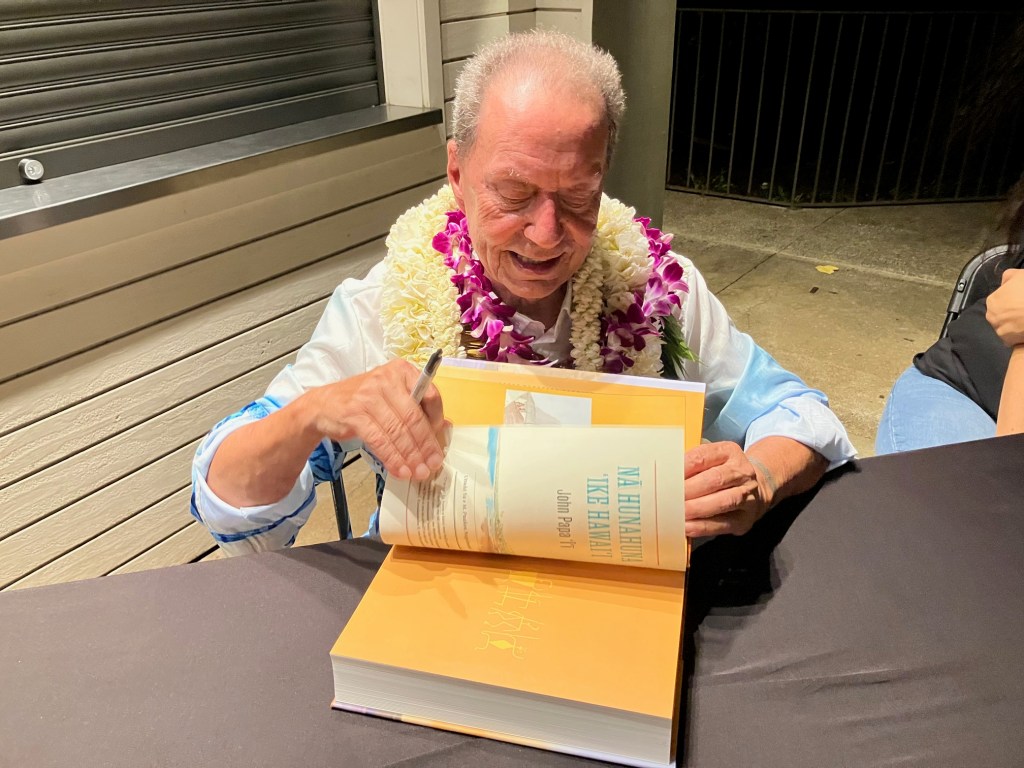
New insights into ancient Hawaiian culture, both its glories and its cruelties, have come to light in a highly anticipated book translated and compiled by scholar and Hawaiian linguist Puakea Nogelmeier.
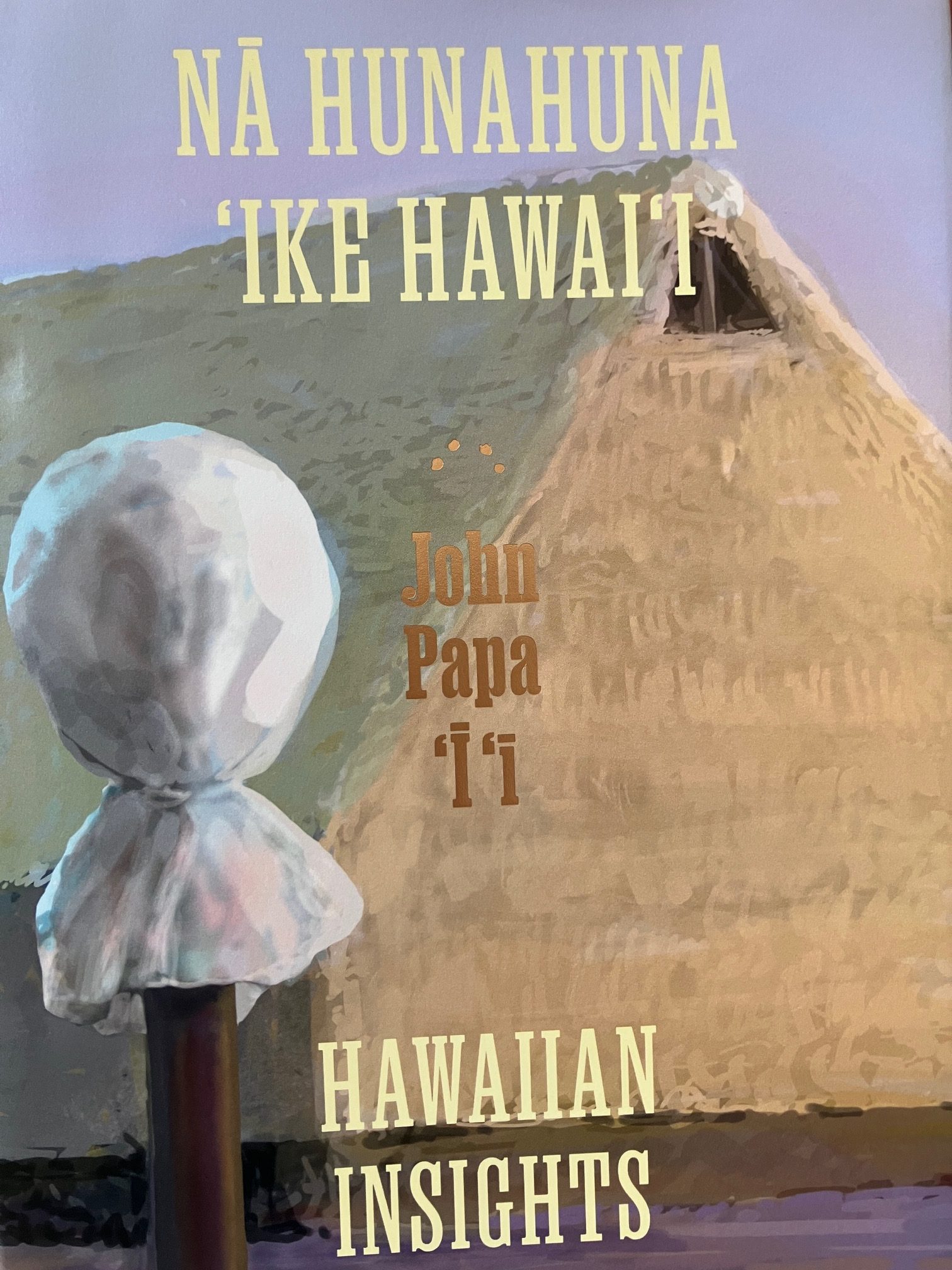
“Nā Hunahuna ‘Ike Hawai‘i” is a monumental 557-page collection of the works of Hawaiian historian John Papa ʻĪʻī, a memoirist who grew up in the household of King Kamehameha and who was intimately involved in the creation of the king’s dynasty over the next 60 years.
The new book, subtitled “Hawaiian Insights,” describes many aspects of Hawaiian culture and religion, including extensive accounts of Hawaiian spiritual rituals, including incidents of human sacrifice. It also dispels the myth that the Hawaiian rulers were directed like puppets by outsiders and instead underscores their determination to chart the course of their fledgling nation.
“This just shatters those mindsets,” Nogelmeier said in an interview.

Ideas showcases stories, opinion and analysis about Hawaiʻi, from the state’s sharpest thinkers, to stretch our collective thinking about a problem or an issue. Email news@civilbeat.org to submit an idea or an essay.
In ʻĪʻī’s telling, foreigners are only bit players in a drama where Hawaiian rulers dominate the central stage. Some outsiders are helpful or good, others less so.
These writings exist because in the 1800s, Hawai‘i’s monarchs encouraged the adoption of universal literacy. Within decades of the arrival of Captain James Cook in 1778, and within living memory of his visit, Hawaiians began reading, writing and publishing books and newspapers. Hawai‘i consequently has the most extensive collection of Indigenous writings of any place in the world.
Hawaiians had a voracious appetite to learn about the world and also particularly about Hawaiian history.
A Prolific Chronicler Of The Kingdom
John Papa ʻĪʻī, a handsome, ethical and brilliant courtier, was at the forefront of this trend. He wrote about what he knew from his own life and what he had learned from eyewitnesses, creating a permanent record when memories were fading and the people who had participated in the events were passing away. His writings were originally published as articles in Hawaiian newspapers.
At a book launch event held last month at Bishop Museum, Nogelmeier explained how he and his collaborators had hugely expanded what was previously available in English, which was a smaller, condensed volume called “Fragments of Hawaiian History” translated by Mary Kawena Pukui in 1959.
“What we did is we collected everything that ʻĪʻī wrote, about the culture, about the history,” Nogelmeier said. “John Papa ʻĪʻī was so bloody productive. That man. He wrote about politics, he wrote about social issues. And some of that was done under a pen name.
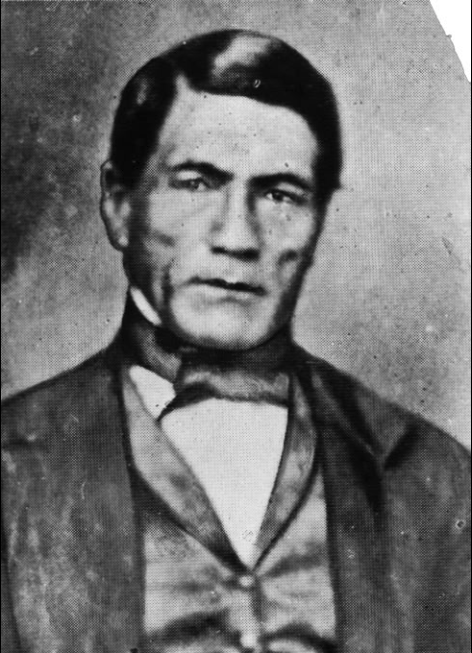
ʻĪʻī was born in 1800, the child of a family with a long tradition of service as royal courtiers, from a unique kind of parentage that was highly regarded in Hawaiian culture. He was a “poʻolua” child born of a mother who had simultaneous relationships at the time with two different men, or where two men were both willing to claim the role of fatherhood. Like many other high-ranking children, that meant the boy was believed to have the benefit of descent from three honored family lines, not just two, according to Hawaiian scholars.
ʻĪʻī’s uncle was serving as an assistant to King Kamehameha. ʻĪʻī was sent at age 10 to begin his service as an attendant to Kamehameha’s son and heir Liholiho.
It was risky duty, something the boy knew before he arrived at court. His own brother had been killed as a teenager for breaking court rules, ʻĪʻī wrote. His brother, lacking adequate alliances at court, had not been given enough food and, in his desperation, had traded a seed nut lei owned by Kamehameha for a few bowls of poi.
One of the king’s wives, Kaʻahumanu, saw the lei and told Kamehameha about the theft. The king questioned the boy, telling him what he had done was wrong. Soon afterward, court officials strangled the boy as punishment. In ʻĪʻī’s account, the boy had been unlucky because his uncle was away and there was no one to intervene in his behalf.
ʻĪʻī asked his mother why she would expect him to go to court, given what had happened to his brother, and she gave him stern guidance to be obedient and carefully educate himself about court rules.
“That is how your uncles became men in service of the chiefs, from a time of poverty into that of wealth,” he recounts her saying. “They endured destitution and countless hardships that came upon them. The same could happen for you, but only if you listen to our teachings, as well as those of my brother.”
It was not easy work, as ʻĪʻī discovered, because Liholiho was not a friendly boy and had an unpleasant habit of surprising his companions and banging their heads together.
In this telling, Liholiho emerges as a conscientious and loyal son to his doting father, but also, according to Nogelmeier, as something of a “spoiled brat.”
Writings Reveal New Details Of Royal Life
Nogelmeier is playing a central role in disseminating new scholarship about Hawai‘i. A longtime professor of Hawaiian language at the University of Hawai‘i, Nogelmeier co-founded a nonprofit, Awaiaulu, designed to train new generations of Hawaiian linguists and translators. Hundreds of thousands of newspaper pages and other documents are being digitized to make the material more broadly available.
Nogelmeier and his students at Awaiaulu are translating many other major works of Hawaiian scholarship, most notably the writings of another prominent 19th century historian, Samuel Kamakau. That is a multiyear effort.
Nogelmeier took a detour from Kamakau to turn his efforts to ʻĪʻī, whose works he believes are so uniquely revealing.
The book describes how the royal compound was laid out, who lived where and how their homes were demarcated. It contains what appears to be the most complete account of ceremonies that occurred at heiau in Hawaiʻi, and how the events were timed. It also mentions, in a somewhat offhand way, that three men were sacrificed on one occasion at a heiau on Lēʻahi — now known as Diamond Head — as punishment for eating coconuts with women, which was forbidden.
ʻĪʻī also explains how different ranks were determined and observed — in other words, the levels of caution that needed to be taken in the presence of different members of royal families.
ʻĪʻī lived with the fear of making such mistakes. He writes movingly of his terror about once needing to cough at a time when making sounds was forbidden, and another time when he dropped an object that might have fallen in the wrong direction. Either of these missteps could have been fatal.
ʻĪʻī’s writings provide new and different details of Kamehameha’s rise to power and also indicate that Kamehameha had been selected to rule even before he went to live with his uncle, Kalaniʻōpuʻu, an important Hawaiian chief.
The book outlines the strategic ways Kamehameha structured his government, determining who got what land, and, envisioning the country’s future, planning for the succession of his children.
Sometimes ʻĪʻī’s accounts differ from those of other historians of the era. Nogelmeier believes that ʻĪʻī was in some cases reflecting what was believed in the court at that time, in other words, what was orthodoxy in royal circles.
Over his long career, ʻĪʻī served under Kamehameha and his two sons and also the chiefesses who served as regents. He oversaw the royal school that educated the next heirs to the throne. He participated in drafting Hawai‘i’s first constitution, served in the House of Nobles and as a superior court judge and negotiated two separate treaties, one with France and the other with Great Britain, according to Marie Alohalani Brown, who wrote a biography of him, “Facing the Spears of Change.”
The book title and introduction illustrate another unusual facet of ʻĪʻī’s life. He was gifted at the art of dodging and parrying spears, a popular but hair-raising sport, which seems symbolic of all the maneuvers ʻĪʻī adopted in his life to survive and also to help advance the goals of the monarchs he served.
ʻĪʻī reserved his highest praise for Kamehameha III, who he called “a kingly father who loved the Hawaiian people, more than all the other kings dating back across many long eras.”
ʻĪʻī became a devout Protestant Christian, which also influenced how he viewed the world. He saw the new religion as offering relief from some earlier strictures. It also meant that he had some theological disagreements with Kamakau, who had become a Catholic.
ʻĪʻī died in 1870 of complications from scarlet fever. His descendants today include historian DeSoto Brown, curator of Bishop Museum’s archives, who is ʻĪʻī’s great-great-grandson, and who introduced Nogelmeier at his talk at Bishop Museum.
Much Hawaiian scholarship remains unplumbed.
Nogelmeier believes that only about 3% of the available material written in Hawaiian in those years has been translated and that much more remains to be told.
This beautifully illustrated book provides a new foundation for that continuing exploration.
 Sign up for our FREE morning newsletter and face each day more informed.
Read this next:

Local reporting when you need it most
Support timely, accurate, independent journalism.
Honolulu Civil Beat is a nonprofit organization, and your donation helps us produce local reporting that serves all of Hawaii.
ContributeAbout the Author