Honolulu Voters Deserved A Vote On Police Accountability. They Didn't Get One
A proposal to beef up the Honolulu Police Commission appeared headed for the November ballot. But members of the charter commission rejected it at the last minute.
August 30, 2026 · 6 min read

About the Author

Over the past five years, Honolulu has paid nearly $26 million in civil claims and settlements related to police misconduct and liability.
These payouts are covered by taxpayers, and tied to failures in police accountability.
A Civil Beat analysis found that 75% of officers fired for misconduct in Hawai’i who appeal through arbitration get their jobs back — and chronically flawed internal investigations are a key factor.
The people of Honolulu pay for failures in police oversight in numerous ways.
They pay through settlement checks written year after year.
But they also pay through irreparable harm to Native Hawaiian and Micronesian communities, homeless residents, and people suffering from mental illness — those who bear the heaviest burden of unchecked misconduct.

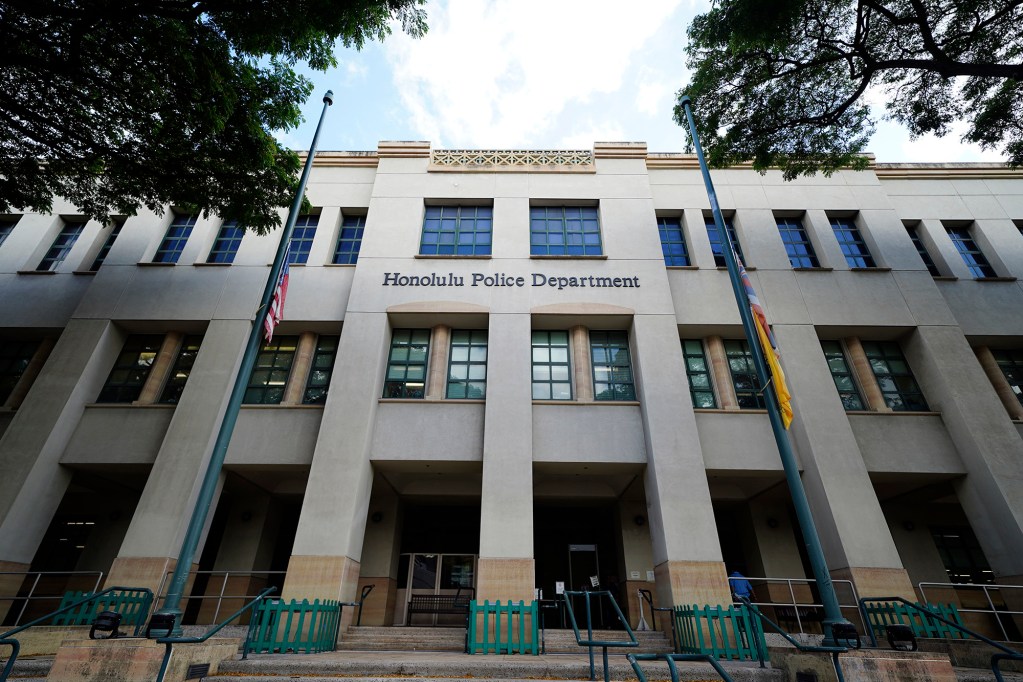
Recently, a charter amendment proposed for the November ballot that would have given Honolulu voters the opportunity to strengthen police oversight was blocked at the last minute by charter commissioners appointed by Mayor Rick Blangiardi.
Many who had followed the process were stunned.
A Proposed Solution
The Honolulu Police Commission is a part-time volunteer body with minimal staff and resources, tasked with overseeing a police department of nearly 2,200 sworn officers.
A department of this size cannot be effectively overseen by volunteers and a handful of staff.
In 2016, when the Charter Commission last put a police oversight question on the ballot, 78% of voters supported strengthening the Police Commission’s authority and investigative powers.
As the years since made clear, authority alone is not enough.
Effective oversight also requires professional capacity, adequate resources, and mandatory cooperation from the department.
This year, the Charter Commission received several police oversight proposals, ultimately advancing Proposal 232 which put forward a specific oversight model with dedicated resources.
The proposal would have established an Office of Civilian Police Investigations as a dedicated investigative arm of the Police Commission, and required police cooperation. The civilian office would conduct independent investigations of serious misconduct parallel to internal HPD investigations, and provide findings and discipline recommendations.
Proposal 232 also established data and analytical capacity to identify systemic problems early, equipping the Police Commission to propose targeted changes to HPD policies, training and discipline.
That capacity matters when a systemic failure can affect hundreds of residents, as the recent controversy over false DUI arrests demonstrated.
The proposal was not a new or untested concept. Independent civilian investigative offices operate in several major cities across the country.
While not a cure-all, it was endorsed by national and local experts in policing, including the NYU Policing Project, University of Hawaiʻi policing researchers, and the Honolulu Police Commission itself.
No Meaningful Debate
For eight months, the proposal advanced through multiple commission votes with strong majority support. Members of the public and policing experts testified — notably, all in support.
While commissioners occasionally asked testifiers clarifying questions, there was remarkably little substantive debate among commissioners themselves.
Then, as the final vote neared, the acting deputy police chief sent commissioners an alarming letter claiming that civilian investigators having access to police records would endanger officers.
The claim was without evidence and ignored that investigators would be subject to privacy and disclosure laws.
That same day, the city’s managing director submitted an urgent letter asking commissioners to postpone action, citing “significant and numerous legal concerns,” and promising to propose amendments once those concerns were resolved.
A second letter followed, emphasizing the proposal’s impact on the city budget, which was characterized as a “significant expense.”
In the final days, across two consecutive votes, several commissioners who had repeatedly supported the proposal switched their votes — on a version that had been significantly scaled back to address legal and cost concerns. The proposed investigative staff had been cut in half.
The final vote reflected a stark political divide. Every commissioner appointed by the City Council voted yes. All but one commissioner appointed by the mayor voted no.
Not one commissioner who voted no cited legal concerns. Instead, objections were made that had not been previously debated.
Opposition Without Alternatives
When major objections are raised for the first time at the moment of the final vote, with no opportunity for the public to respond, the democratic process has failed.
And the objections were remarkably thin.
Creating a dedicated investigative office for the Police Commission would be “growing government,” one commissioner said.
They waited until the final vote, killed the proposal, and offered nothing in its place.
This ignored the cost of the status quo. Honolulu is already paying tens of millions in taxpayer dollars due to failures in police accountability — the amendment was an investment designed to prevent them.
The proposed office would have cost roughly $1.5 million to $2 million annually — less than half a percent of HPD’s $390 million budget. Preventing even one major misconduct case could offset the entire annual cost.
Another commissioner argued that misconduct could be better fixed internally.
One proclaimed misconduct a serious problem — then voted no because the proposal would reform multiple parts of the city’s police-accountability structure. The same commissioner suggested giving the new police chief time to fix the problem.
Reasonable people can disagree about the right model for police oversight.
However, when past Charter Commissions agreed an issue was a priority but had concerns with a proposal, they worked together to craft an alternative and put the issue before voters.
Charter commissioners who claimed misconduct is a serious problem but opposed Proposal 232 had months — and several other police oversight proposals on hand — to put forward an alternative for the ballot. They didn’t.
They waited until the final vote, killed the proposal, and offered nothing in its place.
Given that it will be 10 years before the Charter Commission convenes again, this is especially troubling.
Voters Deserved Better
The Charter Commission’s role was not to make the final decision about police oversight for Honolulu. It was to put an option before the voters and let them decide.
The process left Honolulu voters with no voice on a question affecting their safety and tax dollars.
Voters will not get to weigh stronger civilian oversight against tens of millions in ongoing settlement payments and harm to our communities.
That decision was made for them.
The push for transparent and accountable policing in Honolulu cannot wait another decade. Other pathways to amend the Charter — through the City Council or a citizens’ initiative — must now be pursued.
 Sign up for our FREE morning newsletter and face each day more informed.
Read this next:

Local reporting when you need it most
Support timely, accurate, independent journalism.
Honolulu Civil Beat is a nonprofit organization, and your donation helps us produce local reporting that serves all of Hawaii.
ContributeAbout the Author