Is Hawaiʻi Better Off Without Independent Political Polling?
We don’t know who is leading whom this primary. That might be a good thing.
August 6, 2026 · 8 min read


About the Author

On the evening of Aug. 11, 2012, I was at the former 99 Ranch Market in Māpunapuna when I got a call from a Civil Beat colleague who was also working that night. Mike Levine was across town at Ed Case’s primary night headquarters while I was at the campaign party for Mazie Hirono.
Hirono ended up humbling Case that night by a margin of 57% to 40%, to be exact. She would go on to do the same against Republican Linda Lingle in November, winning the seat of the retiring U.S. Sen. Dan Akaka.
Problem was, just nine days earlier a Civil Beat Poll had Case leading Hirono by a single percentage point. With a margin of error of plus or minus 2.8%, that meant the race was a statistical dead heat.

Except that it wasn’t. Mike was calling that night because he wrote the poll story and he was pretty damn embarrassed. So was I. (At least I was at the winner’s party.)
It wasn’t his fault or mine, and to Mike’s credit he soon published an analysis titled “Civil Beat Poll – What the Heck Happened?” You can read that story to find out what the heck happened, but we weren’t the only news organization that got it wrong that night.
While our poll on the Tulsi Gabbard-Mufi Hannemann race to succeed Hirono in the 2nd Congressional District that same election was spot on, the Hawaiʻi Poll from the Honolulu Star-Advertiser and Hawaii News Now (taken in mid-July) showed Hirono leading Case 55% to 37% and Hannemann up 43% to 33% over Gabbard. Tulsi actually beat Mufi 54% to 37%.

Which brings me to the primary election this Saturday, where Case is defending his 1st Congressional District seat against a credible challenger, state Sen. Jarrett Keohokalole.
Neither Civil Beat nor the Star-Advertiser nor HNN are polling that race, nor the Democratic lieutenant governor’s race nor the races for mayors of Kauaʻi and Maui counties. We haven’t for a few elections now. In Civil Beat’s case, it’s mostly because polling became too expensive for us to sustain.
“I don’t think I have seen what I would consider to be publicly available data from election polls funded by objective parties in quite some time,” Becki Ward, founder of Ward Research, a market research company in business since 1980, told me.
So … is that a good thing or a bad thing?
“Good thing,” says Civil Beat’s politics editor (me). Here’s why:
In my view, horse-race polls on who is winning or losing, as compared with deep dives into policy views, do a disservice to the public.

Sure, they’re fun, and they attract clicks. But I think those polls may unduly influence how a voter votes, i.e., they see their favored candidate losing so they decide to vote for them. Or maybe they choose to not vote at all, because what’s the point if the candidate is trailing badly … or has a huge lead?
OK, that’s my view, arguably a jaded one, because as a reporter and an editor I have had to call many a winning and losing campaign to give them the embargoed results.
But what do others think? I asked three experts intimately familiar with Hawaiʻi polling.
More Issue Polling, Please
I was pleased to learn that there is common agreement on continuing to survey where people stand on important matters of the day.
“I know there’s a lot of interest in the political races, in what is referred to as the horse-race data,” said Ward. “But I think the real loss has been the dearth of data that tracks what Hawai’i residents are thinking and feeling.”
Issue polling, as it is called, was often conducted along with election polling, said Ward, who answered my queries via email.

“Well-funded campaigns are still tracking these barometers, but we don’t see that data available to the general population or voting public,” she said. “And I think there is value to citizens generally understanding whether they feel similarly or differently from the majority of their neighbors.”
I agree and should note that Civil Beat has done issue polling and hopefully will again. The topics surveyed have included Honolulu rail, recreational marijuana, the Thirty Meter Telescope and holding a constitutional convention.
Colin Moore, a political science professor at the University of Hawaiʻi, said he is a strong believer in polling, too, but for both political polling as well as issue polling.
(We spoke on the phone and he sent a follow-up email.)
“Polling is the only systematic way we have to measure what the broader public thinks about a specific issue,” he said, echoing Ward. “It’s an imperfect technology, but the alternatives are usually the impressions of political insiders, who have their own interests, or media judgments shaped by anecdotes and the loudest voices. Those are not more reliable ways to understand public opinion.”
As to political polls, Moore said they do help determine when candidates should be treated as viable.
“Without independent polling, judgments about viability are based largely on campaign contributions, endorsements, media coverage, and name recognition,” he said.
An independent poll, Moore said, can reveal that a candidate who insiders have discounted “actually has substantial support, which prompts journalists, donors, and voters to take the campaign more seriously. It might also show that a supposedly formidable candidate is weaker than the conventional wisdom suggests.”

Moore took mild issue with my contention that political polls determine outcomes, however.
“There’s some evidence that the appearance of momentum can matter,” he explained. “Saying that a candidate is at 30% may have little effect, but saying that the candidate has surged from 20% to 30% could create a sense that the campaign is taking off and lead to more voter interest.”
But, he added, in general, “the evidence is mixed” on whether polls consistently help or hurt a candidate. Nor is there any consistent evidence about turnout.
Moore also pointed out something that seems obvious but worth emphasizing here: “A favorable poll can generate media attention, endorsements, volunteers, and outside spending. A bad poll can make it harder to raise money or convince organizations that a candidate remains viable.”
(Full disclosure: Civil Beat has sometimes publicized such polls, which are pushed by campaigns and political action committees. But they are evaluated on a case-by-case basis for substance and newsworthiness.)
In spite of some major missed calls in major elections (e.g., Harry Truman in 1948, Donald Trump in 2016), polls generally are still pretty solid ways to predict outcomes. The American Association of Public Opinion Research reports that despite sampling errors, shifts in voter preferences and other factors, polling generally comes within a few percentage points of the final result when conducted properly.
“However, it’s important to note that polls are estimates, not forecasts, and should be interpreted with caution, especially when the race is close,” AAPOR concludes.
A big challenge these days, according to a 2024 article from a University of Southern California political scientist, is getting enough people to take surveys. Response rates to poll participation requests have dropped “precipitously,” according to an interview with Christian Grose, from 25% to 3% or less.
“A good poll is only accurate the day it is taken,” he said.
The Hawaiʻi Market Challenge
Pollsters are learning how to adapt.
“I think polling is constantly evolving in terms of how to reach a representative sample,” said Matthew Fitch, executive director and a founding member of Merriman River Group, which used to conduct Civil Beat’s polls.
“The era of calling voters on the phone at home is dying, but dying slower than you would think, because the people most likely to vote tend to be the people most likely to have a landline and answer the phone, and to take a survey. Internet and text polling work well as long as you can correctly identify the likely voter model in advance.”
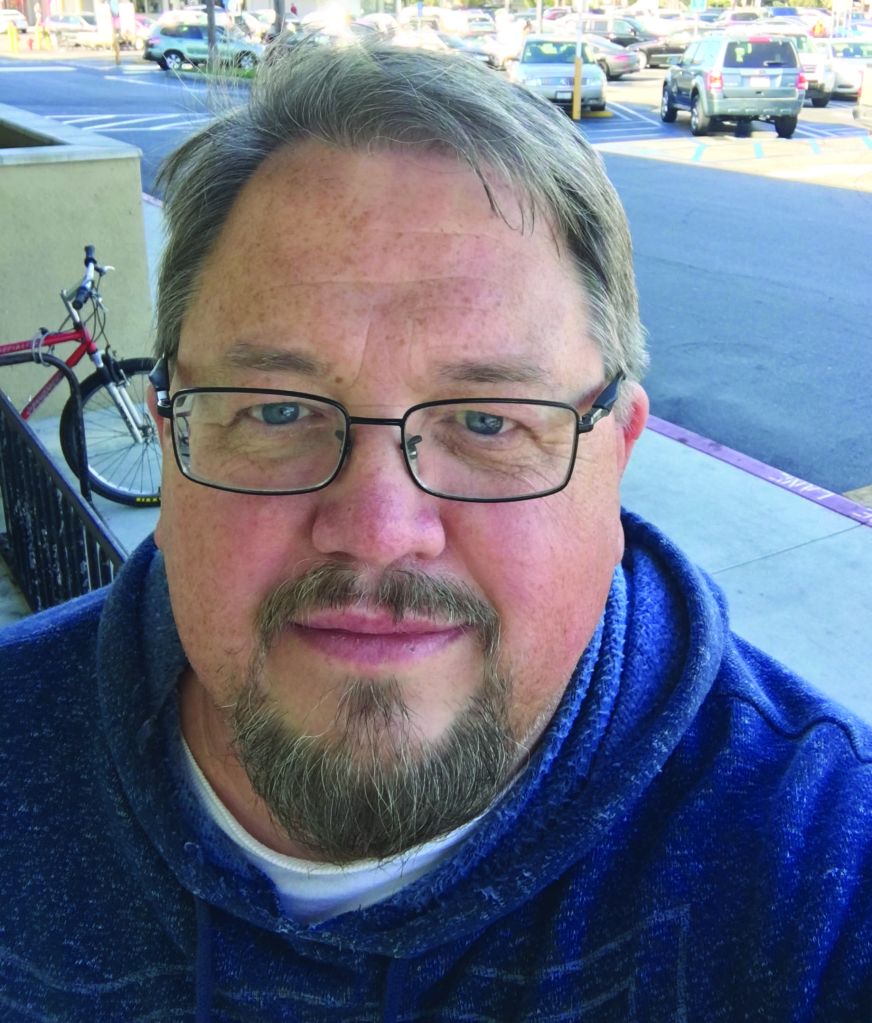
Most of Merriman River Group’s work has been in election administration, Fitch said via text and email. That includes contracting with the Democratic Party of Hawaiʻi, the Mililani Town Association and the Kauaʻi Island Utility Cooperative.
Polling in Hawaiʻi, by the way, is unique as compared to many other states, said Fitch. That makes it challenging.
“It’s the ultimate melting pot in terms of demographics,” he said. “It’s also a one-party state for state and federal offices, so there is a huge ideological diversity within Democratic candidates, making primaries more meaningful, with a genuinely wide range of opinion, than a general election.”
Ward said the diversity requires a pollster to understand cultural differences.
“It matters greatly that we accurately represent the proportion of Japanese, Filipino, Chinese, and other Asian ethnicities in our survey samples, for example, whereas those on the continent would often just look at broader race categories, such as Asian Americans, in this case,” she said. “And while new generations in Hawaiʻi may break from the voting traditions of their grandparents and parents, there are still unique patterns to be analyzed and understood in Hawaiʻi politics.”
 Sign up for our FREE morning newsletter and face each day more informed.
Read this next:
Local reporting when you need it most
Support timely, accurate, independent journalism.
Honolulu Civil Beat is a nonprofit organization, and your donation helps us produce local reporting that serves all of Hawaii.
ContributeAbout the Author