Olin Lagon: No Hog Cheese
Scarcity is supposed to make people hoard. Somebody forgot to tell us. Mostly.
August 20, 2026 · 6 min read


About the Author
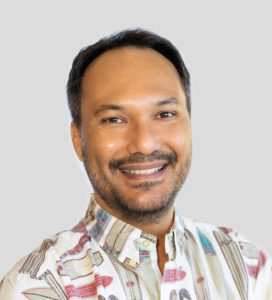
This photo is 15 years old. Kindness posted on a pump in Kāneʻohe at 10:09 p.m., a tsunami on the way, and me standing there because my mom and I are stubborn.
On March 10, 2011, our sirens went off. Japan had suffered a major earthquake and a wave was on its way here. It was going to hit. We just didn’t know how big it would be. My mom was living in the danger zone, across from the beach in the Waimānalo homestead. I called her but she insisted she was going to be OK. Stubborn as heck. No need come get her. She said the same thing during ʻIniki.
Our gas car was running on fumes. I didn’t think I had enough to even get to her. My unprepared lifestyle was forcing me to listen to my mom. But the mango that did not fall too far from da tree drove off trusting that the gas station gods were looking down on me.
That is how I ended up in a massive line at the Aloha Island Mart in Kāneʻohe, hoping there would still be gas when it was my turn. The line was long and quiet. Nobody honked. Nobody cut.
By the time it was my turn, all of the cheaper regular gas was sold out. A worker taped these signs to the pumps and dropped the price of plus and premium to match regular. Why in the world would he do that? Not a single person in that line would have complained about paying the normal price for whatever gas was left. I would have been grateful for any gas at almost any price.
I walked inside their store to grab some water. The shelves were almost bare and a worker had just loaded up what was probably the last of it from the back. The guy in front of me waiting for those bottles looked at how few were left and told me to go grab some too. He did not take it all. Neither did I. I am sure we both wanted to haul every bottle home. But we didn’t. My brother-in-law Clyde taught me that lesson years ago when we fished. Growing up we teased each other with that lesson too … brah, no hog cheese.
I got the gas, so I got my mom. We came home, turned on the news, and saw the other side of the same tsunami warning. The news showed people in LA scrapping over what water was left on the shelves. Same country. Not the same culture.

Ideas showcases stories, opinion and analysis about Hawaiʻi, from the state’s sharpest thinkers, to stretch our collective thinking about a problem or an issue. Email news@civilbeat.org to submit an idea or an essay.
This is not new here. When Hurricane ʻIwa hit in 1982 we were living in Kūhiō Park Terrace and my mom took us down to P&P, our local grocery. Some guy was standing at the door welcoming ʻohana. He handed my mom a paper bag and said fill it up with what you need. Why in the world would he do that? We would have expected to pay fair prices.
There was one magic spigot in the housing that somehow still had a small flow of water. A bunch of us kids were waiting with small buckets. We waited our turn and each got a little.
At the height of that storm, a huge Samoan guy knocked on our door. I answered. He asked if my dad was home. My dad had died years before. I said no. He asked if I had older brothers. I have three older sisters. No again. I asked why. And he took the time to explain to my 10-year-old self that the Falls of Clyde (no relation to my brother-in-law) needed some strong folks to try and hold it back from smashing against the pier. He was out recruiting. I kinda wished I was a bit bigger then. I liked him. Experiences like this help you understand why people here call strangers uncle and aunty. You do these kinds of things for ʻohana without batting an eye, or however that saying goes.

Maybe I am getting some of the details wrong but what I don’t misremember is the kindness. Over and over and over again. When you grow up seeing these patterns, you get kids like me living aloha without batting an eye.
I know, I know. We still have pockets practicing the ancient art of hogging cheese. Ask anyone who has watched carts of water, Spam and toilet paper fly out of Costco when storms hit the news, and then watched the returns pile up a week later. They will read this and think I am crazy.
We have seen the nastier side, too. While ʻohana were still searching for their ʻohana, speculators were already calling Lahaina survivors offering cash for land. Some landlords jacked up rents. Hogging choke cheese. I wasn’t in Lahaina, but I know they had their own versions of what I lived through. I saw some of it on the news, like aunties and uncles cooking for hundreds of strangers, day after day, for months.
I think hoarding is what we do when we forget where we are. The line at the spigot is what we do when we remember, and that is mostly who we are.
We live in the most isolated populated place on earth, with about a week of food on the shelves. You would think it would be us scrapping over water. We all have the hoarder and the giver in us, after all. Instead, the gas gets cheaper and the last bottles get shared, because enough people have shown us that is how you live on these islands, mostly.
One day the big one will come. I like to think I already know what the signs on the pumps will say.
 Sign up for our FREE morning newsletter and face each day more informed.
Read this next:
Local reporting when you need it most
Support timely, accurate, independent journalism.
Honolulu Civil Beat is a nonprofit organization, and your donation helps us produce local reporting that serves all of Hawaii.
ContributeAbout the Author