The Sunshine Blog: Get Ready, Honolulu Voters, 20 Questions Coming Your Way
Short takes, outtakes, our takes and other stuff you should know about public information, government accountability and ethical leadership in Hawai‘i.
August 2, 2026 · 9 min read

About the Author

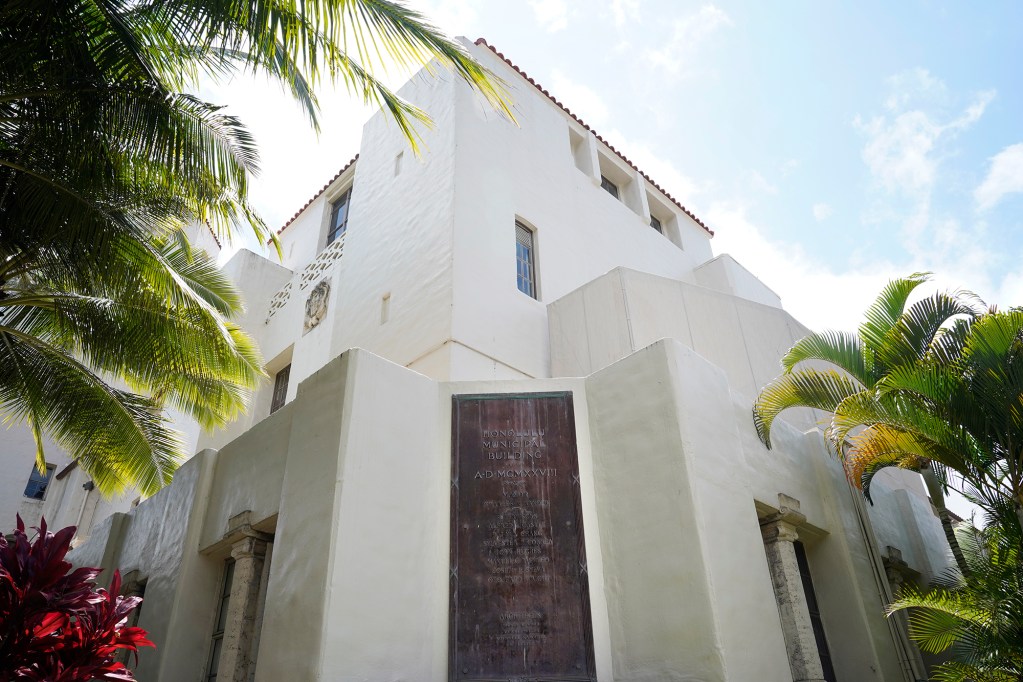
Home stretch: More than a year after the 13 members of the Honolulu Charter Commission held its organizational meeting, the group has finally decided what changes to the city’s foundational policy to put before voters in November. The Sunshine Blog is definitely scratching its head about how this has all played out, but whatever. This is what we’re left with.
Here’s a list of the 20 proposals that the commission has sent to the ballot and here’s the list of ballot questions and brief summaries the voters will see.
The commission made a solid effort to address a few big topics: housing policy and affordable housing, election policy with a proposal switch to ranked choice voting (but not for another six years and only if the Legislature says it’s OK) and to deal with the recent immigration debate by asking voters whether to direct the Honolulu Police Department to basically stay out of federal immigration enforcement.
Other questions relate to cultural topics like creating an Office of ʻŌiwi Resources and Cultural Stewardship and an LGBTQ Commission. More attempt to clean up flaws in the way government currently operates, including who can serve on a local board or commission and what constitutes a quorum.
But groundbreaking? Not so much. Especially considering that citizens only have an opportunity every 10 years to directly push for real change.

Citizens definitely tried to seize the day this time around. People submitted more than 280 proposals for the Charter Commission to work with, well more than any previous charter review process.
Previous charter commissions took the citizen ideas and, after public hearings and much debate, crafted ballot measures for the public to consider. For some reason (that is still lost on The Blog) this commission — despite telling the public any idea was welcome and it didn’t have to necessarily be formally written — didn’t do it that way.
So instead of culling from the best ideas on a certain topic and writing their own final proposal, these commissioners basically took what was submitted and moved forward this one or that one but didn’t try to draft original measures. Many ideas fell to the cutting room floor because they weren’t written in a way the commission or Corporation Counsel staff liked.
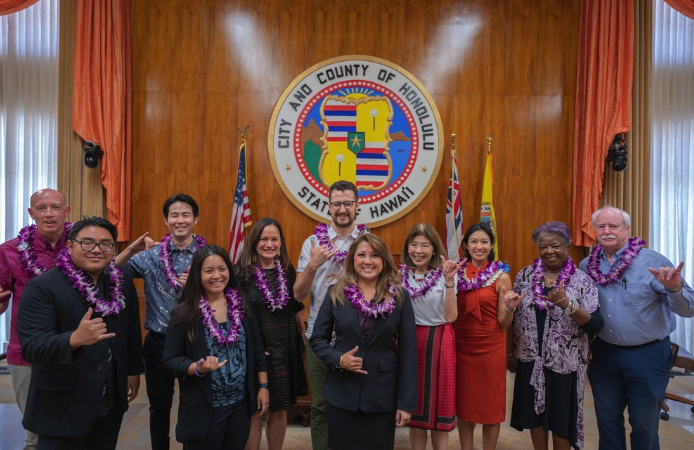
In the end, the glaring example of this year’s process is the failure of the commission to move forward any proposal to reform the Honolulu Police Commission, something that even the commissioners agreed is sorely needed. Although at least six thoughtful proposals were submitted to address problems — the makeup of the Police Commission, for instance, or bolstering its oversight authority — the Charter Commission picked the most complex proposal that would have created an entirely new and separate office to carry out misconduct investigations. The idea came with a high price tag and included hiring numerous new staff.
That was a problem that stopped enough commissioners from supporting it (a supermajority of nine out of 13 was needed to advance anything to the ballot), so at the last meeting after many other meetings and a year of opportunity to come up with something significant, voters will not be able to consider making an important change.
“Civilian police review is important and is necessary,” one commissioner said, pointing out the high costs to the taxpayers when the commission fails to provide strong oversight. “I don’t know that this is the way to do it.”
“Growing government” was a concern for the six commissioners who voted it down. Sigh. You’d think they would have spoken up about that so obvious element of the proposal sometime in the last eight months.
Another proposal that failed to make the cut but that commissioners generally agreed was necessary was expanding the number of City Council districts from nine to 11. During a couple of public discussions on this one over the past few months commissioners noted that Honolulu falls well short of the national average when it comes to the size of districts and the number of people that each council member presents — 109,000 voters in Honolulu vs. 76,000 on average in other cities of 1 million people, one commission member said at the last meeting.
But alas, the proposal fell flat after another commissioner pointed out that expanding the districts and reconfiguring the boundaries based on where Oʻahu’s population is growing the fastest would result in “a significant power concentration in one area of the island.”
Unsaid: The Westside would suddenly have some clout. More study is apparently needed on that one. It failed on a 5-7 vote.
Perhaps not too surprising since the Charter Commission is made up of people picked by the City Council and the mayor.
Fund drive: With the Aug. 8 primary nearly upon us, many candidates have been cramming in campaign fundraisers. Somebody’s got to pay for all those signs and mailers, right?
And it’s not just incumbents like Gov. Josh Green (running for reelection; he held two fundraisers in July) and Kauaʻi Mayor Derek Kawakami (running to be Green’s No. 2; he held four fundraisers).
A lot of people who are not in office but would like to be also passed the hat last month — more than two dozen, by The Blog’s count. They include former office holders like Trevor Ozawa (he’s running for the Honolulu City Council again), Ikaika Anderson (he’s running for the Office of Hawaiian Affairs this time) and Micah Aiu (he wants to take back his former state House seat).
There are also a lot of newcomers asking for kālā like Kahi Pacarro, Jake Morrow, Sne Patel, Janel Fujinaka and David Hazelbeck (all running for state House) as well as Tanya Yamanaka Aynessazian, Lynn Vasquez and Wallyn K. Christian (all running for state Senate).
Maui Mayor Richard Bissen held three fundraisers in July, state Sen. Donna Kim held two and freshmen House reps Daisy Hartsfield and Joe Gedeon held one each.
Here’s some insight from the latest campaign finance reports:
- Democrat Green has raised more than $3.5 million for his reelection. He also has nearly $2 million in cash on hand. Compare that to Cary Cordery, his likely Republican challenger in November, who raised about $300,000 and spent nearly all of that leading up to the primary.
- Democrat Kawakami has raised more than $900,000 in his bid for LG and has nearly $296,000 in cash remaining. Compare that to his two main primary challengers, state Rep. Della Au Belatti, who raised just $258,000 and spent most of it; and Honolulu attorney John Choi, who brought in a mere $32,500 and has about $9,000 remaining in cash.
- Maui County Councilwoman Yuki Lei Sugimura raised a total of $446,000 in her challenge to Mayor Richard Bissen, who raised $395,000. Assuming they are the top two finishers in the nonpartisan primary, they will face each other in the general election, where Sugimura will start the race with about three times the cash on hand as Bissen.
- Kauaʻi County Councilman Mel Rapozo raised a total of $170,000 in the race for mayor. His colleague on the council, Bernard Carvalho, was not far behind ($152,000) while Councilwoman Felicia Cowden raised around $36,000. The top two finishers will advance to the general, where Rapozo currently has about twice the cash on hand as Carvalho and Cowden has far less.
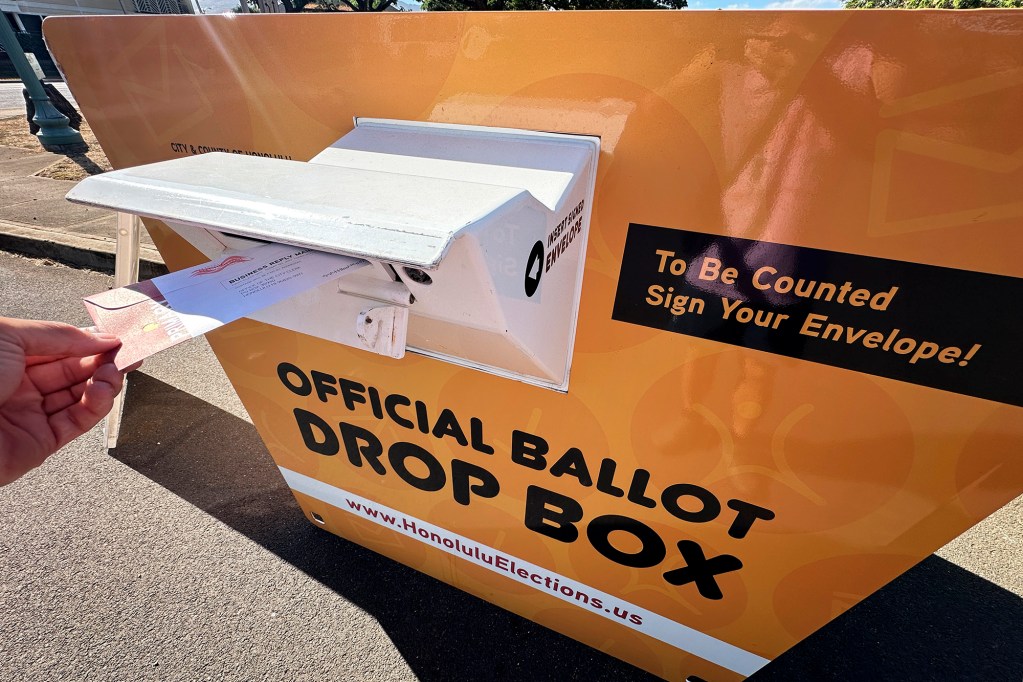
Snap, crackle, vote: Starting Monday, Pop-Up Voter Service Centers will be available for voters in the City and County of Honolulu — you know, the island where way too many people wait until the last minute to vote in the primary, making The Blog and other media and a whole lot of other people grouchy because they have to stay up after midnight to see who won and lost.
The two pop-ups are at Wahiawā District Park (Kilani Avenue side) and Kāneʻohe District Park, and they will be open 9 a.m. to 5 p.m. through Friday, Aug. 7. Voters are encouraged to bring a photo ID for the in-person services.
Full-time voter service centers, meantime, are at the Honolulu Hale Courtyard and Kapolei Hale and are open Monday through Saturday from 8 a.m. to 4:30 p.m. On primary election day, Saturday, Aug. 8, both locations will be open from 7 a.m. to 7 p.m. Contact the Honolulu Elections Division for more information.
For the neighbor islands, click on these links to find drop box and voting service center information: Hawaiʻi County, Maui County, Kauaʻi County.
Cushnie & McKay v. Nago: For a panel that has spent countless hours deliberating over all matters electoral, the Hawaiʻi Elections Commission has been awfully quiet of late. It has not met publicly since June 10 and there is still no chair for the nine-member panel.
Now, one of the commissioners, Ralph Cushnie, is pushing for answers. On Friday he emailed the commission reminding it that he and another commissioner, Tamara McKay, asked the Hawaiʻi Supreme Court last month to intervene in the commission’s operations.
The petition is titled Cushnie & McKay v. Nago. In essence, Cushnie and McKay accuse the Hawaiʻi Office of Elections of blocking the elections commission from meeting. (The commission oversees the office.)
The two commissioners want the high court to order the office to provide administrative support so the commission can resume doing its work, including the election of a new chair.
Cushnie and McKay are two of the four Republican legislative appointees to the elections commission. Both unsuccessfully applied for the position of chair in June.
“The case is pending a decision from the Hawaiʻi Supreme Court,” Cushnie said in an email to The Blog Friday. “No hearing date has been set as of this release.”
Ray Vega at the Elections Commission told The Blog that there was no update on the status of the commission, while Scott Nago at the Office of Elections had no comment on the dispute.
One other development: Jason Bryant of Kauaʻi, one of Sen. Brenton Awa’s two appointments to the commission, resigned July 21 — just a few weeks after his appointment to a four-year term. Awa has since named Makali‘i Pratt to the spot.
 Sign up for our FREE morning newsletter and face each day more informed.

Local reporting when you need it most
Support timely, accurate, independent journalism.
Honolulu Civil Beat is a nonprofit organization, and your donation helps us produce local reporting that serves all of Hawaii.
ContributeAbout the Author