Hawaiʻi Must Reframe Its Food Priorities
Growing more local crops is not enough. As climate risks mount, we need an integrated system of planning and investment in the foods that sustain us.
September 20, 2026 · 8 min read


About the Authors


Recent severe weather in Hawaiʻi reminds us how quickly our everyday networks of life can be disrupted. We depend on systems both local and worldwide that are being tested by extreme heat, wildfires, flooding, and other climate-related hazards.
For decades, conversations about Hawaiʻi’s food future have tended to revolve around the question: How can we grow more food locally? But recent events raise an increasingly urgent question: How well are our food systems prepared for a major disruption?
Local Food Is A Key Goal, But It Is Not Enough
Local food is not the same thing as household food security, and neither is it synonymous with a resilient food system.
Local food describes where food is produced. Household food security concerns whether people have reliable access to sufficient, safe and nutritious food. Food can be grown locally and remain inaccessible because it is exported, households cannot afford it, because the foods produced do not meet population needs, or because it doesn’t reach consumers.
Food-system resilience asks a larger question: Can the food system continue providing sufficient, appropriate food to all when confronted by natural disasters, economic shocks, infrastructure failures or supply-chain disruptions?
These vulnerabilities are distributed unequally. People who already have insecure sources of food and other vulnerabilities generally have fewer resources to absorb additional shocks. When disasters disrupt employment, housing, transportation, electricity and access to food, the disadvantaged suffer more than others.
More Production Doesn’t Equate To Food Security
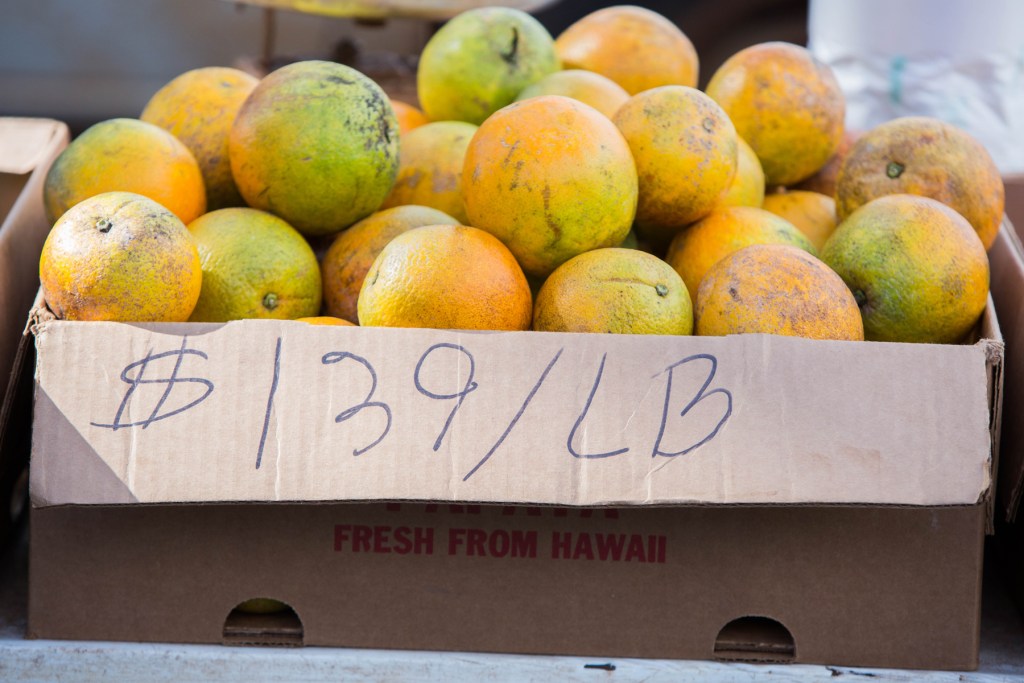
This distinction is particularly important in Hawaiʻi. Much of Hawaiʻi’s commercial agricultural production consists of exports, non-food products such as seed, nursery stock and fresh fruits and vegetables.
Fresh produce is essential to a healthy diet and, because of its relatively high economic value, can play an important role in supporting the livelihoods of our farmers. But increasing production of fresh fruits and vegetables alone will not provide the calories, protein, and nutritionally appropriate foods needed to reduce food insecurity or sustain Hawaiʻi’s population during an extended disruption to imported food supplies.

Ideas showcases stories, opinion and analysis about Hawaiʻi, from the state’s sharpest thinkers, to stretch our collective thinking about a problem or an issue. Email news@civilbeat.org to submit an idea or an essay.
A resilient food system therefore requires attention not simply to how much food is produced locally, but what foods are produced, for whom, and whether they can meet population-level nutritional needs under both normal and emergency conditions.
The bottom line: Doubling local food production would not, by itself, solve either chronic food insecurity in Hawaii or ensure food-system resilience in the case of a natural or human-caused disaster.
Hawaiʻi’s own Act 239 (2025) acknowledges that despite existing initiatives – including the state’s goal of doubling local food production – high rates of household food insecurity and significant structural barriers to local production remain.
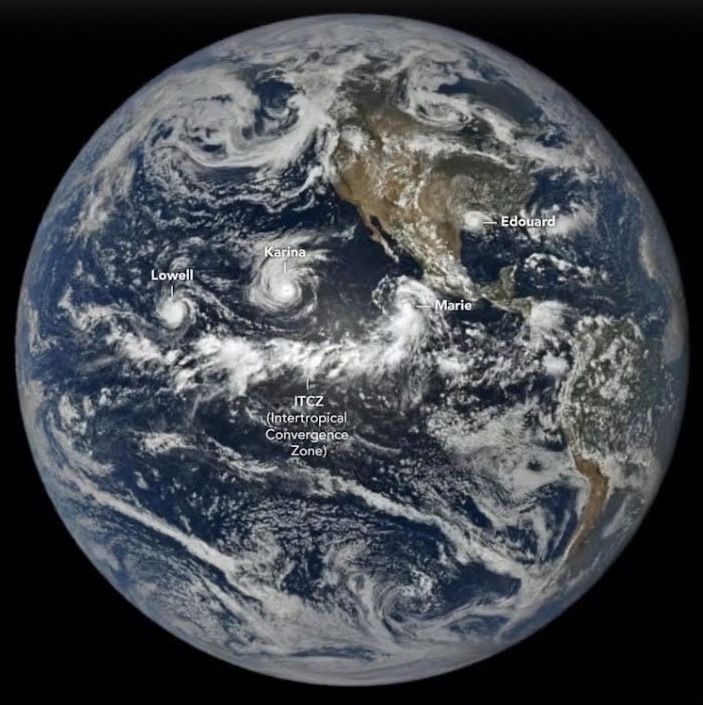
A severe hurricane makes the distinction very clear. High winds and rainfall can damage crops while simultaneously disrupting harvesting, transportation, refrigeration, electricity, water and communications. Hawaiʻi’s many small and dispersed farms add another challenge: surviving food crops must still be harvested, cleaned, processed, aggregated, stored, and transported before reaching affected communities. And, someone ultimately needs to pay for this food to keep Hawaii growers financially solvent.
Even important staple crops such as ʻulu, kalo and ʻuala are not emergency food reserves simply because they are growing in the Hawaiʻi’ landscape. For one thing, they require cooking. When electricity, potable water, roads, ports and fuel are disrupted, food crops can be physically present while remaining inaccessible or unusable.
Doubling food production in Hawaii is a production goal. Household food security and resilience are system outcomes. Achieving those outcomes requires integrated planning and sustained investment.
What Makes A Food System Resilient?
Our research points toward a different approach. A resilient food system has sufficient diversity, redundancy, reserves, connectivity and coordination, adaptive capacity, equity, and robust and distributed infrastructure to continue feeding people when parts of the system fail. Our recent work emphasizes planning, governance, coordination, infrastructure and cross-sector collaboration as critical to protecting food security under growing climate and disaster pressures.
In practice, resilience means investing in diversity, reserves and alternatives before they are needed: diverse local production; nutrient-dense, shelf-stable staple food reserves; multiple supply and distribution routes; distributed storage, processing and refrigeration; and prepositioned emergency food in vulnerable communities.
It means bringing the private sector – the many local businesses that keep Hawaiʻi fed 24/7 – directly into preparedness and response planning. It also means strengthening household and community preparedness and addressing chronic food insecurity so vulnerable households can better withstand disruptions. Together, these plans and investments build the capacity to adapt rather than improvise after disaster strikes.

Building these capacities means strengthening not only food production, but the systems around it: food hubs and aggregation; diversifying local and external supply chains; expanding distributed processing and storage; maintaining rotating reserves of calorie-and protein-dense foods; providing redundant transportation and backup water and energy; and strengthening coordination among government, businesses and communities.
To add to the complexity, we cannot talk about resilience without considering social equity. A food system cannot reasonably be called resilient if it continues functioning while adding risk and harm to those already experiencing food insecurity, poor diet quality, malnutrition, and associated health problems. Resilience must consider who can access food, whether it is nutritionally adequate, and whether the system reduces rather than compounds disparities in nutrition and public health.
As the saying goes: “You can’t fix your roof in the rain.” Resilience must be built before disaster strikes – through planning, investment, and preparedness.
From Farms To Food Systems
The investments needed extend far beyond agriculture. Food systems intersect with public health, land and water, transportation, energy, economic development, emergency management and social policy.
Hawaiʻi therefore needs an ongoing planning process that asks not simply how much local food we can produce, but what outcomes we need our food system to achieve: health and nutrition, food security and affordability, restoration of traditional food ways, viable agriculture, equity, environmental sustainability and resilience.
The Integrated State Food Policy Framework for Hawaiʻi provides a foundation for connecting these goals to policy and investment. Act 239 (2025) provides another, advancing a statewide, interagency food-system plan and strategy that complements city and county-level food-system planning.
This movement extends well beyond Hawaiʻi. Our research supporting a National Community of Practice on Statewide and Regional Food Systems Plans reflects growing efforts across the United States to coordinate state and regional food-system planning. Our recent Resilient by Design work across Pacific Island food systems reaches a complementary conclusion: interconnected climate, economic, biosecurity and supply-chain risks cannot be effectively addressed one sector at a time.
Building The Capacity to Act
The University of Hawaiʻi can play an important supporting role. As Hawaiʻi’s public university system, UH can provide research and data, policy analysis, education and workforce development, evaluation, and sustained capacity for collaboration across sectors. This can help provide a data-driven, 3rd-party assessment of policies and priorities, help communicate potential impact to the public, and, conversely, gather public input and interpretations in formal ways that can be aggregated for policy-makers.
The Ke Ō Mau Center was created specifically as a UH System initiative integrating research and education, planning and policy analysis, and community development around a healthy, equitable, resilient and sustainable food system. Its Transforming Hawaiʻi’s Food System Together initiative (THFST) is already working across multiple fronts detailed in this essay. Recent UH-led summits have brought together hundreds of representatives from government, agriculture, business and community organizations around these challenges.
The state government must provide leadership and accountability, while producers, communities, Native Hawaiian practitioners, businesses and other food-system actors shape priorities and implementation. UH, Ke Ō Mau and THFST can provide durable research, convening, educational and technical capacity to support that public process.
The challenge now is moving from goals and coordination toward planning, investment and implementation.
Hawaiʻi should continue increasing local food production. But we should stop treating increased production as a proxy for food security or resilience.
 Sign up for our FREE morning newsletter and face each day more informed.
Read this next:

Local reporting when you need it most
Support timely, accurate, independent journalism.
Honolulu Civil Beat is a nonprofit organization, and your donation helps us produce local reporting that serves all of Hawaii.
ContributeAbout the Authors