Hawaiʻi Should Remember The Injustice Of Forced Unionism
This Labor Day workers deserve the protection of a Right to Work law.
September 7, 2026 · 4 min read

About the Author

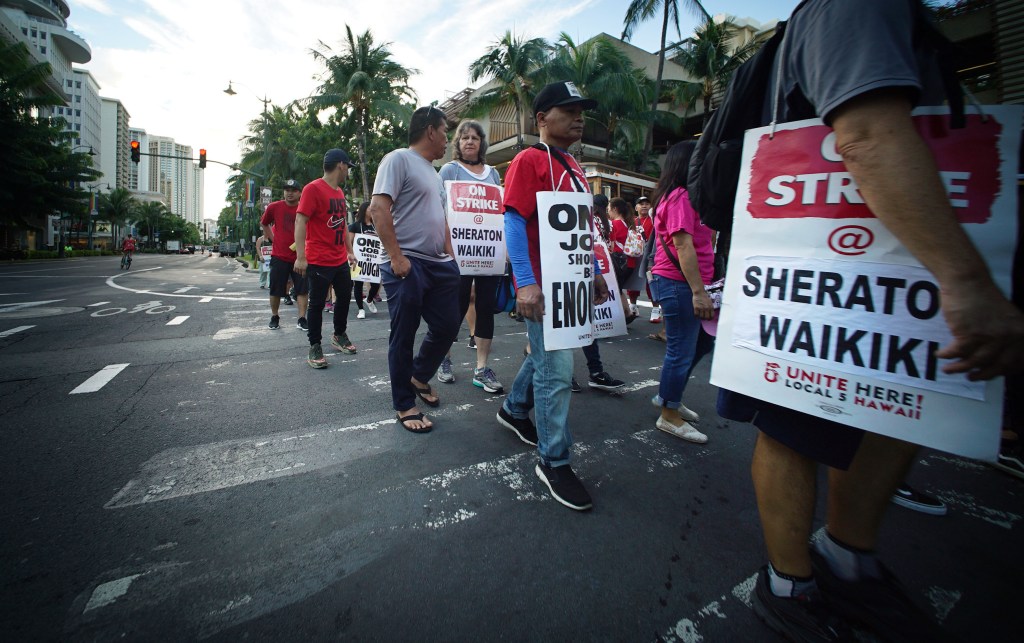
This Labor Day we celebrate the men and women whose hard work keeps the country running. But in Hawaiʻi, many of those same workers face a real threat: pay union dues or lose their jobs.
That’s because Hawaiʻi is one of the minority of states that lacks a Right to Work law. Right to Work laws ensure union membership and financial support are fully voluntary, meaning workers are free to join and pay dues to a union if they choose, but it cannot be mandatory.
In contrast, an employee in Hawaiʻi may oppose unionization, but still can be fired if they refuse to fund the union.
If you think this sounds unjust, you’re in good company. For years polls have consistently shown that 8 in 10 Americans believe union membership and dues payment should be strictly voluntary.

Ideas showcases stories, opinion and analysis about Hawaiʻi, from the state’s sharpest thinkers, to stretch our collective thinking about a problem or an issue. Email news@civilbeat.org to submit an idea or an essay.
Those who see unions up close every day agree too. In a national poll conducted before the 2024 election, 79% of current union members said they agreed with the statement: “Workers should never be forced to join a union or pay dues to a union as a condition of employment.”
Fortunately, state employees in Hawaiʻi and across the country have enjoyed Right to Work protections since the 2018 Janus v. AFSCME U.S. Supreme Court decision. In that case, the high court ruled in favor of Mark Janus and his National Right to Work Foundation attorney who argued the case, finding that the First Amendment protects individuals from being forced to fund union activities as a condition of working for the government.
But unfortunately, those who work in Hawaiʻi’s private sector can still be forced to pay money to union bosses or be fired. This not only denies individual workers the basic freedom to decide for themselves whether union officials deserve their financial support, but granting union bosses such coercion over employees also undermines economic growth and opportunity in Hawaiʻi.
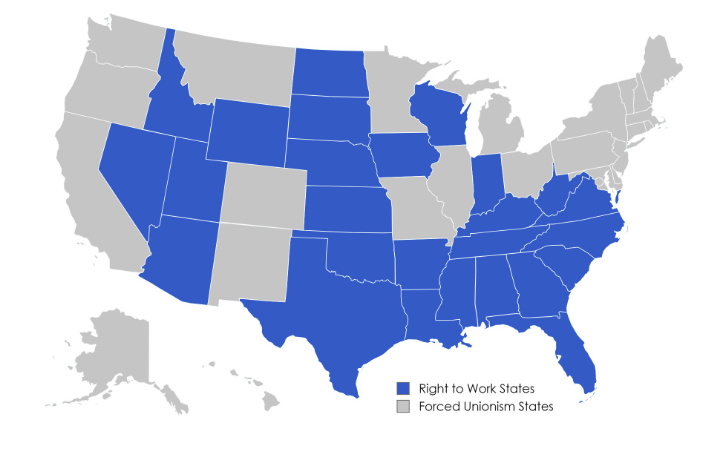
According to a recent National Institute for Labor Relations Research analysis of government economic data, from 2015 to 2025 the percentage growth in the number of people employed in Right to Work states was almost three times that of forced-unionism states like Hawaiʻi. Over those same years, Right to Work states saw a 7.7% overall increase in manufacturing payroll employment, while forced-unionism states suffered a 2.9% decline in factory payrolls.
The NILRR report also found that the rate of dependency on federal welfare (Temporary Aid to Needy Families) is nearly five times higher in forced-unionism states than in Right to Work states. Also as a share of population, there are fewer than half as many authorizations for new single family housing construction in forced-dues states as in Right to Work states.
Moreover, after adjusting for regional differences in cost-of-living, residents of Right to Work states had roughly $3,500 more in disposable income per capita in 2025 than those in states that lack Right to Work laws.
The economic benefits of Right to Work speak for themselves, but this isn’t just about boosting the economy. At their core, Right to Work laws protect and empower worker freedom, giving individual workers a tool to hold the union accountable: when union officials fail to advance a worker’s interests, they risk losing the worker’s financial support.
Right to Work laws don’t outlaw labor unions, nor do they prevent anyone from joining one.
They simply codify a popular, commonsense principle: Every worker should have the choice to decide whether or not to join and fund a labor union.
This Labor Day, take a moment to reflect on the injustices that workers in Hawaiʻi might be up against every day. Consider how Right to Work laws would not only protect their choice over whether or not to join and fund a labor union, but also boost economic growth and opportunity.
This Labor Day Hawaiʻi workers deserve more than just our appreciation, they deserve the protection of a Right to Work law.
 Sign up for our FREE morning newsletter and face each day more informed.
Community Voices aims to encourage broad discussion on many topics of community interest. It’s kind of a cross between Letters to the Editor and op-eds. This is your space to talk about important issues or interesting people who are making a difference in our world. Column lengths should be no more than 800 words and we need a photo of the author and a bio. We welcome video commentary and other multimedia formats. Send to news@civilbeat.org. The opinions and information expressed in Community Voices are solely those of the authors and not Civil Beat.
Read this next:

Local reporting when you need it most
Support timely, accurate, independent journalism.
Honolulu Civil Beat is a nonprofit organization, and your donation helps us produce local reporting that serves all of Hawaii.
ContributeAbout the Author