Honolulu Streams Need More Than Flood Fixes
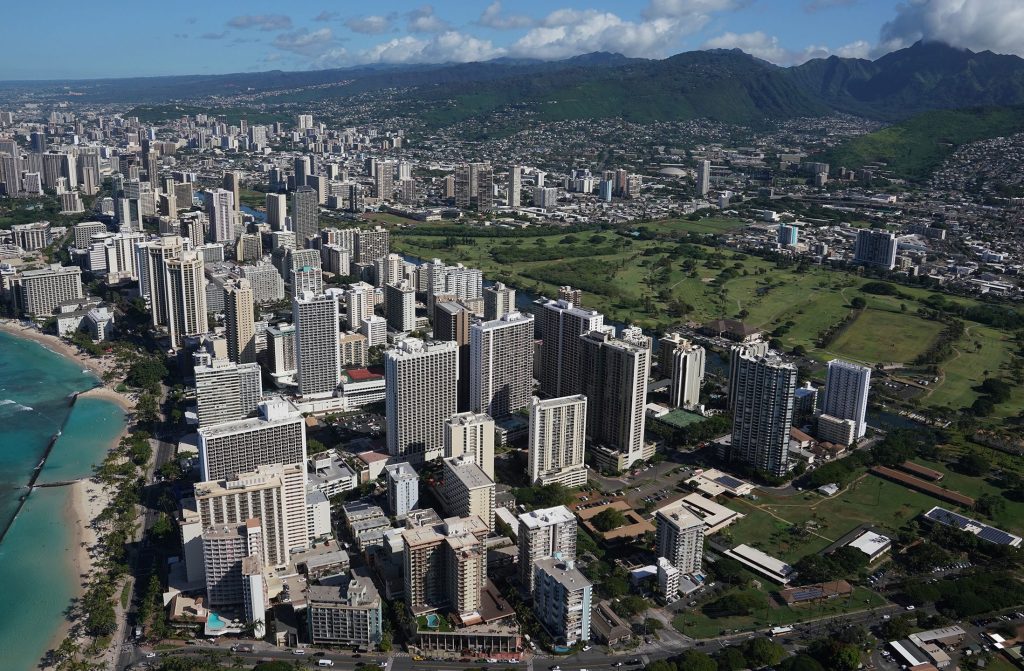
What’s needed in the Ala Wai watershed is a grand vision for flood control, public access, water quality, habitat and scenic splendor.
September 25, 2026 · 7 min read

About the Author
As I write, yet another sopping cloudburst stalks Honolulu’s green valleys. Gray driving rain lashes the green scalloped trapezoid of Pu‘u Lanihuli in Nu‘uanu, recalling the soothing melodies of the Hawaiian bard, Manu Boyd, while mist cloaks the upper Mānoa Valley.
The nature writer Annie Dillard, who died earlier this month, wrote that “[n]ature’s silence is its one remark.”
While rains can fall silently, many of these downpours unpleasantly recall this year’s property-damaging floods, and those of 2004.
Civil Beat has featured dozens of articles relating to Mānoa Stream problems over the years, but it’s a very different ghost of the past that commands my attention. The innovative and ubiquitous architect Frank Gehry, who died last winter, had a lot to say about management of watersheds – or at least one, the Los Angeles River. To advance his plans, he spent a considerable amount of his own money and dwindling final years.
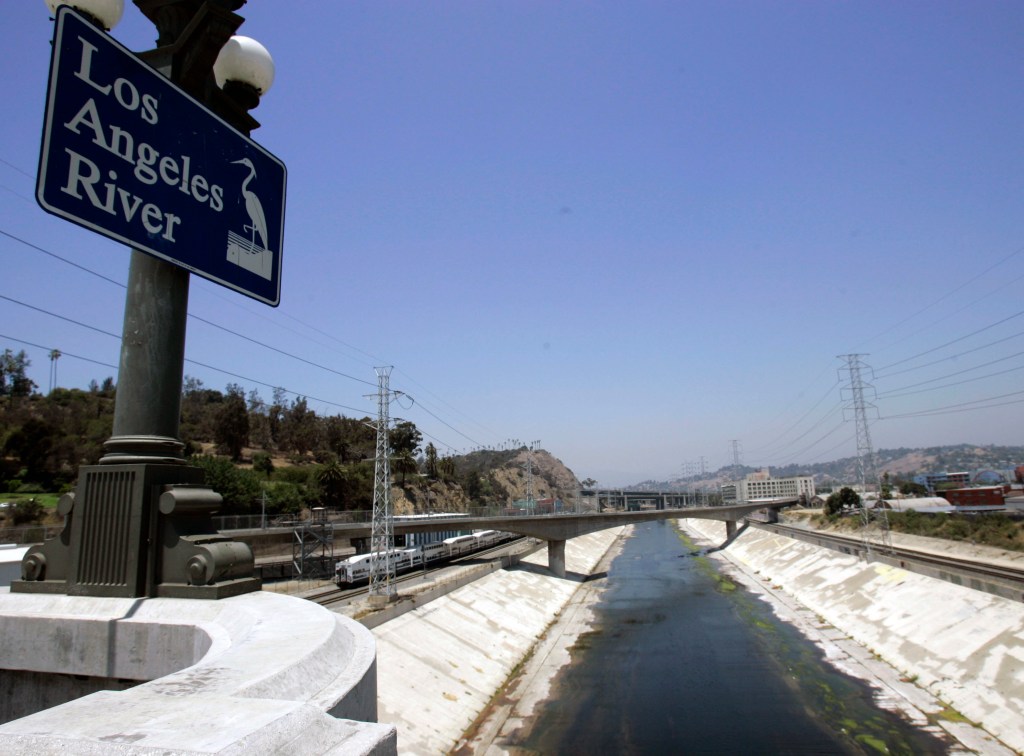
Movies such as Chinatown, Grease and Terminator 2: Judgement Day leave the impression that the Los Angeles River is mostly an empty, squalid concrete channel, utilized only by a filthy trickle of water, rather than a biodiverse river.
Gehry saw a legacy of environmental injustice there, and lost scenic grandeur. He also foresaw its second transformation to “uplift the profiles of Southern California’s poorest, most densely crowded communities along the backbone of the county’s flood-control system,” as Louis Sahagún wrote in the Los Angeles Times.
Bridge-like platforms would restore access to the stream side for residents, while a $150 million cultural center would connect neighborhoods with “dance, painting, culinary arts, ceramics, photography and filmmaking.” Some of Gehry’s ideas offend me as an environmentalist. But to say the least, his plan was ambitious.
What Gehry envisioned for his own backyard has applications for Honolulu, particularly the Ala Wai Watershed.
‘Disjointed incrementalism’ has gotten us nowhere
Gehry’s grandiosity might strike one as wildly out-of-touch in Honolulu. But there’s more in common between Honolulu and L.A. than it seems. In both cities, real estate and the automobile industry dominated planning decisions for decades.
The technical term for Hawaiʻi’s neglectful framework for urban planning (which I wrote about in 2019) is called “disjointed incrementalism.” Problems here are usually dealt with reactively, and not proactively, let alone comprehensively.
If you read the Primary Urban Center Development Plan (PUCDP) Update (and its Natural Resources white paper) and the Board of Water Supply’s Ala Wai Watershed Plan and the work of the new Ala Wai Watershed Collaboration, you will find lots of good information and initiative. None of it tells us how the entire ‘rivershed,’ mauka to makai, should look and be experienced on a daily basis.

Ideas showcases stories, opinion and analysis about Hawaiʻi, from the state’s sharpest thinkers, to stretch our collective thinking about a problem or an issue. Email news@civilbeat.org to submit an idea or an essay.
For decades, the Ala Wai Watershed – from mauka (Makiki, Mānoa, Pālolo) to makai (Kaimukī, McCully-Mōʻiliʻili, Ala Moana, Waikīkī) – has faced a logjam of environmental and social problems. Residents suffer flooding. Bureaucrats engineer proposals. Activists oppose solutions. Politicians split the difference, a particularly oily custom called ‘satisficing.’
For all that powerbrokers offer nods to Hawaiian culture and its emphasis on the sacred wealth of wai, they typically treat Honolulu’s streams as adversaries. Water is diverted. Water is concealed. Water is taken. Far less often is it welcomed, celebrated, and shared. Not in the concrete channels of the upper valleys. Nor in the grassy Mānoa-Pālolo drainage canal.
Grand Plan Needed For Ali Wai
What’s needed is a long-term vision for our waterways, not more incrementalism, which has left us with a turgid, odorous and toxic waterway, missing half of its natural outflow.
Decades ago, the work of the now-defunct Ala Wai Watershed Association and advocates – including Karen Ah Mai, Tom Heinrich and Lynette Cruz – culminated in a greenway path adjacent to Kaimukī High School on the Diamond Head side of the Mānoa-Pālolo drainage canal. I used to live nearby.
What I’m calling for is the largeness of heart for Honolulu’s leaders to attempt to connect that civic improvement down to Waikīkī, and up to Kānewai Park by the University of Hawaiʻi at Mānoa. And, eventually, for the main waterways in Mānoa and Pālolo Valleys to be fully-connected greenways for walking, biking, and even getting to school and work.
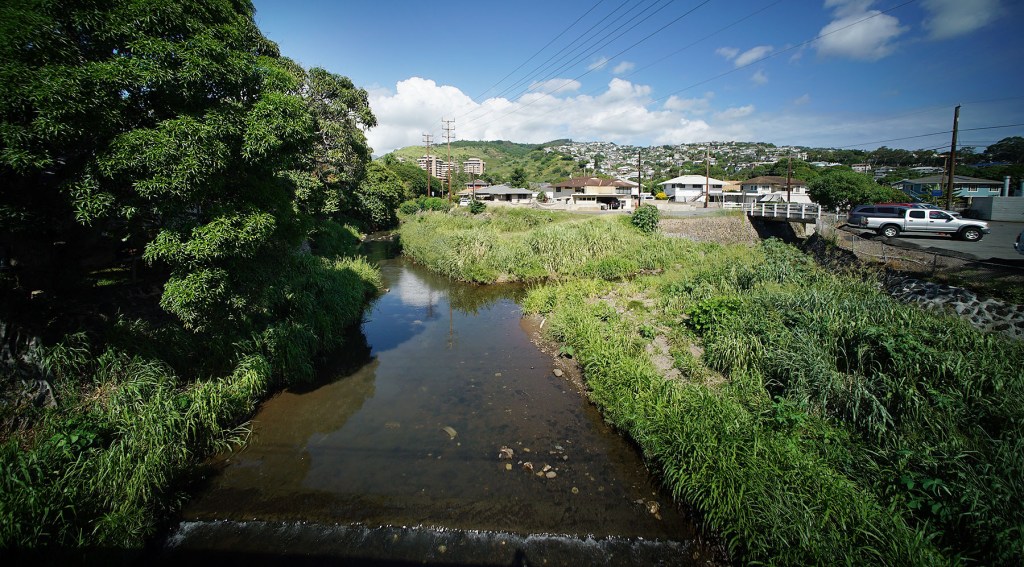
As with the L.A. River, this vision is not intended for fulfillment within a few years, and indeed, may never achieve total fruition. It likely requires eminent domain. But far more frequently it would entail easements and exactions from private owners and developers.
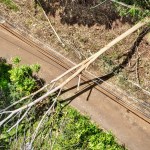
Currently, property owners are responsible for much of our stream maintenance. This is neither fair to residents, nor effective. A pedestrian bridge that connected streets on either side of Mānoa stream has, since destruction in the 2004 flood, lain in chunks within privately owned waterway, obstructing stream flow.
A far less prosperous city named Tigard in Oregon became known to planners over an infamous land use case about a stream-side greenway and private land. The Supreme Court had to intervene. Now, Tigard has a stupendous network of greenways connecting to an even larger one in Beaverton.
Seize This Wahi Pana Moment
As the PUCDP Natural Resources paper said, Honolulu’s “network of streets, shorelines, and streams can become linear extensions of parks by enhancing them with landscaping, special paving, and other features to support and promote recreational walking, jogging, and bicycling.” And, as the legendary planner Kevin Lynch wrote, “access is the prerequisite to using any space.”
Access from mauka to makai would, deploying Lynch’s terms, allow residents to enter greenways at defined “nodes” with descriptive and interpretive signage, following “paths” that connect the watershed’s “landmarks” with “districts” outdoor rooms or regions, and defined “edges” that juxtapose nature and urban from constantly shifting perspectives and in new parks.
There is no good reason that residents of one of the world’s most beautiful destinations should have to drive a car or spend considerable time escaping their own community to find a sense of peaceful quiet or connectivity to nature, including native plants and native birds.
“Access is the prerequisite to using any space.”
Kevin Lynch, American urban planner
I was thoroughly dispirited by a recent environmental advocacy meeting being yet again dominated by enthusiasm for the latest fad of electric vehicles. If anyone believes more cars are the answer to either climate change or Honolulu’s problems, I invite them to stand at the intersection of Kīlauea Avenue and Waiʻalae Avenue, by Kahala Mall, and see how long they can put up with it.
A great vision for our people’s streams cannot ignore climate change or Honolulu’s transportation-dictated development pattern, but nor should it cower before such zombies.
Here, the words of the pioneering planner Daniel Burnham seem best. “Make no little plans; they have no magic to stir mens’ blood and probably themselves will not be realized. Make big plans; aim high in hope and work, remembering that a noble, logical diagram once recorded will never die, but long after we are gone will be a living thing, asserting itself with ever-growing insistency.”
It’s time for Honolulu to develop alternatives for how the water crosses the unfolding land, and how we cross with it – for health, for pleasure and to realize the potential of a storied place, a wahi pana.
 Sign up for our FREE morning newsletter and face each day more informed.
Read this next:
Local reporting when you need it most
Support timely, accurate, independent journalism.
Honolulu Civil Beat is a nonprofit organization, and your donation helps us produce local reporting that serves all of Hawaii.
ContributeAbout the Author