Olin Lagon: The Kalihi Street That Helped Rebuild A Country
We pass extraordinary stories every day without seeing them. This one was hiding in a name.
September 10, 2026 · 6 min read


About the Author
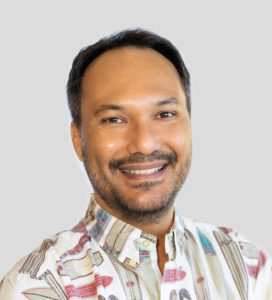
Not long ago I asked a kūpuna who grew up in Kalihi Valley what Kula Kōlea means. She busted out a warm smile, like I had asked her an easy question. The bird, of course. Everyone knows the kōlea. She had lived near that street since small kid time.
She was wrong. Sort of. And what she got wrong turns out to be a story I had missed my whole life, even though I grew up inside it.
I think of it as name blindness. We say place names out loud every day. We type them into address fields. We give them to strangers asking for directions. Somewhere along the way we stopped wondering what they mean.
Her answer was a good one, though. If any bird deserves a street, it is this one.
The kōlea is one of the toughest athletes on Earth. The chicks hatch on the tundra of Alaska and Siberia and their parents leave them behind after just a few weeks. When they are barely two months old, they take off toward a winter home they have never visited.
Kōlea are not built to glide and they cannot even rest on the water. They flap nonstop for about four days and nights, covering more than 3,000 miles. The ones that survive burn that exact location deep inside them. They come back to the same stretch of grass, year after year, sometimes for two decades. My buddy Gary loves posting when the kōlea he has gotten to know return to the same schoolyard.

So a Kalihi neighborhood named for this endurance athlete makes perfect sense. Except for one problem: Kula means school. Why would anyone build a school for the kōlea?
That’s because Kula Kōlea was never about the bird.
In the early 1990s I studied abroad in South Korea. One of my stops was the Samsung Advanced Institute of Technology. Samsung was not yet a global powerhouse, but the engineers in that room were certain they would out engineer the Japanese giants. One of them told me they were close to taking over the computer memory market. I looked at the numbers back then and I would not have bet on Samsung. Boy was I wrong.
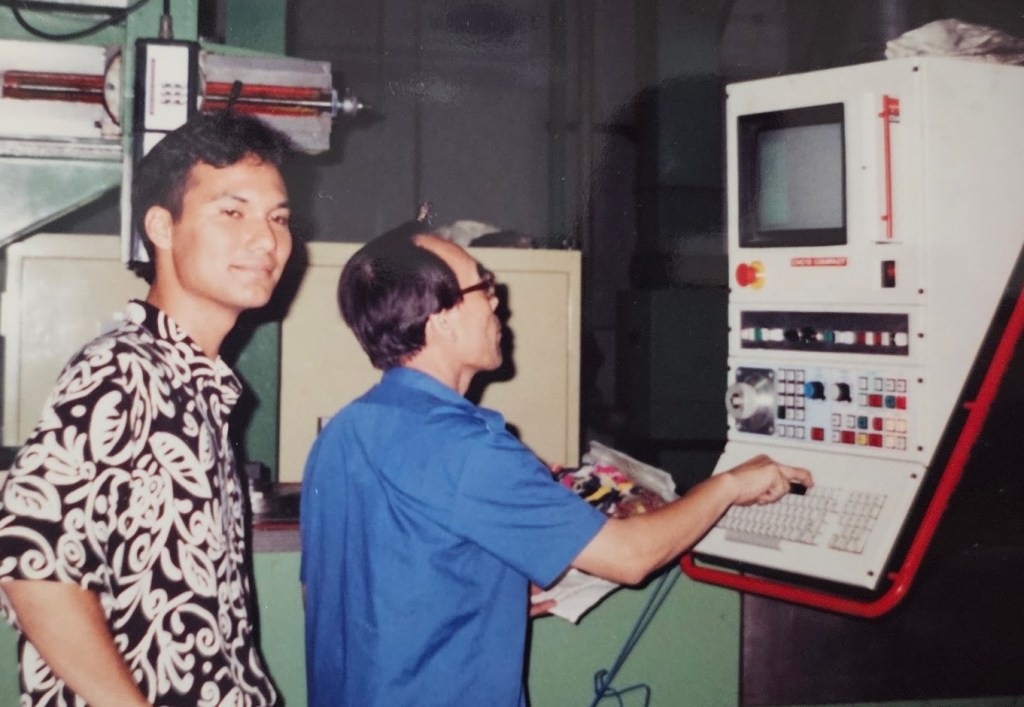
Some of the engineers around me were graduates of Inha University, sometimes called Korea’s MIT. I had no clue at the time, but that school pointed straight back to Kalihi. It even carried my homeland in its name. Nobody in Korea made the connection either. I was standing in a room full of brilliant people, all of us blind to the same name.
Kōlea is also the Hawaiian word for Korean. Kula Kōlea means Korean school.
How did a Korean school end up in Kalihi? We have to go back to 1903, when a ship arrived in Honolulu carrying about a hundred Koreans who came to work the cane fields. About 7,000 arrived over the next two years. Then the door slammed shut. Had it stayed open, I imagine far more Koreans would have made Hawaiʻi home.
Japan slammed it. Fresh off defeating Russia in 1905, Japan seized control of Korea’s foreign affairs and made the country a protectorate. One of its early moves was halting Korean emigration, in part because planters here had begun hiring Koreans to compete with Japanese laborers striking for better pay. Tokyo wanted that leverage gone. The takeover came in stages, and by 1910 Japan had forced Korea under complete colonial rule.
Some in the local Korean community believed their country’s lack of educational opportunities had helped cost them their nation. A Korean exile here named Syngman Rhee stepped up to change that. He raised money to open schools for the keiki of those plantation workers, and his Korean Christian Institute eventually sat on 24 acres in Kalihi, land the immigrant community bought with plantation savings.
Many of these workers earned about a dollar a day. A buck and they still donated to create a school for their kids. The institute educated generations of keiki. Then Korea was liberated in 1945, the school’s purpose was fulfilled, and in 1947 it closed, and the land was sold.

Korea came out of war decimated and desperate for engineers. Rhee, the builder of that Kalihi school, had become South Korea’s first, though deeply divisive, president. But he did not forget his Hawaiʻi roots or his educational ones. In 1952 he proposed a technical school modeled after MIT to grow the talent his country needed. The proceeds from the Kalihi land, along with donations from Korean families in Hawaiʻi and supporters in Korea, crossed the Pacific to build it. The school opened in Incheon in 1954, and its name connected the two shores that made it possible. INcheon plus HAwaiʻi. Inha.
Inha University now enrolls nearly 19,000 students and has long been one of South Korea’s top engineering schools. Its graduates helped rebuild an entire country. A dollar a day and Kalihi ʻāina helped light that fire. Seven decades and some 190,000 graduates later, the school is still at it.

Ideas showcases stories, opinion and analysis about Hawaiʻi, from the state’s sharpest thinkers, to stretch our collective thinking about a problem or an issue. Email news@civilbeat.org to submit an idea or an essay.
Whoever named that street could have called it anything. Their own ʻohana, even. This moʻolelo could have been lost. Instead they chose Kula Kōlea and left a message for the rest of us.
Inha is sustained today by the foundation of the Hanjin Group, the company behind Korean Air, which means every flight lifting off from Honolulu for Incheon retraces the same 4,500 miles those plantation dollars once crossed. The Inha Hawaiʻi connection is far from over.
That is the thing about name blindness. The cure is curiosity. Pick a name. The street you live on. The valley behind your house. That story is waiting for you.
I never caught her name. But the more I thought about it, the more I realized how close she was to the truth. There were two migrants, both crossing the same ocean, both facing a journey that could have easily broken them. Both gathered everything they could from a distant shore, carried it across the water, and invested all of it in a homeland their children had never seen. She pictured feathers. The other half of the story wore cane field boots.
 Sign up for our FREE morning newsletter and face each day more informed.
Read this next:

Local reporting when you need it most
Support timely, accurate, independent journalism.
Honolulu Civil Beat is a nonprofit organization, and your donation helps us produce local reporting that serves all of Hawaii.
ContributeAbout the Author