Were Spanish Explorers In Hawai‘i Before Captain Cook?
Debate rages on who showed up on the islands after the first Polynesians landed. Japanese fishermen? Spanish shipwreck survivors?
September 18, 2026 · 9 min read

About the Author

A new book in Hawaiʻi and new research from Spain have reopened an old debate: After the Polynesians arrived in waves of immigration and took possession of the Hawaiian Islands, which people showed up next?
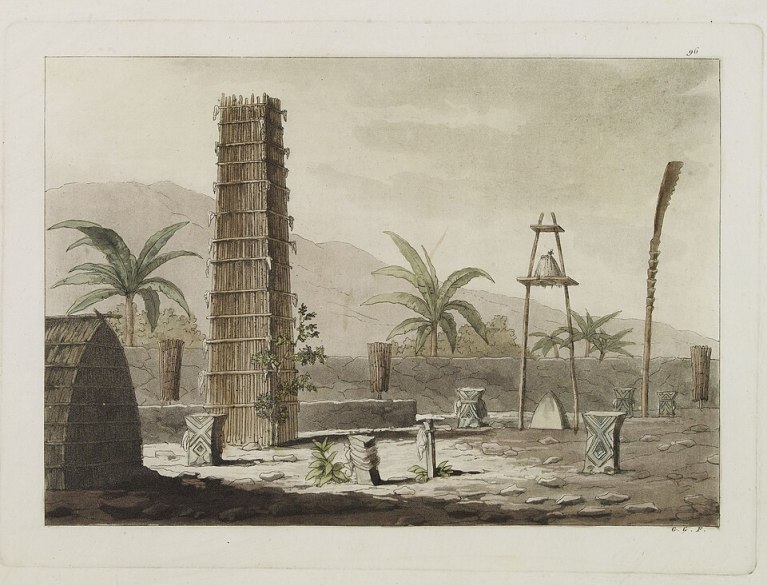
The Hawaiians have long believed that Japanese fishermen and Spanish shipwreck survivors had previously visited, intermarrying with local people. They spoke of blue-eyed people living in Waimānalo and a group of fair-skinned people on Hawaiʻi island. Hawaiian King David Kalākaua wrote in 1888 that it “had been pretty satisfactorily established” that a Spanish galleon arrived as early as 1555.
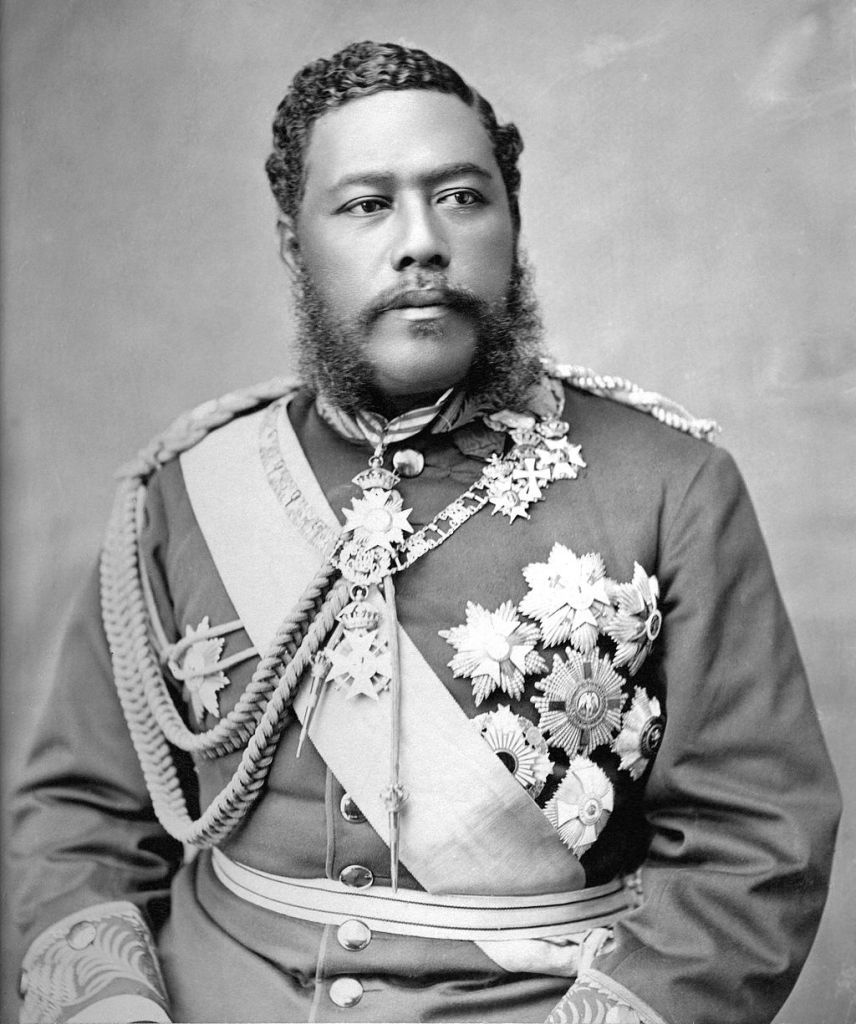
Some Spanish maps from the 1500s have shown a cluster of islands that look remarkably like the Hawaiian archipelago, although the maps do not have the location exactly correct. One particular map, Maris Pacifici, dated 1589, depicts a string of islands, named Los Bolcanes and La Farfana, to the west of North America, halfway to Asia.
Yosihiko Sinoto, the late archaeologist for Bishop Museum, said he believed that Japanese fishing ships had gone astray and found their way to the islands, introducing some uniquely Asian cultural objects. In addition, Bishop Museum holds a burial container from the 16th Century containing woven cloth that predated Capt. James Cook, whose first visit to Hawaiʻi was in 1778. The Spanish almost certainly visited, said Sinoto in interviews that became part of a book on his research, “Curve of the Hook.”
“Given that Spanish vessels were coming and going in the Pacific for centuries, it seems improbable that none landed in Hawaiʻi,” Sinoto told an interviewer for the book.
Found objects, such as iron, can signify an island was visited by one of the early European voyagers. There are many accounts of iron found in Hawaiʻi, but much of it may have simply drifted to the islands attached to floating wooden debris.
Anglophiles, on the other hand, have tended to defend the claim of Cook, who presented himself as a discoverer in 1778 in his ship journal, describing what happened when Hawaiians first clambered aboard his ship.
“I never saw Indians so much astonished at the entering of a ship before, their eyes were continually flying from object to object … evinced that they had never been on board of a ship before,” he wrote in his journal, according to New Zealand historian John C. Beaglehole, who compiled information from the original unpublished manuscripts in British archives.
Embellishment In The Name Of Expansionism
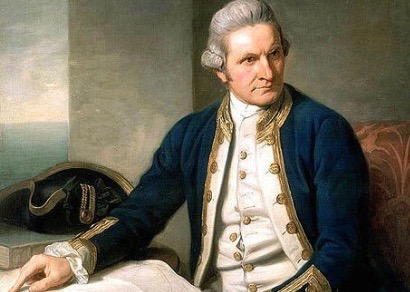
It was advantageous for Cook to describe the encounter in this way because, back in 1492, Europeans had established the concept of claiming lands if they were the first white men to set their foot upon them. And publishing their version of Cook’s posthumous journal was politically vital to the quickly-expanding British empire, whose leaders had their eyes on lands throughout the Pacific, most notably Australia and the Pacific Northwest.
The odd idea of broad territorial claims had been seized upon by Queen Isabella of Castile when she sent Christopher Columbus west in search of the Indies and he instead encountered inhabited islands in the Caribbean. The pope at the time, Rodrigo Borgia, Alexander VI, who had been born a Spanish subject, dutifully ruled that Castile owned those islands and in fact all the Americas, though he gave one portion of the lands, which became Brazil, to the Portuguese.
Cook had stretched the truth, and the British government decided to stretch it even further. Two leading imperialists, Lord Sandwich, who had been First Lord of the Admiralty, and Australian colonizer Sir Joseph Banks prepared Cook’s journal for publication, depicting it as the captain’s own words. In reality the publication was a group effort, funded by the British government and carefully crafted to advance their desired goals of seizing lands abroad, particularly from their arch-rivals, Spain.
In the government-authorized version, the novelty of Cook’s “discovery” is made much more explicit.
“None of the inhabitants we ever met with before in any other island or country, were so astonished as these people were, upon entering a ship,” this new account declared. “Their eyes were incessantly roving from one object to another; and the wildness of their looks and gestures, fully indicated their perfect ignorance with respect to everything they saw; and strongly marked to us, that they had never, till the present time, been visited by Europeans, nor been acquainted with any of our commodities, except iron.”
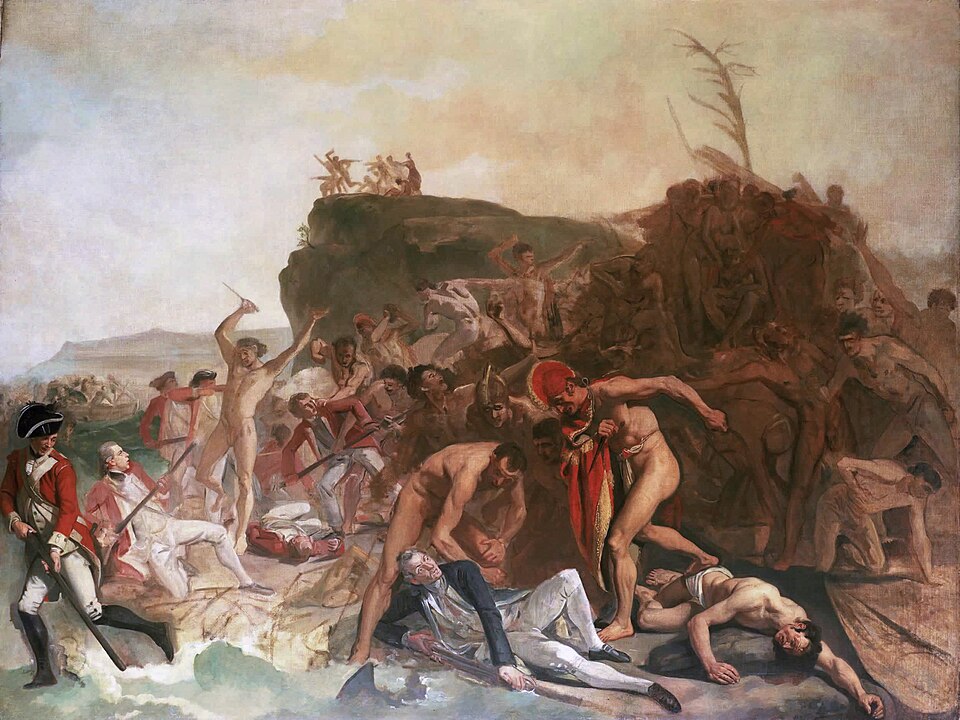
This book, “A Voyage to the Pacific Ocean by Command of His Majesty,” published in 1784, quickly became a popular bestseller, published and republished, translated into various languages, and viewed as gospel truth. For the next 250 years, armchair historians would cite it as a near-holy writ, quoting from it in particular when Hawaiians or people from other countries reported alternate sets of facts.
Even the British, however, were soon backpedaling on their claims of discovery. Maritime scholar James Burney, a ship’s officer who had traveled with Cook to Hawaiʻi, made it clear he believed the Spanish had at least seen Hawaiʻi island, which they called La Mesa, before the British, and had placed the islands on their maps, though at the wrong longitude.

Ideas showcases stories, opinion and analysis about Hawaiʻi, from the state’s sharpest thinkers, to stretch our collective thinking about a problem or an issue. Email news@civilbeat.org to submit an idea or an essay.
There’s “little reason to doubt the identity of La Mesa and Owhyhee,” Burney wrote in 1817 in his “Chronological History of the Voyages and Discoveries in the South Seas.” He also mentioned Lord Anson, who had captured a Spanish galleon in 1743 containing maps that Spain had withheld from the world as trade secrets. Burney, who became a rear admiral, was almost certainly privy to maps held by the British Admiralty that Anson had obtained from the Spanish.
Did Spanish Mess Up Maps On Purpose?
On the other hand, a new book, “In Search of First Contact: An Examination of Possible Pre-Cook European Voyages to Hawaiʻi,” written by Gordon B. Joyce, former chief ranger of the Puʻuhonua o Hōnaunau (Place of Refuge) National Historical Park, reviews the evidence and comes down firmly on the side of Cook.
Joyce revives a 100-year-old scholarship by Swedish historian Erik Wilhelm Dahlgren and ethnologist John F. G. Stokes to examine the question. Dahlgreen studied all the available Spanish maps of the era, Joyce reports, and found them incorrect or imprecise, suggesting the Spanish had instead misidentified the Ladrones Islands, now known as the Marianas.

“No historical fact proves, nor is there any sort of probability, that the Hawaiian islands were ever visited, or even seen, by the Spaniards before their discovery by Captain Cook in 1778,” Dahlgren wrote, according to Stokes, who cited him in delivering his own refutation of any prior claim before Cook’s arrival. Stokes, who lived in the islands, published his findings in a paper delivered to the Hawaiian Historical Society in 1938, citing also local Anglican Bishop H. B. Restarick, the society’s president.
It’s worth noting here that Stokes, an Australian, and Restarick, who was born in England, seemed inordinately fond of discounting any Hawaiian accounts that cast Cook in an unfavorable light. Restarick even traveled around Hawai‘i telling schoolchildren that local history was incorrect.
Is it possible that the published Spanish maps were purposely deceptive? In an era of intense economic and military rivalry, it was advantageous to try to claim discovery of something while being vague about its location, to impede competitors.
Some of Cook’s own published maps in fact are so inaccurate that a 2018 book about him written by Australian historian Margaret Cameron-Ash is called “Lying for the Admiralty: Captain Cook’s Endeavour Voyage.”
Cook appears to have pretended, for example, not to have seen Sydney Harbour, a valuable maritime discovery, though he was in the area for more than a week, probably to delay its discovery by the French, according to Cameron-Ash.
Cuevas Góngora Research Bolsters The Spanish Cause
Another new view of early arrivals comes from Spanish scholar David Cuevas Góngora, author of a paper, “Before Cook: The Spanish Discovery of Hawaii, New Perspectives,” presented at an international conference in Leon, Spain, in 2023, and published as a paper last year.
Cuevas Góngora, who has access to Spanish archives that other historians have been unable to explore, identifies six Spanish expeditions that traveled in the Pacific in the 1500s. Maps and manuscripts offer plentiful evidence the Spanish knew about Hawai‘i, he wrote.
His conclusion flatly contradicts Joyce: He thinks it is “probable” that the Spanish discovered Hawaiʻi in that century.
But he says that should not diminish the significance of Cook, who he said “rediscovered” Hawaiʻi and — even of more import — had spread awareness of its existence through the world.
“I’m 100% convinced that the Spanish were aware of Hawaiʻi.”
History instructor Donald Froning
Many local scholars teaching Hawaiian history tend to support the Spanish claims.
“For me, though there is a lot of speculation and anecdote, I’m 100% convinced that the Spanish were aware of Hawaiʻi,” history instructor Donald Froning said. “When you look at the Spanish maps, they are pretty much accurate on latitude, though off on longitude.” He attributes such errors to the fact that the chronometer, the instrument used in celestial navigation, had not yet been invented.
Froning said he frequently discussed this topic with his friend, amateur maritime historian Richard Rogers, author of “Shipwrecks of Hawaii.” Rogers, who died in a plane crash in 2020, believed that a Spanish ship may well have been driven ashore on the coast of Hawaiʻi island, as the Hawaiians, including author Mona Kahele, had long asserted. But successive waves of lava from volcanic eruptions may have covered the remains, he theorized, effectively entombing them.
Until his death, Rogers had remained hopeful that the Spanish shipwreck would one day be discovered, putting the question to rest.
For now, people are still searching for the truth.
 Sign up for our FREE morning newsletter and face each day more informed.
Read this next:
Local reporting when you need it most
Support timely, accurate, independent journalism.
Honolulu Civil Beat is a nonprofit organization, and your donation helps us produce local reporting that serves all of Hawaii.
ContributeAbout the Author