Neal Milner: Independents Are Rising. Do They Have A Future In Hawaiʻi?
Brenton Awa seems tailor made to be an independent. But the electorate is slow to budge from the two big parties, despite their unpopularity.
October 11, 2026 · 6 min read

About the Author

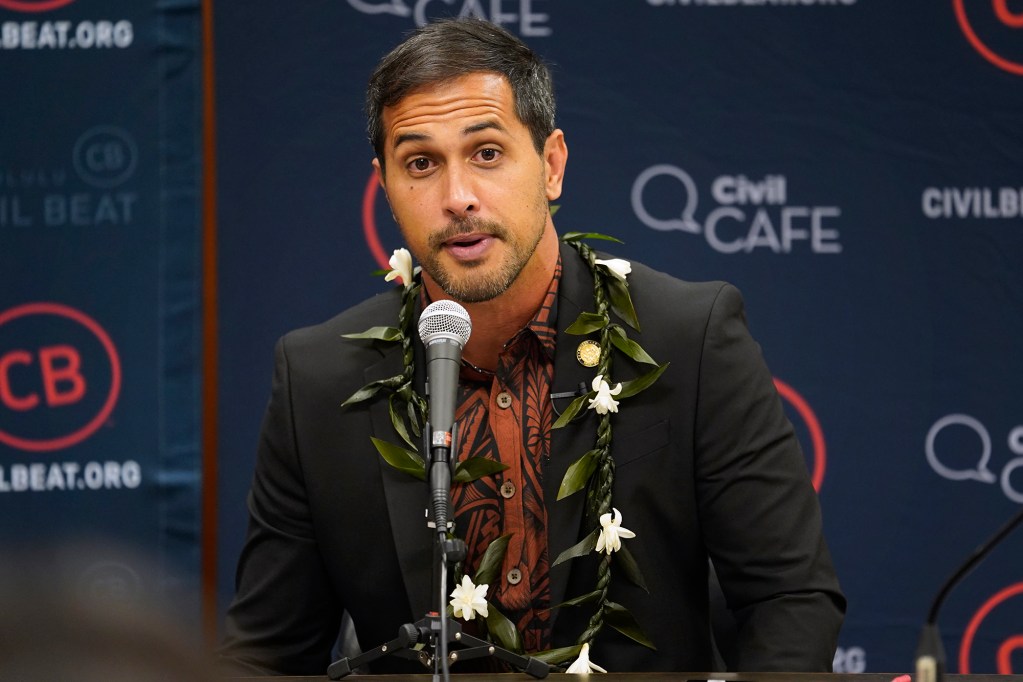
Would Republican Brenton Awa have a better chance of defeating Jill Tokuda in Hawaiʻi’s 2nd Congressional District race if he were running as an independent?
Running as a Republican, he is almost certainly going to lose in November. Political analysts and prediction markets give him less than a 10% chance.
With those bad odds, why not give the independent alternative a shot?
Besides, Awa is an unconventional kind of candidate who does not fit well within either party and really doesn’t give a damn about that.
In a Civil Beat election forum last week, Awa called himself an independent. He said that Donald Trump lost the 2020 election. He supports abortion and says that humans play a big role in climate change.
Wow, what kind of Republican is that?

Obviously, it’s too late for this to happen in 2026. So what’s the point?
Thinking about Awa this way tells us something about what it takes to move away from the same two political parties that have controlled politics for so long.
The number of voters calling themselves independents keeps rising. More than 40% of voters nationally and probably less in Hawaiʻi now call themselves independents.
Think of two kinds of independent movements. One sees that increase as a sign that voters are sick of choosing between Democrats or Republicans. Call this a mass independent movement.
There’s a second, smaller, more targeted attempt to build a movement that’s going on right now.
The Independent Leadership Council, formed by former U.S. Sen. Joe Manchin, wants to reform Congress by helping elect a bloc of independents who will act strategically to break the chokehold of the current two-party polarization in Congress.
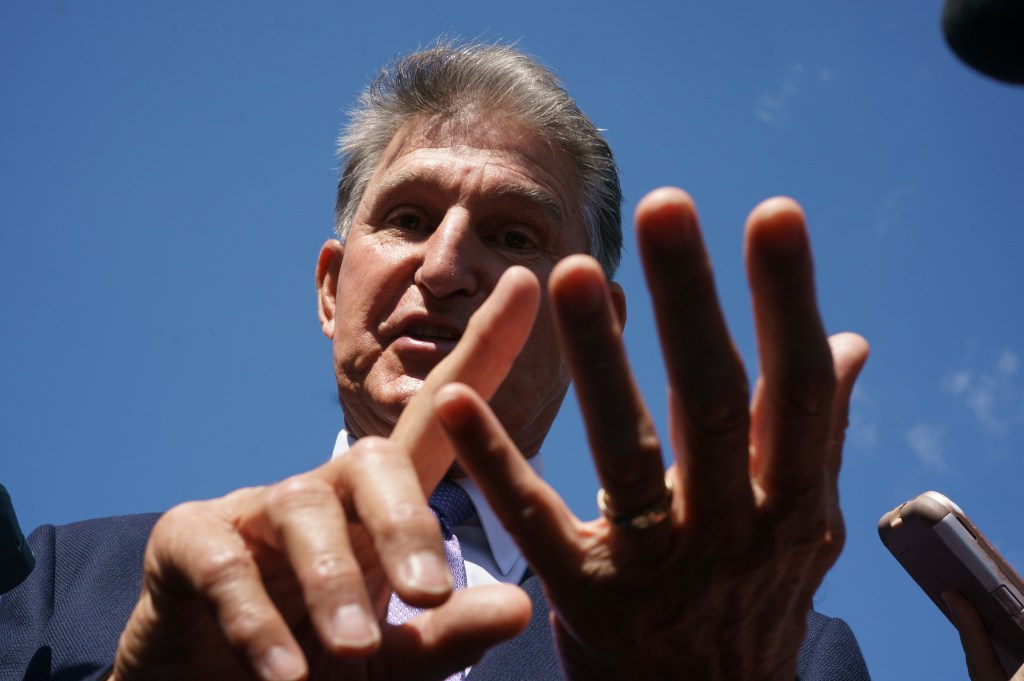
These independents would act as what Canadian politics calls “a fulcrum caucus,” using its leverage to break the gridlock and make a difference.
The Manchin group is supporting three congressional candidates who are running for the Senate as independents in this 2026 election cycle.
They are Don Osborn in Nebraska, Todd Achilles in Idaho and Brian Bengs in South Dakota. Each is running against an incumbent in heavily Republican states. Tough task.
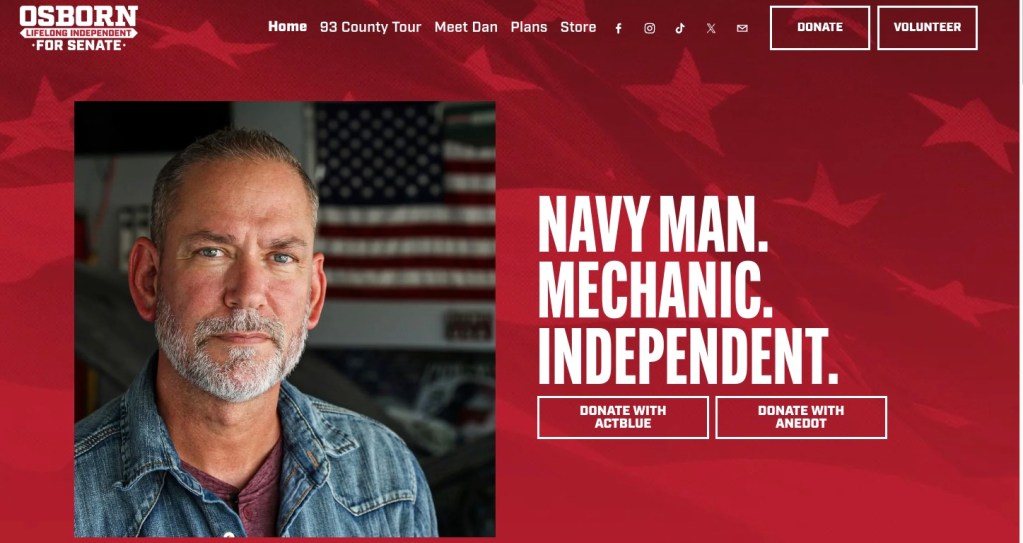
Of the three, only Osborn has a strong chance of winning. The Nebraska polls are close to even. He is an experienced campaigner. Running as a Democrat last time, Osborn lost to his Republican opponent by less than Kamala Harris lost to Trump.
Osborn has no Democratic opposition to split the vote. He has a background that’s appealing to disgruntled Republican and Democratic voters.
The candidates in the two other states are putting up a good fight. Democrats regularly write off Idaho, but Achilles has the Republicans worried enough that JD Vance has stepped in to warn Idaho Republicans to take Achilles seriously.
But the candidates in Idaho and South Dakota don’t have Osborn’s advantages. Democratic candidates in both Idaho and South Dakota dropped out but not without resisting. One has refused to endorse the independent candidate while the other publicly complained that he was pressured.
Awa Would Face Obstacles As An Independent
If Awa were running as an independent in 2026, he would probably be the least likely of this group to succeed.
He has unconventional views. He says he will only serve for one term. Awa has refused to take outside help from national Republicans and other organizations.
But those are not his biggest disadvantages. In fact, they could win him votes. His big obstacles are:
- Incumbency: Even though Tokuda has served only one term, incumbency is still an advantage against a first-time opponent like Awa. As the Nebraska independent candidate is showing, it is possible to beat an incumbent, but he has advantages that Awa doesn’t.
- Money: Right now, Tokuda has 35 times more available funds than Awa. Awa’s views about not taking money may be refreshing, but it is a huge gamble.
- Numbers: To have a shot, Awa would have to win over a larger number of regular Democratic voters. Hawaiʻi is even a more one-party state than those other three.
Likely he would lose as an independent for the same basic reasons he will lose as a Republican.
Could things change? Sure. If he were to run as an independent in 2028, Awa would have experience running for that office. He could, as Osborn in Nebraska has done, more explicitly frame himself as an independent.
And what if in 2028 the Independent Leadership Council found Awa’s independent candidacy promising enough to step in and help him with money and campaign advice?
That would create a dilemma for Awa – whose political self-identity is based on his distrust of outside help as well as his laser focus on Native Hawaiian issues.
He’d have to ask himself whether he could win without this help or change his views in order to take advantage of it.
For those who want a mass independent movement, the most important lesson from Awa’s 2026 run and hypothetical 2028 run as an independent would be how hard it is to move the needle away from two-party dominance.
That’s where the optimism about a general independent movement hits the wall.
‘Independents’ Often Vote For Same Party
Most people who say they are independents are “leaners” who consistently vote for the same party.
The number of “true” independents who switch back and forth from Democratic to Republican candidates drops to about 10%.
The number of people who have negative views about both parties has increased, but once again that hasn’t changed voting behavior.
Our winner-take-all elections are another disincentive. However you view the political parties, usually the candidates from those parties are the only realistic choice.
That’s why the Leadership Council’s strategy is so targeted. It’s more about getting a few small victories that will make Congress an actual functioning entity.
Don’t rule out the possibility of a broader independent movement. It could be slow and historical, or it could involve something immediately dramatic.
But it’s not in the present.
Joe Manchin’s Leadership Council may seem stodgy, slow and too much a reminder of how much liberals despised Manchin when he was a U.S. senator.
For Awa, the pros and cons of running as an independent are more immediate.
Can a person with his independent views win in a state where one party is so dominant and traditional party labels still make such a huge difference? And how much is he willing to change to improve his chances of winning?
 Sign up for our FREE morning newsletter and face each day more informed.
Read this next:

Local reporting when you need it most
Support timely, accurate, independent journalism.
Honolulu Civil Beat is a nonprofit organization, and your donation helps us produce local reporting that serves all of Hawaii.
ContributeAbout the Author