Olin Lagon: Drought After 2026 Storms? Our Kūpuna Tried To Warn You
After five near-miss hurricanes, dry times and fires could come to Hawaiʻi this El Niño winter, a pattern described in writings that date back to the 1870s.
October 15, 2026 · 7 min read

About the Author

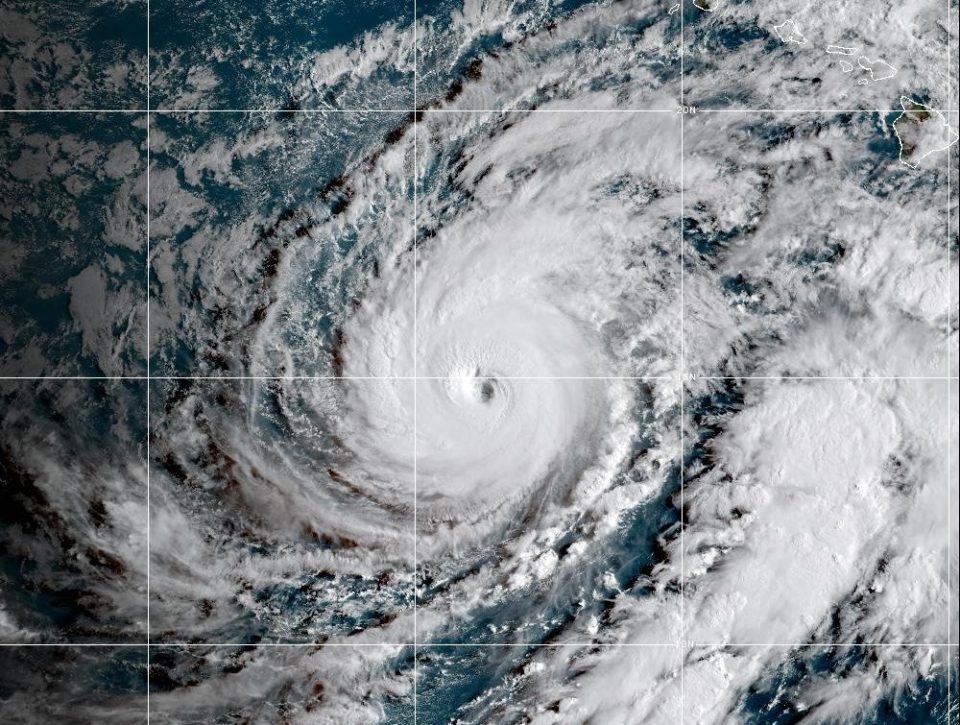
I made the map below on the left, to show the modeled worst-case trajectories of what supercomputers generated for the past five hurricanes. You can see that at least one modeled path sent it straight across our islands.
Then, to the right, you can see where those storms actually went. Even with these near misses, what happened on the ground was catastrophic for many.

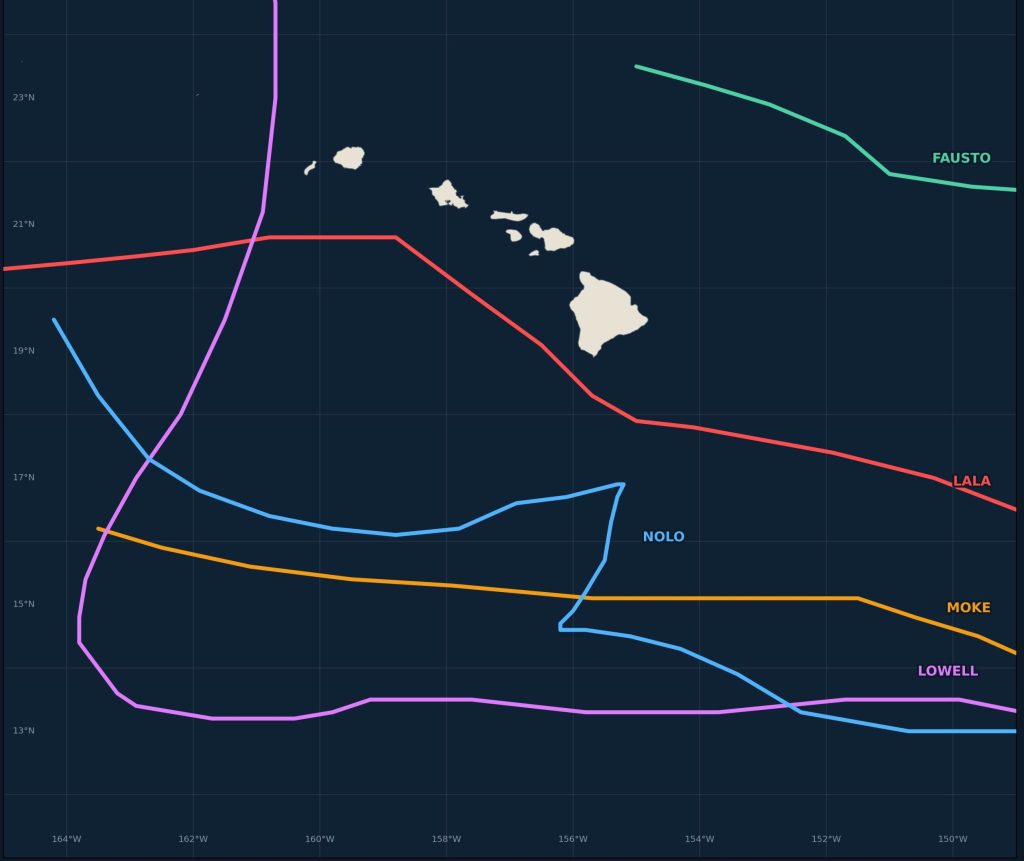
I pulled the data from the National Hurricane Center’s archive. None of these worst-case runs became the official forecast. But none of them were guesses either. Each came from a supercomputer fed with real data from satellites, buoys, weather balloons and Hurricane Hunter flights. Forecasters looked at all the runs together and settled on a consensus path, which was roughly an average path. So yes, I cherry picked the scariest runs. But if you deal enough hands, a royal flush will show up, no matter how unlikely.
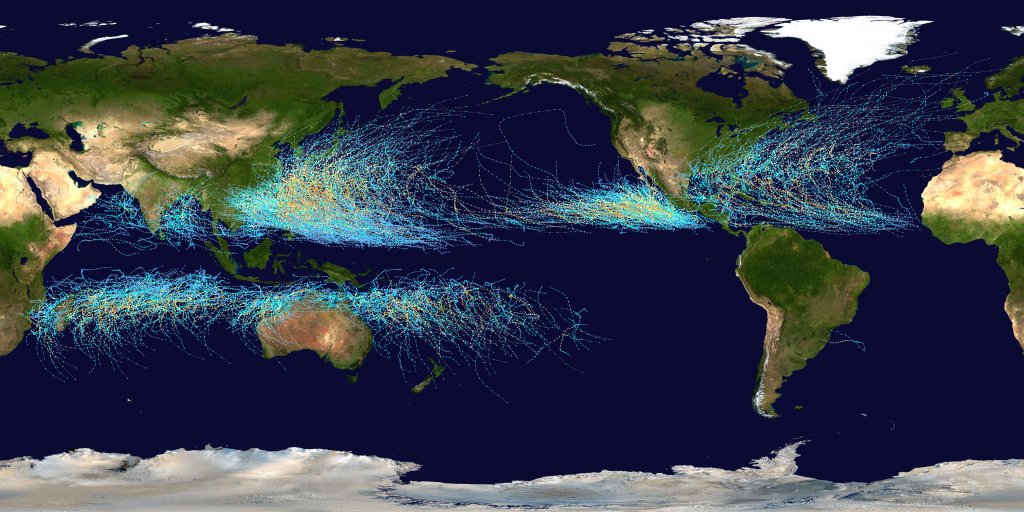
A quick aside. This next map is from NASA and plots every storm that formed between 1985 and 2005. Blue dots are tropical depressions. Lighter dots are hurricanes with red being the strongest. Hurricanes need a twist from the Earth’s spin to get going, and at the equator that twist is almost zero. Lucky for us, they also donʻt usually form in areas that have our islands in their path. Zoom in near the middle and you’ll see us sitting in a lucky-ish pocket.
Back in May, I looked at the data for the upcoming hurricane season and was horrified. I shared a post that started with this line. “The last time the Pacific Ocean did what it may do again, more than 50 million people died.” I sat on that post for a bit because I don’t like sharing about potential disasters. There is already too much fear mongering. But the data was clear, and I thought we should be talking about the hurricane season we are likely to face.
The data pointed to an El Niño that could rival the 1877 one, about the worst ever recorded. Now, five months later, that prediction is way too conservative. The oceans around us may already be hotter than they were in 1877 and that is still climbing. A recent study published in Science showed that El Niños just in the past 40 years are stronger than any in the past thousand years. Hot oceans cook up more hurricanes.

Ideas showcases stories, opinion and analysis about Hawaiʻi, from the state’s sharpest thinkers, to stretch our collective thinking about a problem or an issue. Email news@civilbeat.org to submit an idea or an essay.
We have a little more than a month left in our hurricane season. I think it is important now to look at the data to see what comes next. I really hope we get lucky because what is likely coming is drought and wildfire.
About 70% of the time after an El Niño, Hawaiʻi gets a drier than normal winter. The U.S. Geological Survey published research on what a super El Niño could mean for Hawaiʻi. They get into the details on drought, but this part caught my eye.
“A comparison of downscaled seasonal precipitation and temperature models is not available for the Pacific Islands … confidence statements for this region rely more heavily on historical analogs.”
In other words, history is one of the best tools we have for predicting what happens next. It is far from fool proof – since climate change has altered the natural patterns we once could study and rely upon. Still, our old papers hold important clues.
At Nu‘u on Mauiʻs south coast, research by Hawaiʻi Land Trustʻs Dr. Scott Fisher found marine sediment and broken dishes more than 200 feet inland. That evidence matched what was reported in an 1891 newspaper article that said a tsunami crashed through the front doors of homes and buried the springs.
Hold a thought for Nuʻu. It comes back a couple more times.
So letʻs go digging. Back in May, I went into the archives to see what a super El Niño year looked like in 1877. I dug again this weekend looking for drought around 1878.
If you understand ʻōlelo Hawaiʻi, you can search Papakilo or Ulukau. For English versions, start with the Institute of Hawaiian Language Research and Translation at UH Mānoa. You can also search Chronicling America. Filter it to Hawaiʻi between 1876 and 1879 and search both “drought” and “drouth,” the old spelling.
Here is a sampling of what I found from the years after the 1877 El Niño.
In February 1878, Ka Nūpepa Kūʻokoʻa reported that the cane at ʻUlupalakua was dying for lack of water. On Oʻahu, animals were dying in the fields, taro patches had gone dry, and “the water is retreating to the mountains.”
Three weeks later, R. W. Wilcox of ʻUlupalakua reported that about 300 tons of sugar had been ruined. Cattle were dying on Kauaʻi and Maui. Taro patches at Kaneloa in Waikīkī had been abandoned for lack of water.

In September 1878, Naaieono of Kula wrote to Ko Hawaii Pae Aina about a great famine at Nuʻu in Kaupō. People were cooking pānini fruit in kettles to dull their hunger. About five weeks later, a Kūʻokoʻa correspondent reported that Nuʻu had been abandoned and that Kahikinui looked “as if it has been burned by fire.” In May 1879, D. H. Aukai wrote from Honuaʻula that three years had passed with clear skies and no rain.
The drought that came with the 1877 El Niño lasted years.
In this coming year, we have a challenge our kūpuna did not confront. All the rain this year put about a million acres of invasive grasses and shrubs into full growth. When drought dries that out, it becomes fuel. Lahaina burned two months after El Niño arrived, because of guinea and buffelgrass that had taken over old plantation land.
I donʻt know what is going to happen. Itʻs stressful. But remember Nuʻu? What occurred after the drought there gives me hope.
I am on the board of Hawaiʻi Land Trust, and we now carry the kuleana of stewarding Nuʻu. I had no idea it was once abandoned because the rains stopped coming. But the people came back.
They came back because they had somewhere to go while they waited out the hard years. The newspaper said the people of Kaupō went to Wailuku, Makawao, Kīpahulu and Hāna looking for food and land to farm. And they must have come back because Nuʻu was worth it.
Today Nuʻu holds one of the healthiest coastal wetlands left across our pae ʻāina. Aeʻo and ʻalae keʻokeʻo have returned. The old walls and kiʻi pōhaku are still there, and ʻohana still come down to fish the way they have for generations.
We pull kiawe and replace it with native plants. We keep mending the fence around the spring so the pigs stay out. It is hard work and you are welcome to join us. Hundreds have come out to help. That is what coming back looks like too.
Boy does it look like a dry year is ahead of us. So stay kind, support the places that hold us when it is hard, and keep coming back.
And may the rains fall anyway.
 Sign up for our FREE morning newsletter and face each day more informed.
Read this next:

Local reporting when you need it most
Support timely, accurate, independent journalism.
Honolulu Civil Beat is a nonprofit organization, and your donation helps us produce local reporting that serves all of Hawaii.
ContributeAbout the Author