Olin Lagon: When Radiance And Pain Ride On The Same Wind
A gift from Uncle Sol’s ʻohana prompted me to think about who pays for beauty.
October 22, 2026 · 7 min read

About the Author
From across the room this looks like a stunning leiomano, a Hawaiian shark-toothed club. Walk up close and you start to see the things we were taught that make art less valuable. The wood is jagged. The teeth on the left side are crooked. The glue holding them was left to ooze and harden. Nobody wiped it while it was wet.
Set this next to a piece by a master crafter and you would guess a student made it. Set it next to a piece by Uncle Solomon Apio, one of the most gifted crafters of our era, and the contrast would look like a Herb Kāne hanging next to one of my sketches.
Uncle Sol made this one.
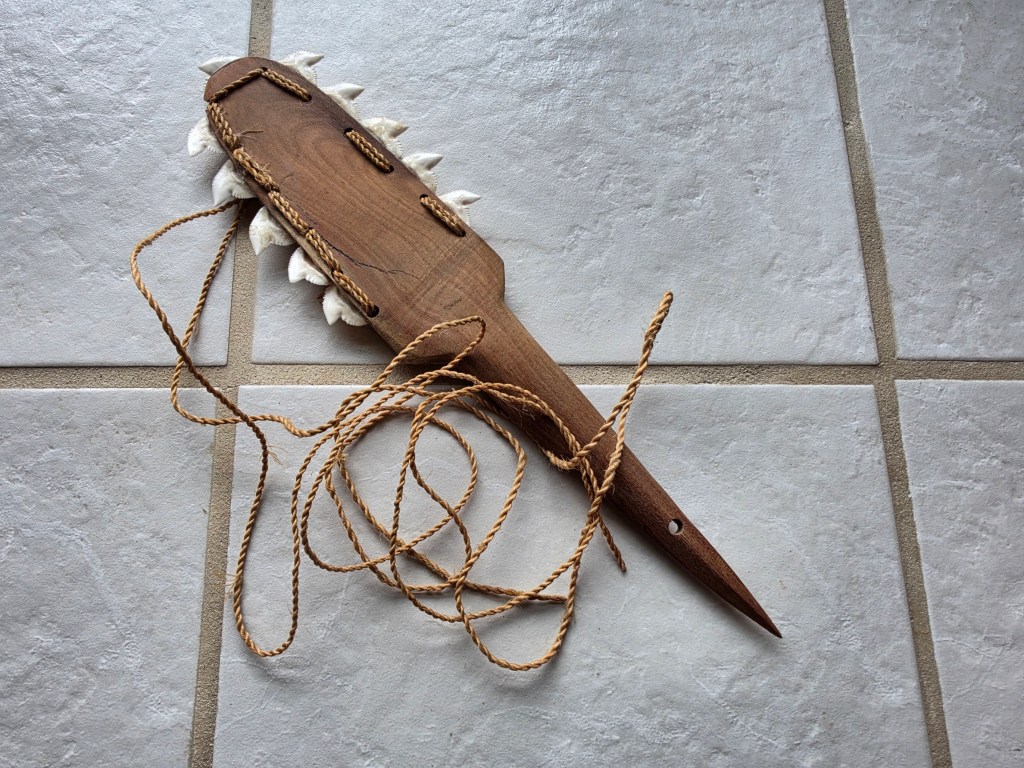
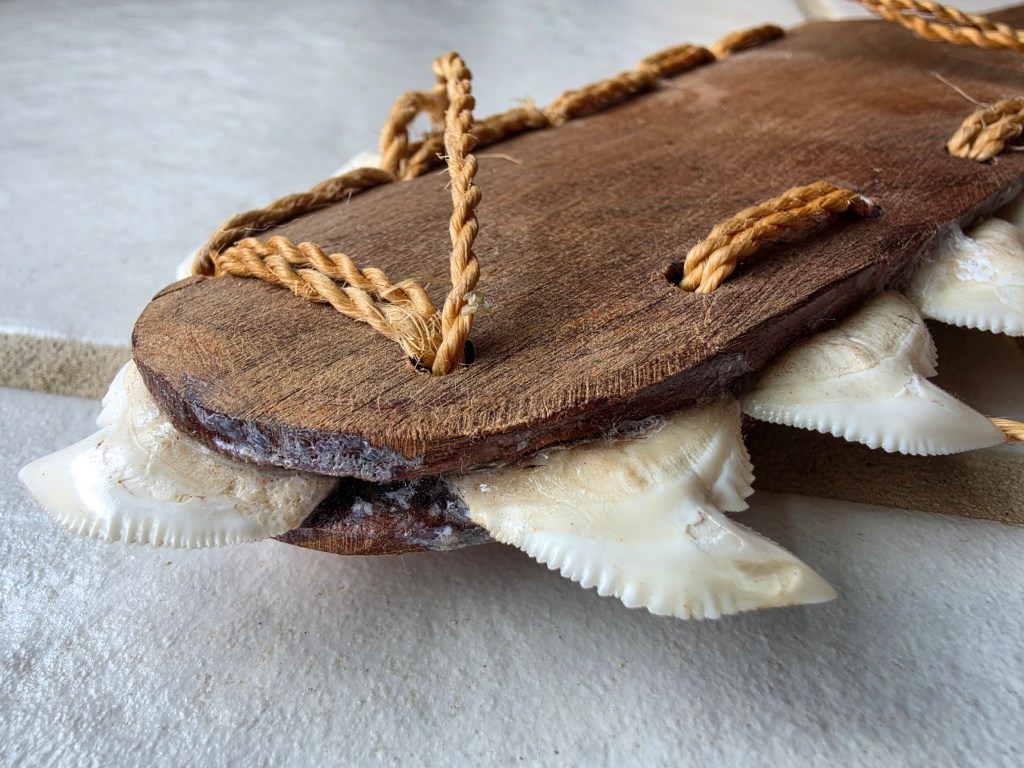
He made it late in life, after decades of perfecting his craft, with irreplaceable, rare materials he had been saving for years. I feel lucky beyond words to mālama this piece in our home.
If that seems odd, it is exactly why I am writing about this one. There are masterpieces and then there are master’s pieces.
To explain, I need to take a short detour through physics.
Why Some Sunsets Stop Traffic
I work out at Ala Moana Beach Park in the late afternoons, so I have watched more than a few sunsets. All of them are beautiful. But once in a while, we are treated to a sunset that stops traffic.
Sunlight carries every color at once, mixed so completely our eyes see them as white. When that light bangs into our atmosphere the colors start to buckle loose, kinda like they do in a prism. Shorter wavelengths scatter out far more easily than longer ones. At noon with the sun overhead, the path through the air is shortest. Only the colors with the shortest wavelengths have time to scatter, the hues of blues. That is why our sky looks blue.
But at dusk the sun sits past the horizon and the light has to push through 40 times as much air to reach our eyes. By then the blues have long been stripped out of view. All you have left to see are the longer wavelengths, the oranges and the reds.
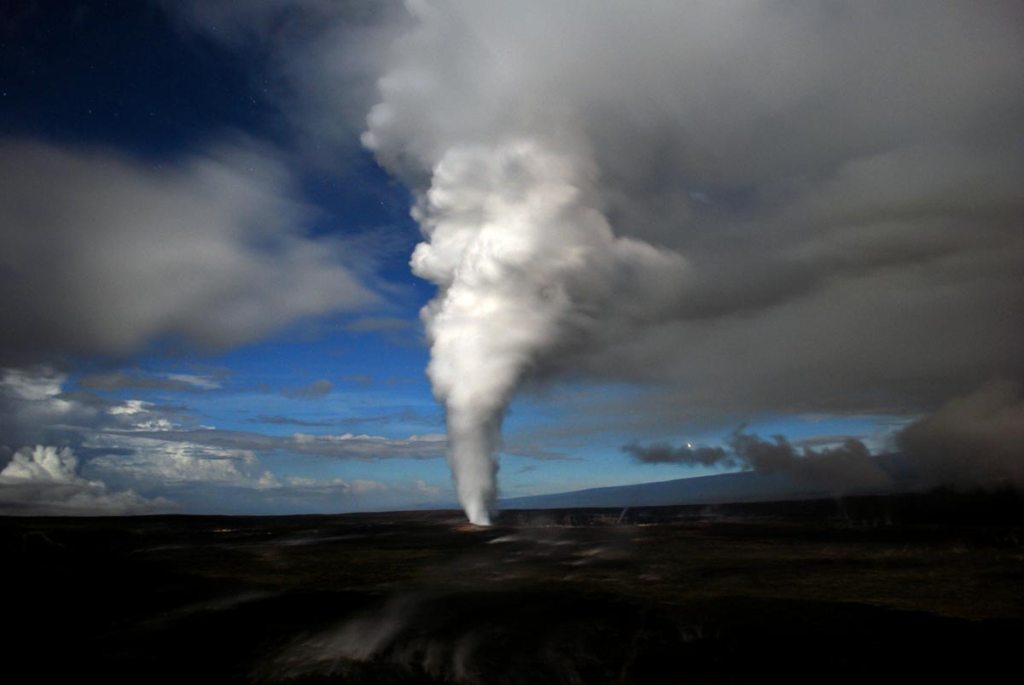
That explains a beautiful sunset. It does not explain the ones that stop traffic. Most of those need high clouds to catch the red light after the sun has dropped out of sight. But some of the wildest skies we get here are gifts from Pele. Her vog drifts across our islands. That vog is acidic droplets of sulfur dioxide. They can intercept those last bits of red light early and scatter it across the sky.
None of this belongs in your lungs. The particulates are small enough to slip past your nose and throat, settle deep in the lungs and cross into your blood. The same is true of the smoke from a brush fire and the particles that come out of tailpipes, jet engines and ship stacks.

Ideas showcases stories, opinion and analysis about Hawaiʻi, from the state’s sharpest thinkers, to stretch our collective thinking about a problem or an issue. Email news@civilbeat.org to submit an idea or an essay.
But those droplets are what make the show. Clean air lets the red light pass straight through. Air messy with particulates grab it and paint it across the sky, and when they sit high enough and thin enough, you get the pinks and purples you almost never see. A sky like that needs air that is a bit hard on our lungs.
Vog hit my mom hard. She shut the windows and waited it out on the same evenings the thing hurting her was setting the whole sky on fire. The harm and the show rode in on the same wind.
Hold that thought while I get back to the leiomano.
A Gift That Took My Breath Away
Uncle Sol’s son Alani is an old friend and an artist in his own right. As his dad aged and could no longer run the tools safely, Uncle Sol and their ʻohana faced a decision that must have been heartbreaking. They sunsetted his shop. The ʻohana wanted to share a priceless set of tools and wood and get them into the hands of the next generation.
I do not carve. My father-in-law does. So I drove out to ʻEwa Beach to pick out a few wood blanks to pass along to him. I chose three. Alani and I were talking story, and as I was about to head home, he showed me this leiomano. It was mine if I wanted it.
I still do not have the right words for how I felt. I knew right away what I was looking at. Our museums are full of work from a master’s prime, and that work tells you what the artist could do. This was one of his last pieces, a sunset piece. One that tells you what the artist cared about once the doing was no longer easy.
As if that were not enough, Alani told me where the teeth and the cordage came from.
Mau collected the shark teeth and made the cordage. He gifted them to Uncle Sol years ago, and Uncle Sol held on to them, waiting for the right time.
Mau was a traditional navigator from Satawal, a small island in Micronesia. In 1976 he guided Hōkūleʻa from Hawaiʻi to Tahiti, the first time in centuries anyone had made that crossing the old way. If I could share a cup of coffee with anyone in history, Mau would be near the top of the list, mostly so I could say thank you.
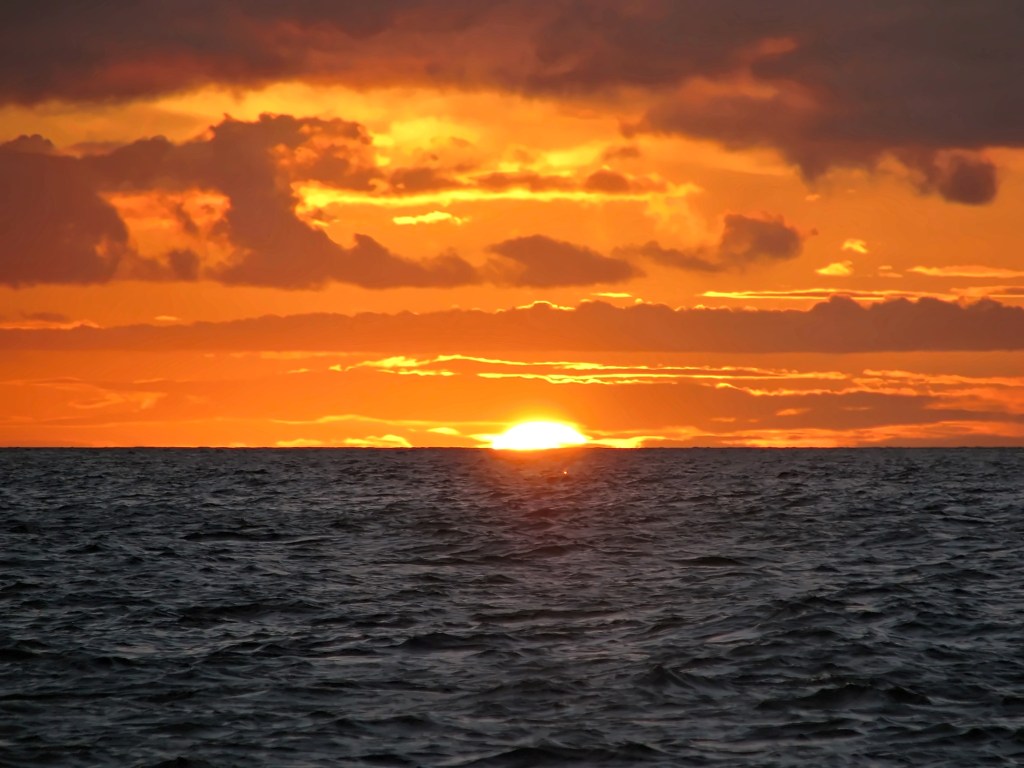
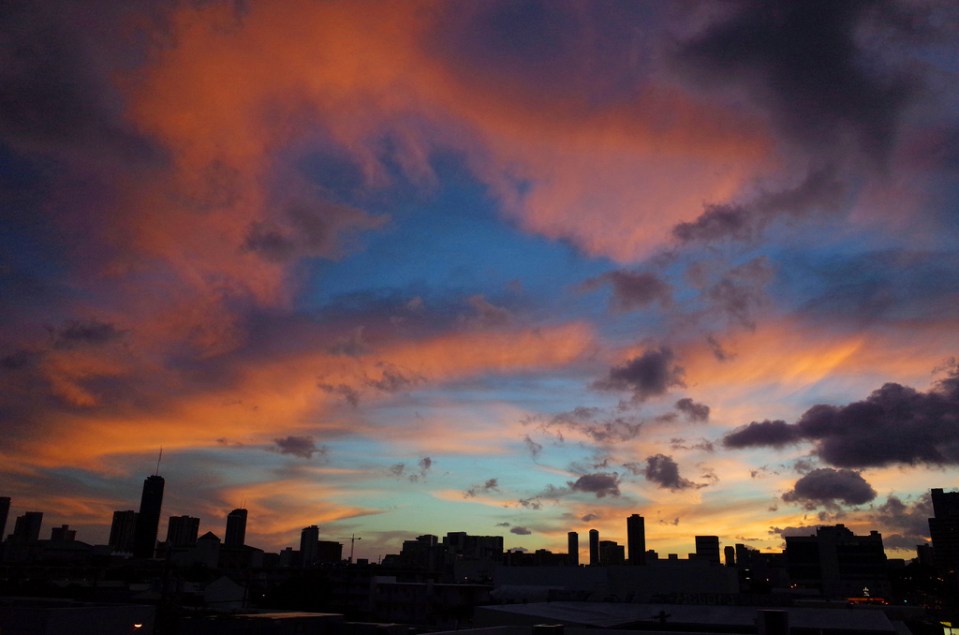
I took this photo of a beautiful sunset back in April 2010 on board Hōkūleʻa. I have volunteered with the Polynesian Voyaging Society, the stewards of Hōkūleʻa, and built some of the systems they used on the worldwide voyage. I would have loved to sail more but I get seasick. But I stuck around long enough to have heard the stories of Mau.
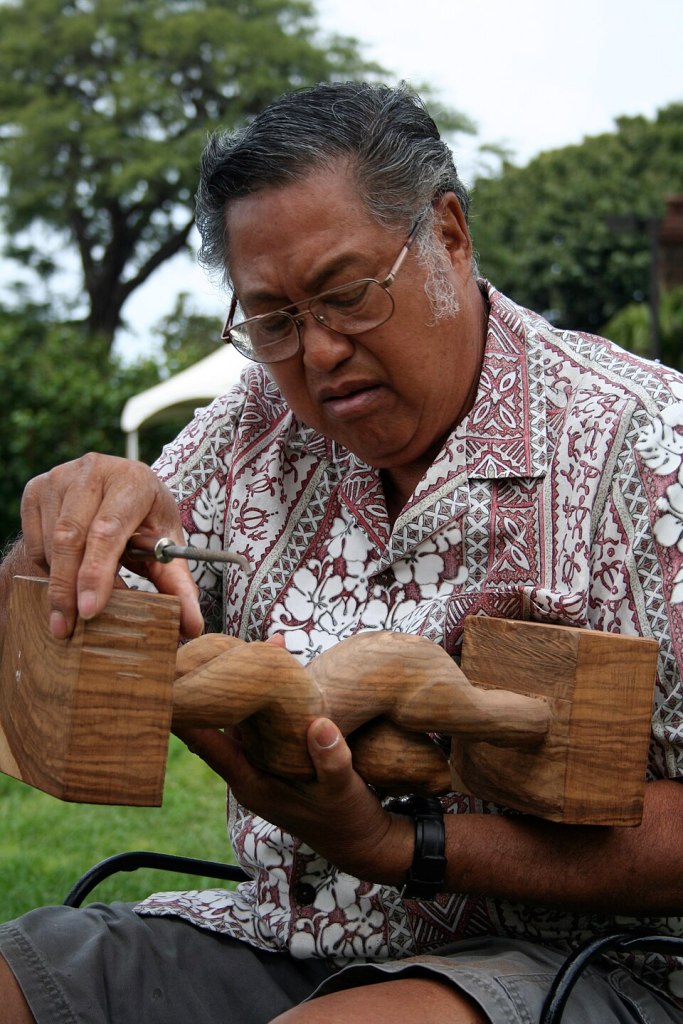
Uncle Sol held Mau’s teeth and cordage for years. He could have used them in his prime, for a piece the Bishop Museum would have been honored to display. I asked Alani if his dad ever said why he waited. He did not know.
We do know that when he finally picked them up, the work was extremely hard. His hands did what my mom’s lungs did on vog days, and that is when he decided the gift was ready.
On some nights when the sky caught fire, I was outside looking up in awe. My mom must have been inside with the windows shut. I never once thought about her while I watched. Now I cannot look at a traffic stopping sunset without thinking about who is indoors paying for the show.
I got that from this leiomano. The beauty of it sits on top of what it cost Uncle Sol. The best light and the hardest days sometimes ride in on the same wind.
 Sign up for our FREE morning newsletter and face each day more informed.
Local reporting when you need it most
Support timely, accurate, independent journalism.
Honolulu Civil Beat is a nonprofit organization, and your donation helps us produce local reporting that serves all of Hawaii.
ContributeAbout the Author