Where Hawaiʻi Draws A Line On Voter Choice
Why not have a write-in option on the ballot? It’s no wonder that many voters leave some ballots blank.
October 28, 2026 · 5 min read

About the Author

In Hawaiʻi, a legislative race can be over before the general election begins. If a primary leaves a candidate with no general election opponent, the Hawaiʻi Constitution treats that candidate as elected at the primary, and the seat never reaches the November ballot. After the 2026 primary, Civil Beat reported that several Democratic and Republican lawmakers had already won reelection outright.
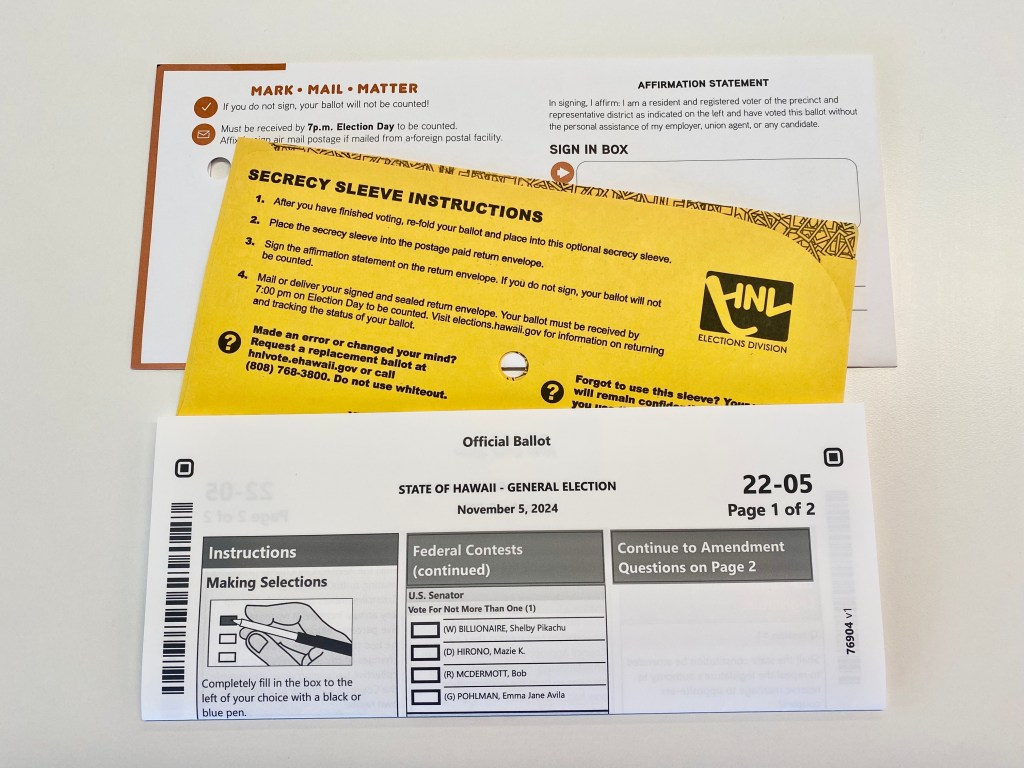
A voter who would prefer someone not listed has no way to vote for that person. Hawaiʻi does not allow write-in votes, which let a voter choose a candidate whose name is not printed, and it is one of six states that prohibit them. The National Conference of State Legislatures counts 43 states that permit write-in candidates for most state and federal offices. In most of those, a voter cannot simply write down any name and have it count, because the candidate has to file a declaration of intent by a deadline.

Ideas showcases stories, opinion and analysis about Hawaiʻi, from the state’s sharpest thinkers, to stretch our collective thinking about a problem or an issue. Email news@civilbeat.org to submit an idea or an essay.
Alan Burdick, a registered voter in Honolulu, ran into that system in 1986, when only one candidate filed for his state House district. Burdick did not want to vote for him and asked election officials whether he could write in somebody else.
Hawaiʻi law made no provision for it, so he sued. While the case was pending, the Legislature sent voters a constitutional amendment providing that an unopposed legislative nominee is elected at the primary, which voters approved in 1988.
Six years after he filed, the U.S. Supreme Court upheld the ban in Burdick v. Takushi, named for Morris Takushi, then the state’s director of elections. The case is remembered as a fight over write-in voting.
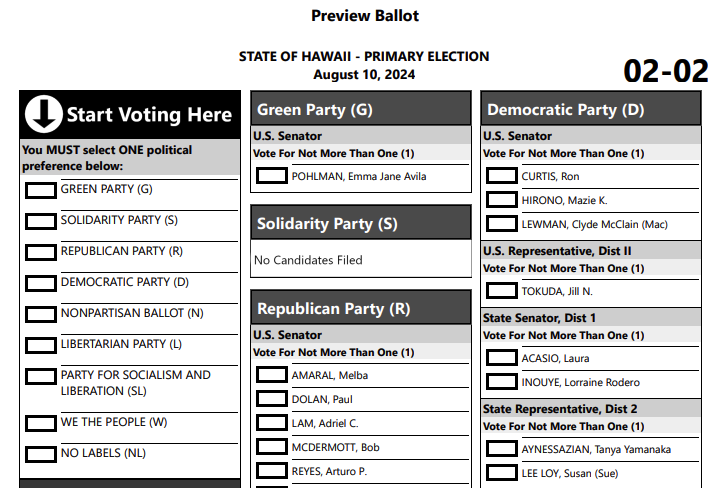
The disagreement underneath it was more basic. At what point has an election system given voters enough choice?
Looking at Hawaiʻi’s election system as a whole, the court found that candidates had relatively easy access to the primary ballot before the filing deadline, which limited the burden of prohibiting write-ins.
The court also accepted the state’s interest in closing the field. Write-ins, it noted, could let a late filer bypass the ordinary nomination process or give a losing primary candidate another path into the race.
The majority wrote that letting unopposed primary winners take office keeps the general election focused on races that remain contested, and that the arrangement would not be possible without the write-in ban. Justice Anthony Kennedy, in dissent, thought the logic ran backward. If the primary can decide an office outright, he argued, the ability to write in another candidate at that stage becomes more important, not less.
A voter’s interest in choosing a preferred candidate, Kennedy wrote, does not depend on that candidate’s odds. He pointed to figures from a brief filed by Common Cause Hawaii showing that in 1990, 27% of voters left uncontested state Senate races blank and 29% left uncontested House races blank, compared with 12% to 13% in contested races.
Kennedy read that as evidence that at least some voters were dissatisfied with the choices they had. The court upheld the ban, but a similar divide remains visible in Hawaiʻi’s election returns.
In 2026, an analysis of certified Office of Elections results found a median blank rate of 19.5% in one-candidate Democratic legislative primaries, compared with 6.6% where more than one candidate ran. In 2024, the figures were 20.1% and 7.4%. Those primaries accounted for most of the multi-candidate legislative contests in both cycles.
The returns cannot tell us why any particular voter left a race blank. Districts with one candidate may also differ from contested ones in incumbent strength, partisan makeup, campaign activity or voter engagement.
Hawaiʻi’s rules close the field before the ballot is printed.
Across the two cycles, nine Democratic legislative primaries ended with one candidate taking at least 80% of the candidate vote, and their median blank rate was about 8%, much closer to the other multi-candidate races than to the one-name contests. Nine races cannot carry a broad conclusion, but a race does not have to be close to give voters a choice.
For the 2026 election, nomination papers were due at 4:30 p.m. on June 2. Officials then finalized the candidate list and began preparing ballots.
The disagreement in Burdick was not over whether elections need deadlines. The majority looked at the opportunities available before voting began and found them sufficient.
Kennedy looked at what remained once the voter had the ballot and reached the opposite conclusion. The court settled whether Hawaiʻi could prohibit write-in voting and left the broader question underneath it. When an election offers a voter only one name, is an earlier opportunity for somebody else to have run enough?
The returns cannot tell us which view Hawaiʻi voters share. They do show that voters leave one-name legislative primaries blank more often than contests with more than one candidate. Kennedy thought that difference mattered.
Hawaiʻi’s rules close the field before the ballot is printed. Most states still leave voters a write-in option.
 Sign up for our FREE morning newsletter and face each day more informed.
Community Voices aims to encourage broad discussion on many topics of community interest. It’s kind of a cross between Letters to the Editor and op-eds. This is your space to talk about important issues or interesting people who are making a difference in our world. Column lengths should be no more than 800 words and we need a photo of the author and a bio. We welcome video commentary and other multimedia formats. Send to news@civilbeat.org. The opinions and information expressed in Community Voices are solely those of the authors and not Civil Beat.
Local reporting when you need it most
Support timely, accurate, independent journalism.
Honolulu Civil Beat is a nonprofit organization, and your donation helps us produce local reporting that serves all of Hawaii.
ContributeAbout the Author