Jeta: Saving Hawaiʻi’s Hongwanji – And Bon Dances – Isn’t A Quick Fix
Fortunately, traditional Japanese musicians and dancers are working to keep the bon dancing tradition alive here for other generations.
November 10, 2026 · 9 min read

About the Author
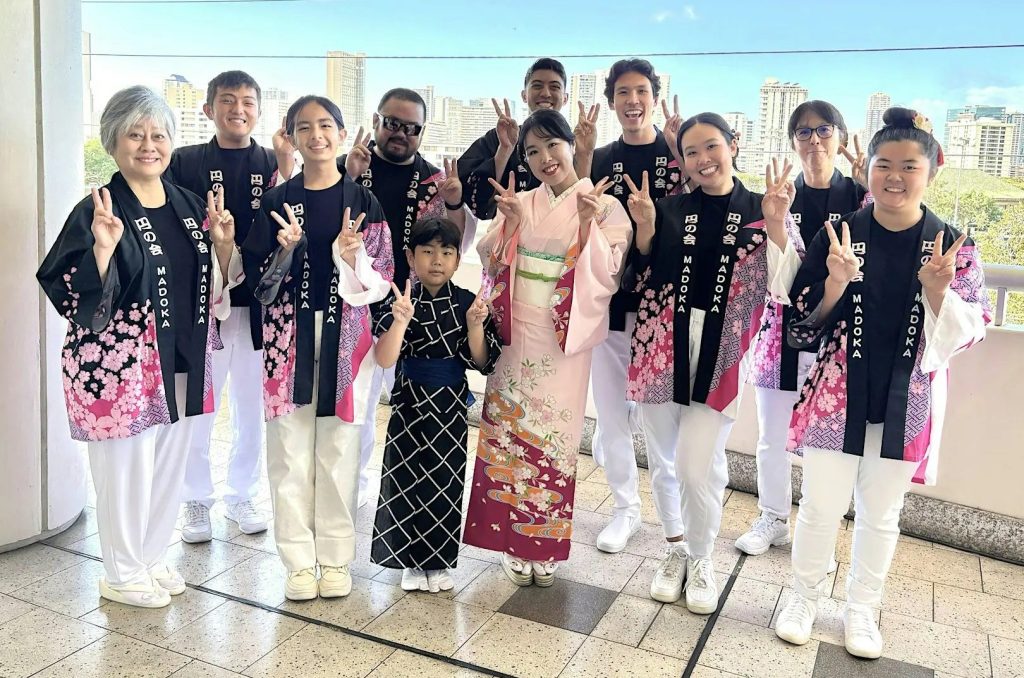
When Lydia Morikawa and her 10-year-old son Ronin joined a video call with me to discuss traditional Japanese music and bon dancing in Hawai‘i, Ronin – like any other boy his age – made a series of silly faces and hand gestures.
“It’s not shave ice and andagi. Those are perks,” Morikawa reminded Ronin when I asked him about Obon’s significance.
Yet as I engaged with the young yonsei — a boy generations removed from the family’s original immigrants — he revealed a deeper understanding of this Japanese Buddhist tradition.
Bon Odori, he said, is “like, respect our ancestors and, like, the Japanese people would think if we celebrated, then our ancestors would come back for that one day and celebrate with us.”
For Ronin, ancestral connection also lives in his practice of traditional Japanese music.
“We laugh that Ronin’s love for Japanese music began in utero,” Lydia says. “He came out drumming and singing Japanese songs probably before he could sing English songs. We always laugh that he’s my grandmother.”

Ideas showcases stories, opinion and analysis about Hawaiʻi, from the state’s sharpest thinkers, to stretch our collective thinking about a problem or an issue. Email news@civilbeat.org to submit an idea or an essay.
“By the time she enrolled me in taiko, I’d probably broken like four trash cans,” Ronin adds, recalling how he drummed on household items as a toddler. His parents enrolled him “out of necessity.”
Today, he plays taiko, shamisen, fue and sanshin.
In nurturing his passion, Ronin is incidentally preserving Obon’s cultural roots in Hawaiʻi. Children like him are becoming increasingly vital to its future.
But it’s not bon dancing that needs saving; it’s the religious institutions that sustain it.
Music Lives On
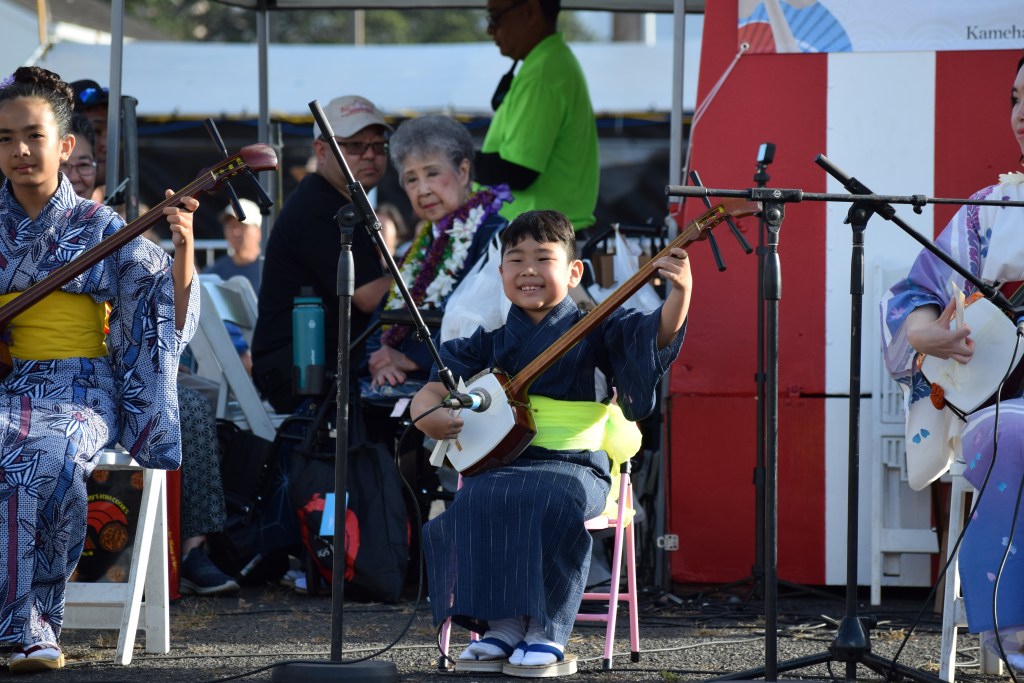
Ronin discovered shamisen four years ago through “cool videos” of bands such as Wagakki Band on YouTube. His taiko sensei referred him to Madoka no Kai, an Osaka-based music school run by Anju Madoka‘s family. She became his shamisen sensei.
For three generations, her family has taught min’yō (Japanese folk songs) from Japan’s 47 prefectures, preserving regional languages and musical styles, with themes about everyday life passed down over centuries.
Min’yō became part of bon odori’s repertoire, traditionally performed live from the yagura — the central wooden tower that dancers circle. Over time, prerecorded tracks became another fixture of bon dances in Hawaiʻi.
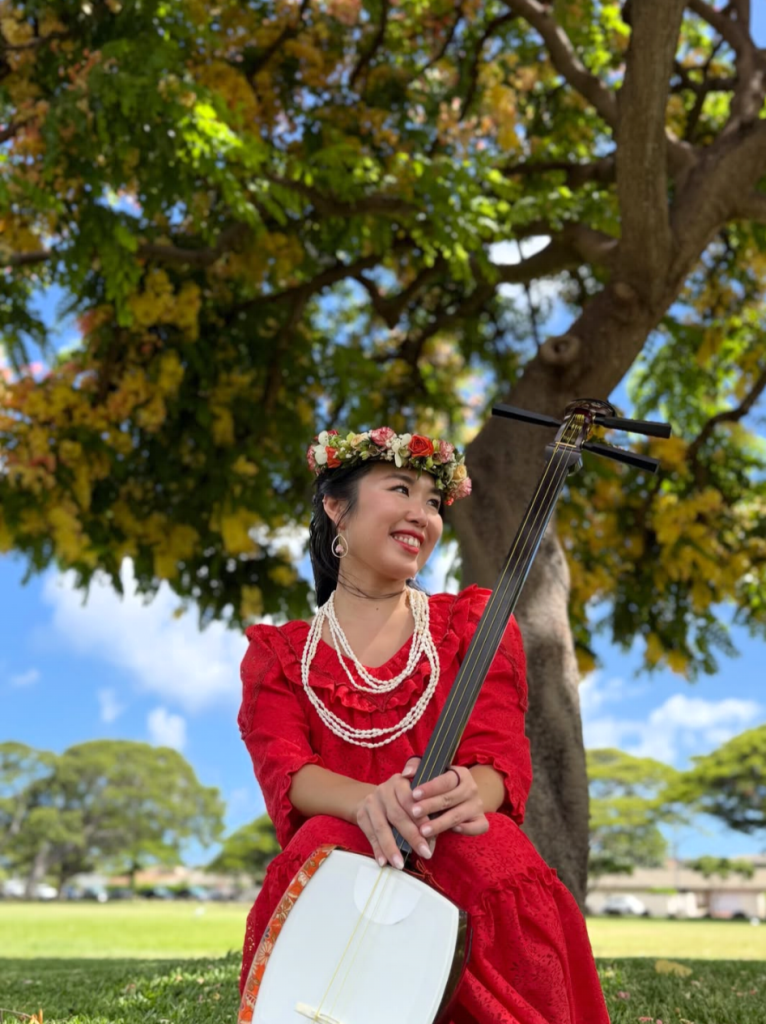
Madoka, the 39-year-old shamisen and min’yō master from Osaka, felt compelled to intervene.
In 2021, she opened Madoka no Kai’s Hawaiʻi branch and began performing live min’yō at bon dances hosted by Hongwanji temples.
“Why I started the school in Hawaiʻi is I wanted the local people to perform for local,” Madoka says.
“I’m an outsider from Osaka. But if I stop performing on Oʻahu, there’s no more performers. So I wanted the local people to perform for local, or in the future, the local people can teach the local.”
Describing herself as a “grandma child,” she was close to her grandmother, who loved Hawaiʻi. Madoka sees opening a school here as a way to perpetuate her legacy.
In honoring her grandmother’s memory, Madoka helps local communities continue honoring their own ancestors through the cherished local tradition of bon dancing.
A Disappearing Act
This year, more than 80 Obon celebrations were scheduled across the islands. The plantation-era tradition continues to thrive.
Back then, Japanese temples and plantation camps shared a yagura, taking turns hosting bon dances every week. That’s why Hawaiʻi’s Obon season spans an entire summer, rather than a few days as in Japan. The celebrations here are distinctly local, recognized as such even by the Japanese.
But the Buddhist institutions behind the festival face an existential threat.
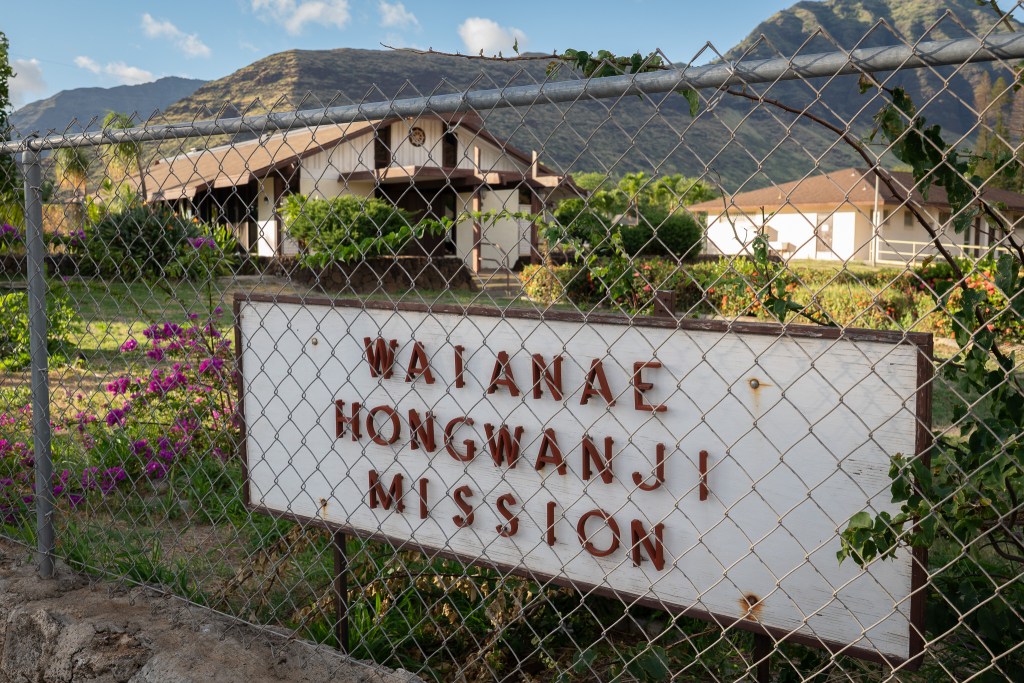
As kūpuna members die off without younger generations to replenish their ranks, Hongwanji membership dwindles. For many temples, Obon season is their biggest annual fundraising opportunity.
But even that wasn’t enough to save Waiʻanae Hongwanji, which closed in 2025, or Waialua Hongwanji, which will hold its final service this month. At the current rate of decline, the Honpa Hongwanji Mission of Hawaiʻi could cease to exist by 2036.
As temples disappear, so do the bon dances they host.
Obon’s Dying Soul
Over the last 141 years, bon dances have evolved beyond a religious rite to a signature of local culture: a family ritual etched into childhood memories, a summer evening hang with friends.
The largest bon dances take place at secular venues, like Megabon at Leeward Community College, to accommodate thousands of attendees.
Even yukata and happi coats, once required attire for those who are dancing, now share the bon odori floor with pop-culture cosplay and Pokémon-inspired choreography.
In 1951, University of Hawaiʻi department chair Yukuo Uyehara lamented that bon dancing had “degenerated here in Hawaii into nothing more than a social folk dance festival.”
The spiritual observance had become “too gaudy and gay,” attracting non-Buddhist spectators. Traffic jams galore.
Critics of yesteryear might clutch their pearls at how the very changes they condemned helped make bon dancing a beloved part of local culture.
But popularity and attendance don’t address declining Hongwanji membership.
Even if Obon thrives as a standalone social tradition, divorcing it from its Buddhist origins would undermine its historical and cultural significance in Hawaiʻi.
What good is preserving the bon dance if we forget our ancestors in the process?
Keeping the Spirit Alive
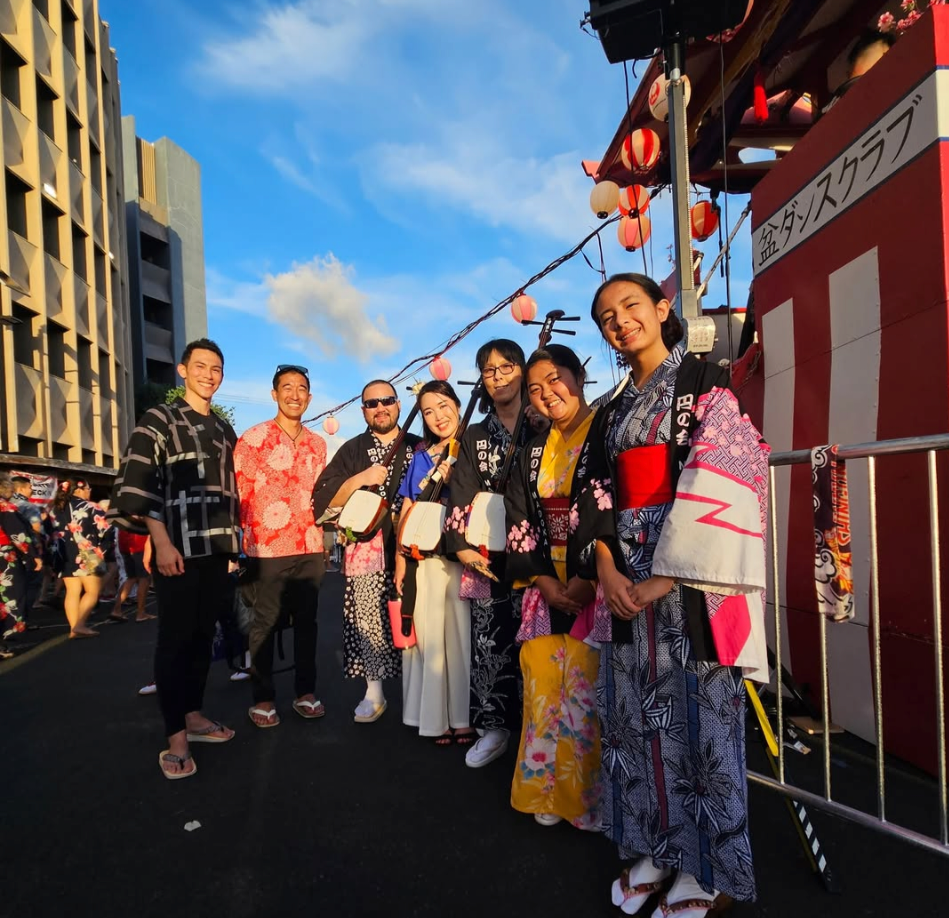
Preserving Obon’s spiritual roots means keeping its Buddhist institutions alive. Hongwanji temples are fighting a paradigm shift: kids these days just aren’t gassed up about religion.
But as the most “connected generation,” young people are in dire need of in-person connections. Japanese Buddhist temples have the opportunity to rebrand as community spaces.
Lydia says temples are pivoting from elder-centric activities such as bingo night to family events where young people can socialize. Historically, children visited religious institutions with their parents, only to stop after high school.
Temples are now trying to avoid becoming “an environment where kids are trying to escape.”
At the statewide Hawaiʻi Lay Association Convention in September, Japanese Cultural Center of Hawaiʻi executive director Nate Gyotoku delivered a keynote stressing that temple survival requires giving younger generations a voice.
“If you want young people, but you don’t have young people in your leadership helping you, then you’re not gonna attract young people,” he says.
Gyotoku also emphasizes locality. There’s no one-size-fits-all playbook: what works in Honolulu will not work in Wailuku or Hilo. Temples need to understand their communities.
That approach extends to bon dancing, one of Hongwanji’s strongest connections to the broader community.
“If these temples are able to foster that relationship with the community and create space for younger people to have a say as to what a bon dance can look like in five to six years,” he says, “I think you’ll see it evolve and survive.”
The Next Generation’s Dance
Among Hawaiʻi’s roughly 15 active bon dance groups, troupes such as Hawaiʻi Shin Kobukai are modernizing Obon without sacrificing tradition.
As the group’s leader, Lydia teaches members Obon’s significance while inviting newcomers to “just get in and dance,” allowing them to discover its deeper meaning over time.
Drawing on her background in ballet, tap, jazz, and traditional Japanese dance, she blends inherited and contemporary choreography in a roughly 50/50 split, remaining faithful to song lyrics.
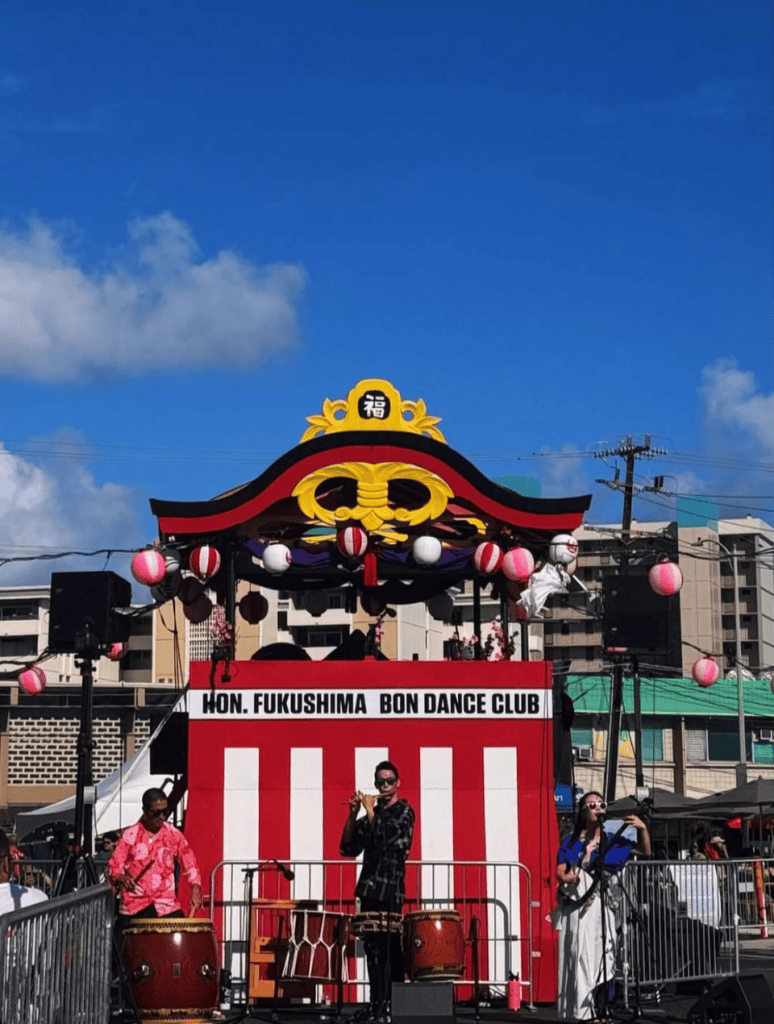
“We’ll really listen to it and dig into the meaning of the song,” she says. “You don’t want to create a dance where the motions are 100% incongruous with what they’re singing about.”
During Obon season, Ronin travels between troupes as a “little roving musician,” performing bon taiko (drumming for bon dances) at major events like Mōʻiliʻili Summer Fest and Plantation Village, sometimes accompanying his shamisen sensei Madoka during her live performances.
This year, Hawaiʻi Shin Kobukai brought miniature bon dances to nursing homes for kūpuna unable to attend outdoor celebrations.
The Songs We Carry
Today, bon dance troupes are increasingly using pop music to “hook” younger audiences. Min’yō about grueling labor may not land with modern youth, but “K-Pop Demon Hunters” offers an easier entry point.
Lydia says Hawaiʻi Shin Kobukai alternates pop music with traditional songs to keep younger dancers in the circle.
“Rather than fight their way out of the circle, they’ll just stay and learn the traditional song,” she explains. “It’s a little bit of trickery. But at the same time, they will experience something that they otherwise probably would not have come out to do.”
Lydia also consults younger members on song selections.
“A lot of young ones in our group will dance to anything. Their friends will not,” she says. “So I go to them like, ‘OK, this is a set list. What do you guys think?'”
Their feedback informs the set lists, from song choices to sequencing.
“It’s kind of all about bringing in the younger generation, not giving them complete free rein, but also valuing their opinion.”
An Encore To Obon
With Obon season over, Ronin is now preparing for the inaugural recital of Madoka no Kai’s Hawaiʻi branch on Sunday, Nov. 15, at Pearl City High School’s Nakasone Performing Arts Center.
The concert will showcase traditional Japanese music through taiko, min’yō, and shamisen performances by 30 students, including 11 from Osaka. Madoka’s trio, MikAnS, will also take the stage.
But one student will be missing.
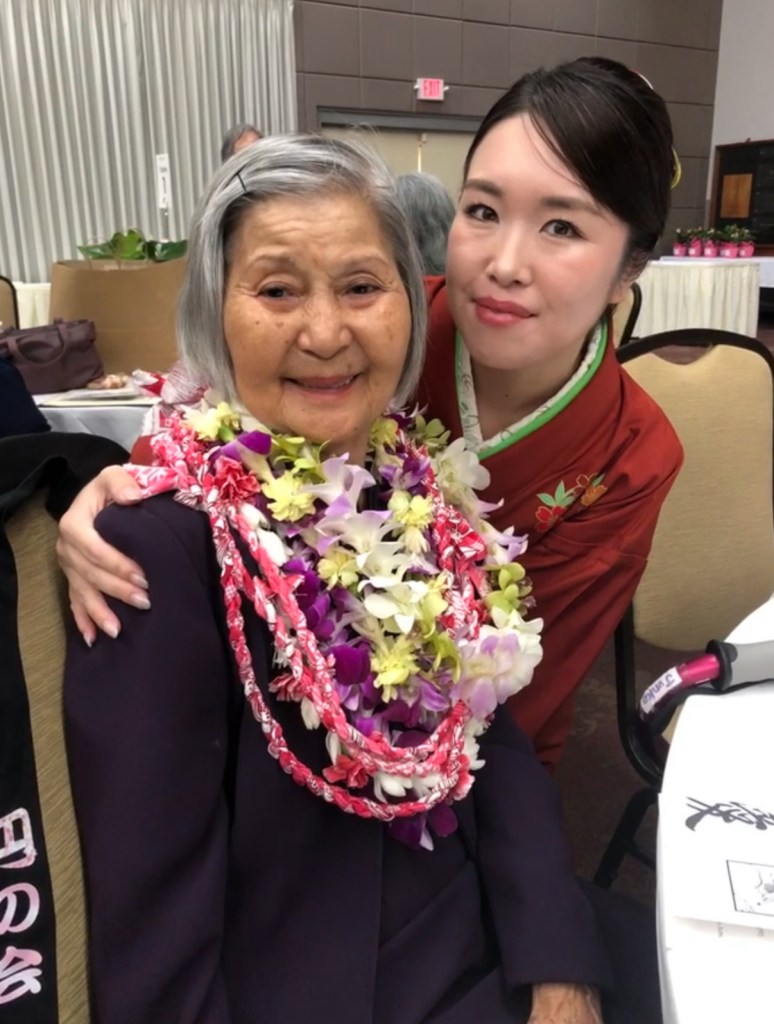
Junko Holmes, 88, moved from Japan to the United States after marrying an American serviceman. At 85, she pursued her life goal of learning shamisen, studying weekly with Madoka for two years.
Holmes suffered a stroke and died on Nov. 2, but her name remains on the program: her memory carried through the music she loved beyond the Obon season.
Because what better purpose for min’yō than helping us remember those who came before us?
 Sign up for our FREE morning newsletter and face each day more informed.
Local reporting when you need it most
Support timely, accurate, independent journalism.
Honolulu Civil Beat is a nonprofit organization, and your donation helps us produce local reporting that serves all of Hawaii.
ContributeAbout the Author