We Train Hawaiʻi’s Future Workforce. Can They Afford to Stay?
Hawaiʻi island is investing in education, career training and healthcare. But without affordable housing, we risk losing the very people our communities need most.
November 11, 2026 · 6 min read

About the Author

Imagine a young person growing up on Hawaiʻi island who dreams of becoming a nurse, physician, electrician or entrepreneur. Through education, mentoring and hard work, that person develops the skills to pursue a meaningful career.
We celebrate that achievement. But then comes a more difficult question: Can that person afford to remain here?
That is the uncomfortable reality we face: We can help prepare people for better-paying careers without ensuring they can afford to build a life here.
The housing numbers tell the story
Hawaiʻi island has dramatically different housing markets.
In September 2026, the median single-family home sold for approximately $399,000 in Puna and $502,000 in South Hilo. On the West Side, prices reached $1.14 million in South Kohala and $1.3 million in North Kona.
At recent mortgage rates, purchasing a $1.3 million home with a 20% down payment can mean housing costs approaching $8,700 monthly, including estimated taxes, insurance and maintenance.
To keep those costs near 30% of household income requires annual earnings approaching $350,000, along with $260,000 for a down payment.

Ideas showcases stories, opinion and analysis about Hawaiʻi, from the state’s sharpest thinkers, to stretch our collective thinking about a problem or an issue. Email news@civilbeat.org to submit an idea or an essay.
Renting offers limited relief. Our review of recent three-bedroom rental listings found asking rents averaging approximately $2,300 to $2,750 monthly in Hilo, compared with $4,250 to $4,470 in Kailua-Kona.
A family needs approximately $100,000 annually to comfortably afford many of those Hilo rentals, compared with $170,000 or more in Kona.
For perspective, Hawaiʻi County’s official 2026 median-income benchmark for a family of four is $98,300.
This is no longer simply a challenge for low-income households. Even families earning $100,000 to $150,000 annually can struggle to secure suitable housing near their workplaces.
Even well-paid professionals face difficult choices
Consider the healthcare professionals our island desperately needs.
The University of Hawaiʻi’s 2025 physician workforce assessment identified a shortage of approximately 224 full-time-equivalent physicians in Hawaiʻi County. Although preliminary statewide figures suggest some improvement, access to healthcare remains a serious challenge.
Over the past year, the healthcare committee of my organization has met with executives of major Hawaiʻi island hospitals, practitioners in smaller medical practices, and educational leaders at the University of Hawaiʻi and our community colleges.
These conversations have reinforced the challenges of recruiting, training and retaining healthcare professionals.
A physician considering a position in Kona may earn a substantial salary, but also carry significant educational debt and face extraordinary housing costs. A comparable mainland opportunity may offer a larger home, lower living expenses and greater financial security.
Specialists establishing independent practices face additional expenses for facilities, staffing, equipment and insurance.
Even when professional salaries are competitive, purchasing power may not be. The same dilemma, often with far less income, confronts nurses, teachers, skilled tradespeople and other essential workers.
We cannot expect to attract and retain the workforce our island needs if qualified professionals conclude they can build better futures elsewhere.
A remarkable opportunity – and a missing connection
Hawaiʻi has received approximately $189 million in first-year federal funding through the Rural Health Transformation Program, creating an extraordinary opportunity to strengthen healthcare, expand professional training and support recruitment and retention.
Programs such as HOME RUN — Hawaiʻi Outreach For Medical Education In Rural Underserved Neighborhoods — can help develop pathways for future healthcare professionals and support those choosing to serve our rural communities.
These investments are encouraging and urgently needed.
But training additional nurses, physician assistants and doctors is only part of the equation.
If graduates cannot afford to establish households where their skills are needed, and experienced practitioners find the financial sacrifices of relocating here too great, we risk diminishing the long-term value of these investments.
The same challenge confronts our efforts to develop skilled tradespeople, educators, entrepreneurs and other essential members of our workforce.
Housing is an economic development responsibility
At the Kohala Coast Community Fund (KCCF), we support more than 20 organizations helping Hawaiʻi island residents acquire the skills, confidence and opportunities to pursue meaningful careers. Our mission is to create pathways for our residents to remain and thrive in their home communities.
Yet addressing Hawaiʻi island’s housing shortage requires substantial capital, land, infrastructure, regulatory coordination and long-term commitment.
These are challenges that workforce development organizations such as KCCF are not equipped to solve. Our resources and expertise are appropriately focused on education, training, mentoring and creating career opportunities.
But our experience gives us a clear perspective on what is at stake.
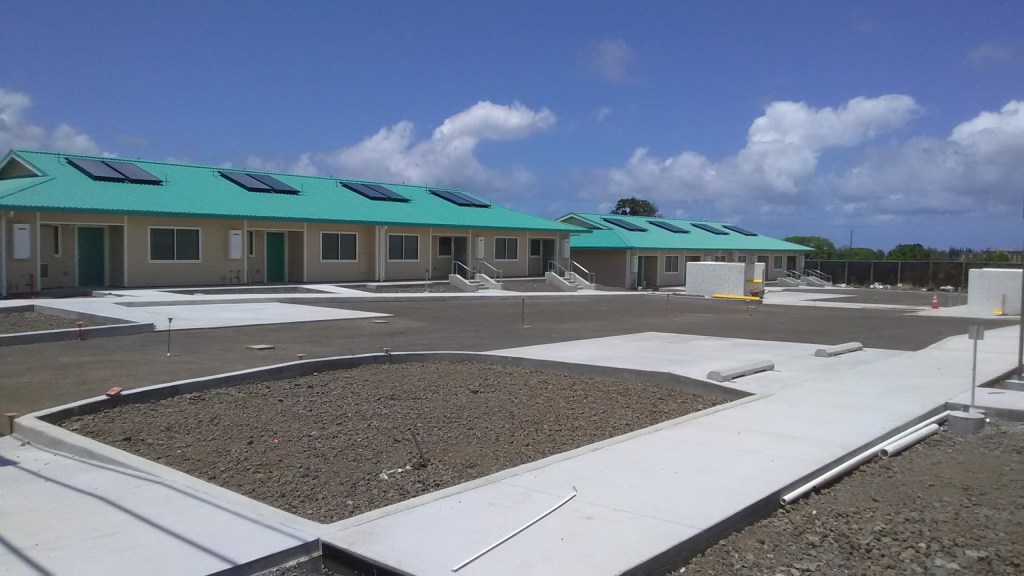
Affordable workforce housing must become an explicit priority in the economic development strategies of county and state government, major employers, the business community and organizations dedicated to housing.
The responsibility must be shared by those with the resources and authority to act.
There are promising models elsewhere in the country: community land trusts that preserve affordability, partnerships that develop housing on public or privately contributed land, revolving housing funds, and employer-assisted housing initiatives.
We have a local example in Nā Hale Makoa, the 140-unit affordable rental community in Waikoloa Village, developed on county-owned land through public-private collaboration.
These approaches deserve broader consideration, adaptation and investment.
Three priorities stand out:
- First, make workforce housing part of economic development planning. When government, hospitals, major employers and educational institutions assess future workforce needs, they must also consider where those workers can realistically afford to live.
- Second, mobilize public and private resources to expand housing opportunities. Governments, developers, major landowners, employers and housing nonprofits should pursue partnerships that make more appropriately priced homes and rentals available near employment centers.
- Third, remove unnecessary obstacles to building housing. More efficient permitting, coordinated infrastructure investments and innovative, cost-effective construction methods could help increase supply while preserving appropriate environmental and community safeguards.
None of these measures offers a simple or immediate solution. But the economic and social costs of inaction will continue to grow.
Training alone is not enough
Across Hawaiʻi island, educators, nonprofit organizations and community leaders are helping residents develop the knowledge, skills and confidence to pursue meaningful careers.
These efforts are making a difference, and they deserve continued support.
But their promise is diminished when the people who benefit cannot afford to remain in their communities.
KCCF will continue doing what we do best: supporting organizations that equip our residents with the skills and opportunities to succeed.
We are counting on our partners in government, business and the housing sector to do their part.
Affordable housing is not simply a social service. It is essential economic infrastructure, as fundamental to our future as education, healthcare, transportation and reliable utilities.
Our island needs nurses, physicians, teachers, construction workers, entrepreneurs and skilled professionals. We must also create communities where these individuals and their families can afford to live.
We can help prepare Hawaiʻi island residents for meaningful careers. But ensuring they can build their futures here requires a broader community commitment.
 Sign up for our FREE morning newsletter and face each day more informed.
Community Voices aims to encourage broad discussion on many topics of community interest. It’s kind of a cross between Letters to the Editor and op-eds. This is your space to talk about important issues or interesting people who are making a difference in our world. Column lengths should be no more than 800 words and we need a photo of the author and a bio. We welcome video commentary and other multimedia formats. Send to news@civilbeat.org. The opinions and information expressed in Community Voices are solely those of the authors and not Civil Beat.
Local reporting when you need it most
Support timely, accurate, independent journalism.
Honolulu Civil Beat is a nonprofit organization, and your donation helps us produce local reporting that serves all of Hawaii.
ContributeAbout the Author