Hawai‘i’s Future Depends On The Coconut Tree
But because of the the coconut rhinoceros beetle, we are watching it die.
September 12, 2025 · 5 min read


About the Author
There is no tree more emblematic of Hawai‘i than the niu, the coconut tree. Towering and graceful, its swaying fronds set the scene for postcards and daydreams.
But this tree is more than a backdrop. It is a living relative, a provider, a vital ancestor that helped Polynesians settle these islands. Niu (which is Hawaiian for coconut) is life.
Every part of the tree has value: nourishing water, sustaining meat, shelter from the leaves, medicine from the oil, wood from its trunk and soil stabilization from its roots. In return, all we have to do is care for it.
Today, we are watching it die.

Ideas showcases stories, opinion and analysis about Hawaiʻi, from the state’s sharpest thinkers, to stretch our collective thinking about a problem or an issue. Email news@civilbeat.org to submit an idea or an essay.
Once cornerstones of food security and cultural identity, niu are now reduced to “ornamental liabilities.”
For over a hundred years, this view has shaped policy and public perception. Resorts and counties lop off fronds and flowers before they can fruit, weakening the tree’s immune system and severing its relationship with our daily lives. After so much time, many people no longer have a personal connection to niu — and without that relationship, it is difficult to expect anyone to care. What appears to be landscaping is, in truth, cultural erasure.
Into this broken system came the coconut rhinoceros beetle, a tenacious pest that has found easy targets in our stressed trees. Rather than respond with care, the state and counties turned to synthetic pesticides — not only ineffective, but harmful to pollinators, soil, and water. Their use violates the principle of mālama ʻāina, which teaches us that the land is family, not a commodity.
Too often, people speak of O‘ahu as if it is already a lost cause to the fight against CRB. But every single tree is worth defending.
We have other tools. Organic methods, tree care, and community-led efforts have shown signs of healing — new fronds growing back, new life pushing forward. Yet the government refuses to acknowledge these practices as legitimate. Instead, it cuts and poisons our trees indiscriminately.
Last year, the state Legislature rejected a bill to recognize niu as a traditional staple crop. Why? Because recognition would require us to honor and protect the tree’s importance as a food source, not dismiss it as mere scenery. That rejection speaks volumes. It’s not just about one tree — it’s about what kind of future we are choosing: resilience or dependence.
Consider this: niu can provide both food and clean water for survival in times of crisis. On an island chain vulnerable to climate shocks, shipping disruptions, and ecological collapse, how can we justify destroying a crop that has fed generations and could be a lifeline in emergencies today?
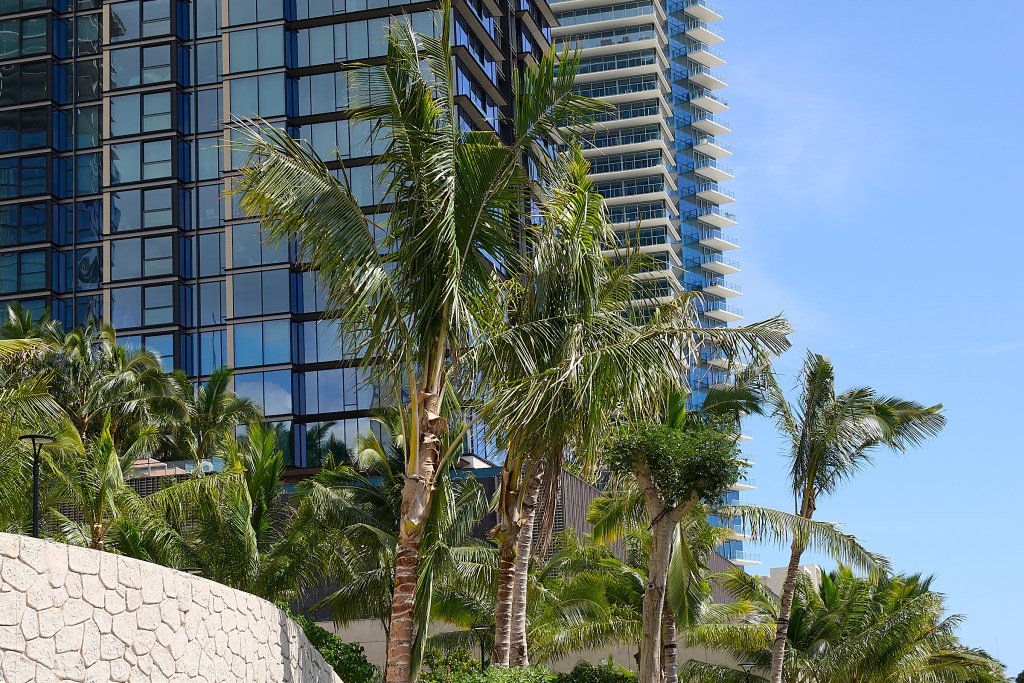
The threat doesn’t stop with niu: the coconut rhinoceros beetle also attacks other palms, trees, and crops, further undermining the resilience of our landscapes and ecosystems. To deprive our children and grandchildren of this lifeline is to deny them security and abundance. The survival of future generations depends on how we care for niu today. We now face the reality a reality of a Hawai‘i without coconut trees — a future that is unthinkable.
To some, it’s just a tree. To us, it is culture, heritage, and life itself. To lose niu is to lose more than food; it is to erase a living ancestor from Hawai‘i’s future. Its decline is our reckoning — with the land, with our leaders, and with ourselves.
When the coconut tree thrives, so do we.
That is why we are calling on the counties to halt their campaign against coconut trees. We ask them instead to invest in community-led stewardship, support regenerative land management practices, and honor the knowledge that has sustained these islands for centuries. If we truly believe in aloha ʻāina, then our policies must reflect it.
Everything must start with education. Most of those who advocate for niu do so because they have a relationship with it — as food, as shade, as ancestor, as teacher. Facilitating those relationships is vital. Education builds connection, and connection builds care. When more of us know niu not as a liability but as a living relative, more of us will be ready to act — to conserve, to restore, to mālama.
The choices we make now will determine whether future generations inherit a land of abundance, or one of scarcity. The niu has always given freely. It is time for us to give back.
Because when the coconut tree thrives, so do we. Kupu ka niu, kupu ke kanaka. When the coconut grows, humanity flourishes.
For more resources and ways to support community-led stewardship of niu, click here.
 Sign up for our FREE morning newsletter and face each day more informed.
Community Voices aims to encourage broad discussion on many topics of community interest. It’s kind of a cross between Letters to the Editor and op-eds. This is your space to talk about important issues or interesting people who are making a difference in our world. Column lengths should be no more than 800 words and we need a photo of the author and a bio. We welcome video commentary and other multimedia formats. Send to news@civilbeat.org. The opinions and information expressed in Community Voices are solely those of the authors and not Civil Beat.
Local reporting when you need it most
Support timely, accurate, independent journalism.
Honolulu Civil Beat is a nonprofit organization, and your donation helps us produce local reporting that serves all of Hawaii.
ContributeAbout the Author