

A Navy Captain Was Faulted For His Red Hill Response. But He’s Still Working There
The Navy says officers who are removed from leadership posts may be reassigned to positions consistent with their training and experience.
A Navy captain who was relieved of command over “leadership and oversight failures” after the catastrophic fuel leak at the Red Hill facility in November is still working on petroleum operations at the storage complex, according to the Navy.
Navy Capt. Albert “Bert” Hornyak failed to lead as the on-scene commander during the leak that contaminated the tap water of thousands of military families, according to U.S. Pacific Fleet investigations released last month.
“He demonstrated poor judgment by deciding that the spill was stable and manageable despite uncertainty about key elements of the unfolding incident,” the report said.
But Hornyak still works on petroleum management at Joint Base Pearl Harbor-Hickam, and his purview still includes Red Hill, according to Richard Spiegel, a spokesman for Naval Supply Systems Command.

Hornyak did not respond to phone calls seeking comment.
When officers are relieved of duty, they may be reassigned to positions consistent with their training and experience, Spiegel said in a statement to Civil Beat. In Hornyak’s case, that means working in the new Navy Petroleum Office at Pearl Harbor, a division created to “provide additional support to Red Hill,” among other duties, Spiegel added.
“Hornyak’s current responsibilities involve a wide range of fuel issues, some of which may involve the Red Hill facility,” Spiegel said.
Hornyak was the commander of Fleet Logistics Center Pearl Harbor when some 20,000 gallons of fuel spewed into a tunnel of the World War II-era storage facility on Nov. 20. The fuel had been sitting in a fire suppression drain line – a PVC pipeline not intended for fuel – since an earlier fuel leak occurred in May.
After a Red Hill worker allegedly crashed into that pipeline with a cart, fuel gushed for 34 hours just 380 feet from the drinking water source. The worker, doused in fuel, had to go to the emergency room for burning and itching skin, according to the Pacific Fleet probe.
According to military investigators, Hornyak “was aware of the potential for a fuel release to the environment” and knew that personnel had been injured, but he didn’t communicate the seriousness of the situation to senior leaders.

Nevertheless, Hornyak kept his position until April. That’s when another fuel leak occurred at the troubled facility, releasing an estimated 30 to 50 gallons during a maintenance activity, according to the Navy.
Naval Supply Systems Command Rear Adm. Peter Stamatopoulos relieved Hornyak of his duties citing a “series of leadership and oversight failures.”
According to Spiegel, Hornyak’s reassignment was unrelated to the fuel leaks that contaminated the drinking water last year.
David Kimo Frankel, an attorney representing the Sierra Club of Hawaii, said it’s “disturbing” that someone who was a leader during the catastrophe is involved in responding to its aftermath.
“You may want the knowledge they have available, but they probably should not be the ones making decisions because their judgment has been demonstrated to be poor,” he said.
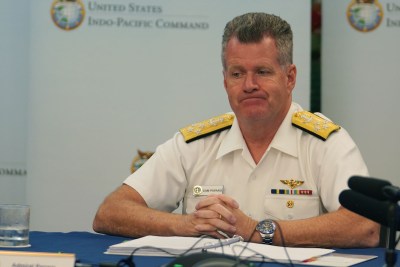
Decisions on discipline or “administrative actions” related to the Red Hill disaster will be made by a team led by Adm. Daryl Caudle, the commander of the U.S. Fleet Forces Command, Spiegel said.
Navy officials have not specified a timeline for when those decisions will be made, but Adm. Samuel Paparo, commander of the Pacific Fleet, said those actions may be made public.
Navy Leaders Have Moved To New Roles
Hornyak is the only military official connected to Red Hill to have been publicly removed from his position. Several other officials who dealt with Red Hill during the crisis left their roles, but the Navy described those changes as routine.
Hornyak’s predecessor as commander of FLC Pearl Harbor, Capt. Trent Kalp, oversaw Red Hill at the time of the May leak and left his post in August.
The Pacific Fleet investigation released last month noted several failures by Kalp that contributed to the catastrophe.

Kalp removed military oversight of day-to-day operations at Red Hill just a few months prior to the May leak. The report said that decision “significantly” increased risk at the facility, which regularly holds about 100 million gallons of fuel.
Kalp failed to “identify, mitigate, or directly address these risks,” oversaw an “alarming level of procedural non-compliance,” on May 6 and demonstrated an overall lack of critical thinking and leadership, according to the Pacific Fleet investigation.
Kalp is currently working for the commander of the Pacific Fleet at its headquarters in Hawaii, according to the Navy.
During a change of command ceremony, he was lauded for his “outstanding record of achievement.”
Rear Adm. Robert Chadwick, who commanded Navy Region Hawaii at the time of the May leak, left his post a month after that leak. After a two-year term in Hawaii, he moved to a position in San Diego.
Chadwick first learned of the May leak from watching Hawaii News Now, according to the Pacific Fleet investigation. Within days of that fuel release, Chadwick requested an external investigation of the fuel release because he had concerns about Fleet Logistics Center Pearl Harbor’s ability to conduct an adequate internal investigation, according to the Pacific Fleet report.
Rear Adm. Tim Kott, who replaced Chadwick and was in charge at the time of the November leak, retired in June, after only a year in the job.
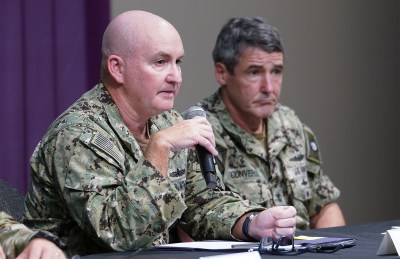
Kott and other key leaders were aware that there was a lack of drills related to potential spills at Red Hill but did not take action to rectify that before the crisis began, according to the Pacific Fleet’s supplemental investigation.
The Navy has said Kott’s departure did not have to do with the crisis.
Capt. James “Gordie” Meyer had been the commander of Naval Facilities Engineering Systems Command since 2020, meaning he was in his leadership role during both the May and November fuel leaks. He was relieved from his post in June.
Related
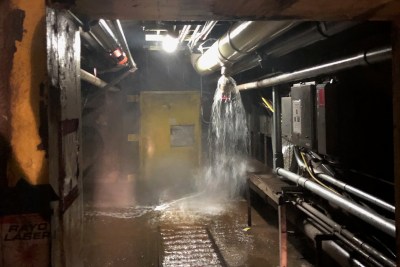
According to the Pacific Fleet investigation, Meyer – along with Kalp – decided not to immediately notify regulators about the May fuel spill. And in November, Meyer and Hornyak were faulted by investigators for a failure to exercise “the sense of urgency, critical thinking, forceful backup and timely and effective communication demanded by the seriousness of the situation.”
According to a Navy press release, Meyer will be staying in Hawaii to lead NAVFAC through the defueling of Red Hill.
Navy Capt. Erik Spitzer, the former Pearl Harbor commander who sparked public outrage and later apologized for saying the drinking water was safe when in fact residents had been drinking fuel, retired in June.
The Navy awarded him a Legion of Merit Award for his service.

