Where The Roots Of Asian American Hate Crimes Lie
By pulling back the veil from a recent spike in attacks, we can find solutions beyond solidarity.
March 29, 2021 · 5 min read


About the Author

While on family vacations to certain parts of the mainland, I always feared, but expected, the incessant glares while casually browsing a grocery store for bottled water. But I’d never imagined that things would ever go beyond that.

Over the past several months, hate crimes against Asian Americans and Pacific Islanders across the United States have spiked. Eight people, six of them Asian American women, were horrifically murdered at a spa in Atlanta. A Chinese man was stabbed and killed on his way home in Manhattan. An elderly Asian American woman was brutally attacked while waiting for a traffic light in San Francisco.
It wouldn’t be the first time. In the decades that have preceded our recent history, discrimination against Asian Americans and Pacific Islanders have been shards of glass that break the skin of America — yet those scars have been cauterized with invisibility, with silence, with complicity.
A total of 3,795 attacks have been reported since the beginning of the COVID-19 pandemic, with the steep incline in violence — physical, verbal and sexual — in part a result of the stigma surrounding the Chinese origins of the coronavirus, with most mainstream media outlets attributing the rise in xenophobia and racism to President Joe Biden’s predecessor.
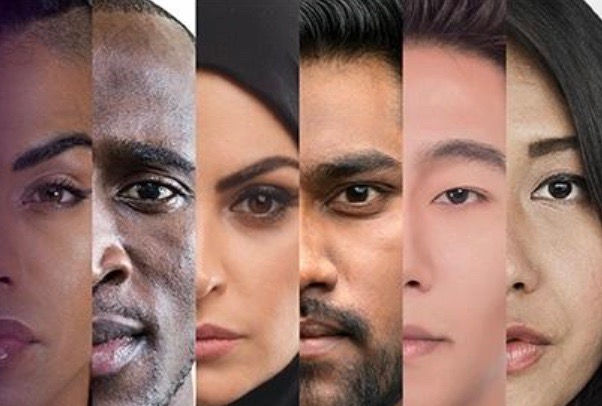
While the rhetoric of the Trump administration surely had a role in the spread of discrimination, it would be disingenuous to pin the full blame on a single, divisive political figure — it detracts from identifying and addressing the systemic root of the problem.
For one, amid racialized violence, the inconsistencies in how states across the country classify hate crimes have become increasingly apparent as a critical flaw in our justice system. The Department of Justice reports that only 47 states have hate crime laws in place, 17 of which don’t require data collection on hate crimes. This leaves national data severely incomplete, causing deficits in the allocation of support and resources to vulnerable communities.
Model Minority Stereotypes
Collected hate crime data already vastly underrepresents the spread of anti-Asian American targeting, with victims often questioning whether confrontations were crimes or a result of overthinking, leading many incidents to go unreported.
Hesitancy can largely be attributed to the persistence of the model minority stereotype — the belief that Asia Americans are self-reliant achievers of the American Dream, are the “nonthreatening” and “submissive” people of color, and have overcome racism by working hard — a damaging ideology that has enabled structural violence.
Words like “smart” and “hardworking” have become stereotypically synonymous with Asian Americans — but painting the community with a broad brush of universal success undermines critical recognition that Asian Americans and Pacific Islanders are the most economically stratified ethnic group in the United States.
Further, it undermines the capacity to have conversations on the consequences of discrimination against the AAPI community.
The conjecture that hard work can overcome racism is not just a common talking point to avoid necessary acknowledgment of the societal ills America faces but is a gross misrepresentation of it, and historically, has been weaponized against Black Americans who foot the largest bill from compounding systemic racism.
These glass shards dig deeper than the words and actions of former President Donald Trump — they dig to the core of our national identity.
To many of us living in Hawaii, this rising trend may come as a shock — after all, we live in a cultural mixing pot comprised mostly of Asian Americans and Pacific Islanders. It’s that simple fact, however, that may undermine our recognition of the gravity of these heinous hate crimes and how they pervade our communities, leading us to brush them off as isolated incidents happening far away from our island home.
The rise of hate crimes should be a wake up call for Hawaii and the nation as a whole.
However, a majority-minority status doesn’t exempt our state from the possibility of discrimination, as was seen with the findings of the investigation into Kauai Chief of Police Todd Raybuck — in which he mocked the physical attributes and accents of Asian Americans. In many ways, these revelations underscore how racism targeting people of Asian descent has become normalized and half-heartedly dismissed, a direct result of the model minority myth.
The rise of hate crimes should be a wake up call for Hawaii and the nation as a whole. The sirens have been sounded for us to dissipate xenophobic rhetoric, to require data collection on hate crimes, to challenge the model minority stereotype, to have an open dialogue about who we are and what we face.
We must be willing to have tough but needed conversations and call out explicit and implicit racism when we see it — because silence is the vehicle of complicity. Talking about the violence of discrimination doesn’t divide us — it’s a rallying call for unity to find true solvency.
If not for you, then for me and the generations of young Asian American and Pacific Islander children with hopes and dreams of a brighter tomorrow that will follow.
I have faith in you, and in us.
 Sign up for our FREE morning newsletter and face each day more informed.
Community Voices aims to encourage broad discussion on many topics of community interest. It’s kind of a cross between Letters to the Editor and op-eds. This is your space to talk about important issues or interesting people who are making a difference in our world. Column lengths should be no more than 800 words and we need a photo of the author and a bio. We welcome video commentary and other multimedia formats. Send to news@civilbeat.org. The opinions and information expressed in Community Voices are solely those of the authors and not Civil Beat.
Read this next:

Local reporting when you need it most
Support timely, accurate, independent journalism.
Honolulu Civil Beat is a nonprofit organization, and your donation helps us produce local reporting that serves all of Hawaii.
ContributeAbout the Author