Denby Fawcett: Mayor Offers Long List Of Improvements For Chinatown
But residents say just three things will make life better for them.
May 11, 2021 · 6 min read


About the Author

Mayor Rick Blangiardi did something unusual last week — he confronted face to face a group of wary, fed-up Chinatown residents and business owners at their neighborhood board meeting.
Instead of sending his minions to sweet talk the attendees like other mayors have done in the past, Blangiardi showed up himself with his managing director to explain how he plans to help.

The denizens of Chinatown have made it clear to the city they are tired of stepping into human excrement in front of their stores and scared when they see drug deals going down right in front of them.
Some say their more timid customers will no longer come to Chinatown to shop.
Their main focus of anger is about homeless people who they say appear to have taken over the streets as many businesses vacated the area for good during the pandemic.
To make matters worse, they say, Honolulu police officers miss most of what is happening by electing to stay in their vehicles rather than getting out to patrol on foot.
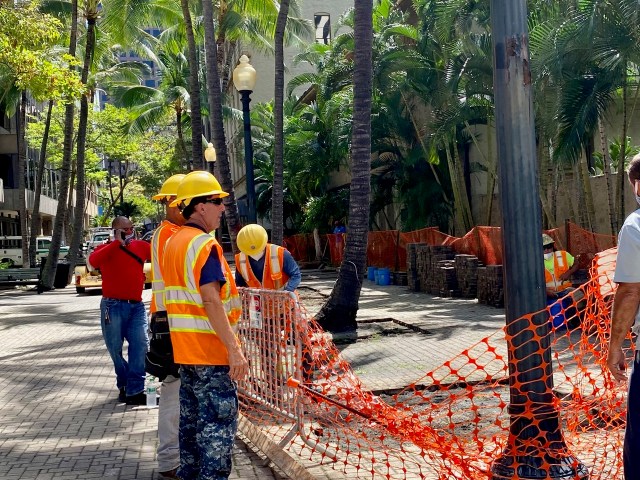
The mayor told the attendees at the meeting Thursday that eight city departments will be working on more than two dozen initiatives on a list he passed out, including planting new trees and fixing broken pavement on Fort Street Mall, a project that began Saturday, to installing new signage in the Kekaulike Street Mall.
He said he’s ramping up police response to crime in the area and negotiating with the River of Life Mission to urge it to move its meal service out of Chinatown.
“We will turn this long neglected historic front of Honolulu into a safe and vibrant community we can all be proud of,” the mayor said in a news release issued after the meeting.
Chinatown Watch co-founder Fran Butera said she was encouraged by the mayor’s talk but hopes that he will focus less on beautification and deferred maintenance initiatives and more on difficult problems that need to be addressed first: the open crime, drug dealing and the plight of Chinatown’s homeless population.
Her chinatownwatch.com is a website used by Chinatown residents and businesses to document problems in the neighborhood and to try to solve them.
She and others I spoke with after the meeting said that to be effective the mayor’s list must focus on getting effective police enforcement in the area, kicking out the drug dealers and urging the River of Life Mission to move its food service out of Chinatown.
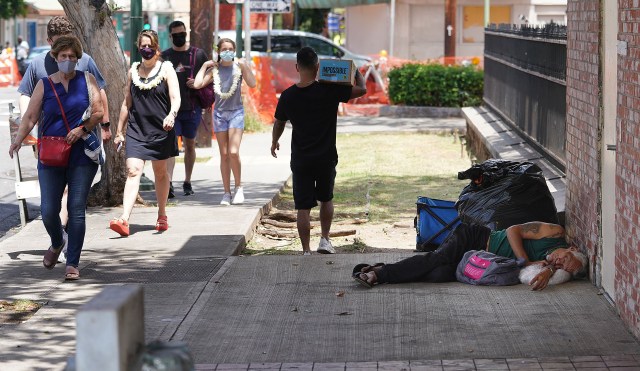
“The feeding operation in the mission’s building on North Pauahi Street has made Chinatown a destination for homeless as well as a destination for drug dealers who come to prey on the homeless,” Butera said.
Hundreds of homeless people flock to the Christian mission Monday to Friday for its free takeout breakfasts, lunches and dinners.
Butera says there are no public restrooms in the area so homeless people defecate in the streets and throw the meal containers on the sidewalks or into the gutters after eating at River of Life.
“It is a magnet for the homeless. My office gets complaints from Chinatown residents and business owners about it day after day, week after week,” Honolulu City Council member Carol Fukunaga says.
Fukunaga says the city has been trying since 2018 without success to get River of Life to move its meal serving operation to Iwilei but negotiations fell apart last fall.
But there seems to be hope now. Rann Watumull, president of River of Life’s board of directors, said in an interview Friday the mission is close to signing a contract with the city to move its food service to the city’s $17 million Homeless Resource Center on Iwilei Road and Sumner Street.
The city says construction on the resource center is expected to be finished by mid-June and the 27 studio apartments for homeless people on the top floors to be completed in mid-July.
“We are on board with moving to Iwilei. We are waiting to hear back from the city on the contract we are negotiating. We think the synergy in Iwilei will be good for our mission,” Watumull says.
The resource center in the old Montgomery Motors Building is near the city’s four-story Punawai Rest Stop for homeless people as well as the Institute for Human Services men’s shelter.
Everything is close together in the Iwilei neighborhood with different service providers offering bathrooms, showers, places for homeless people to sleep as well as mental health and addiction treatment services.
Watumull says after the meal service operation is relocated to Iwilei, River of Life expects to move its chocolate-making operation, now on the third floor of its building, down to the first floor to create a fancy chocolate boutique.
“We want to contribute to the revitalization of Chinatown by providing a chocolate shop to be enjoyed by residents and tourists,” he says.
Watumull says even though its homeless meal service will move to Iwilei, the mission will continue to distribute 400 boxes of groceries once a week to Chinatown residents — most elderly women — living in nearby apartments.
The mayor’s list of projects includes working with the Honolulu Police Department’s leadership “on a sustained, increased level of law enforcement presence on the streets of Chinatown and increased activation of HPD’s Chinatown substation.”
Blangiardi’s office did not answer Civil Beat’s questions on exactly what that means.

Lee Stack, president of the Chinatown Improvement District, said she was hopeful after Blangiardi’s presentation.
Chinatown Improvement District is a nonprofit dedicated to improving conditions in Chinatown while retaining the area’s historical character.
But Stack also worries about the tendency of city administrations to focus on sprucing up the streets and city-owned properties rather than diving deeper to try to resolve Chinatown’s more vexing societal issues.
At the meeting, Blangiardi told the audience, “I will stand by my words and you can hold us accountable.”
Butera says the Chinatown community has become increasingly suspicious and cynical. “The mayor will have a lot of eyes on him making sure that what he promises actually happens,” she says.
 Sign up for our FREE morning newsletter and face each day more informed.

Local reporting when you need it most
Support timely, accurate, independent journalism.
Honolulu Civil Beat is a nonprofit organization, and your donation helps us produce local reporting that serves all of Hawaii.
ContributeAbout the Author