Hawaii Has Benefited From Kitty Simond’s Leadership
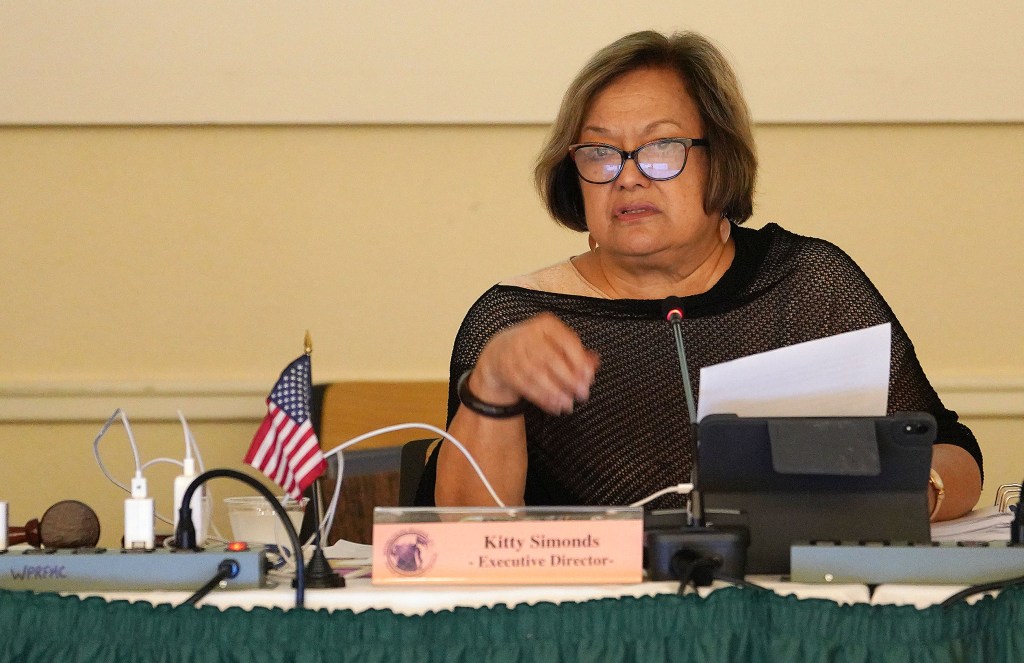
Kitty Simonds is an effective advocate for the commercial fishing fleet.
November 17, 2021 · 4 min read

About the Author

I read with interest Civil Beat’s recent series “On the Hook.” While I applaud the substantial research that went into the series, I must disagree with the criticisms — direct and suggested — of Kitty Simonds, the long-time executive director of the Western Pacific Regional Fishery Management Council.

As the series noted, she has no shortage of critics. But what she has been, everyone seems to agree, is an effective advocate for Hawaii’s commercial fishing fleet. That’s an important part of her role as executive director.
The councils were created by the Magnuson-Stevens Fishery Conservation and Management Act, which was passed in 1976 to assure local participation in matters governing fishing in U.S. federal waters, specifically maintaining populations of fish and sustainability of fishing industries. This is a subject with which I have some personal experience.
When I served in the Congress (1987-1990) representing Hawaii’s 1st Congressional District, I was appointed to a seat on the House Merchant Marine and Fisheries Committee. I sought that committee assignment because I knew how important its decisions were to Hawaii and its aquatic and fishing industries.
Shortly after my appointment, Sen. Dan Inouye called me to fill me in on a problem for Hawaii’s fishing fleet caused by the Magnuson-Stevens Act. The law covered every fish on the planet except tuna, or ahi as we call it in Hawaii. There was concern that unless tuna was included in the Magnuson-Stevens Act, the species could become seriously diminished.
Sen. Inouye also told me that some in the U.S. fishing industry lobby were working hard to keep tuna off the list. By doing so, the U.S. purse seiner fleet in the Gulf of Mexico had virtual control of the fishery.
(Once we successfully changed the law, the U.S. purse seiner fleet had to recognize the exclusive economic zones of scores of Pacific Islands nations.)
I felt that the act’s original stance on tuna was wrong on all counts, and I received critical support in Hawaii from Frank Goto and Brooks Takenaka of the local United Fishing Agency, and Kitty Simonds.
I worked with a sympathetic committee chairman, Congressman Walter B. Jones, a North Carolina Democrat, and we put together a strategy that garnered enough Democrat and Republican votes to pass a bill placing tuna under Magnuson-Stevens out of committee. Then Chairman Jones suggested I seek a hearing before the House Rules Committee to advance the measure on the consent calendar. That way it could be approved by unanimous consent, which allows a bill to pass without a formal vote. I gained the crucial support of the Rules Committee for a hearing.
Let’s be careful about confusing differences of opinion on policy issues with effective representation.
On the day of the vote, I posted supportive members of the Merchant Marine Committee at the entrance doors to the House Chamber, armed with leaflets explaining that for environmental reasons — the continued existence of this vital fish, the tuna — it was necessary for them to vote “aye” by unanimous consent on this measure. It worked and I called Sen. Inouye with the good news.
I mention this at some length to make a point: We sometimes forget that in the national scheme of things, Hawaii is a very small state. We’ve been blessed to have locals like Dan Inouye and Kitty Simonds who are well versed in the arcane ways of the federal bureaucracy. They have played a big role in helping Hawaii punch far above its weight in Washington.
So let’s be careful about confusing differences of opinion on policy issues with effective representation and doing one’s job well.
I have always found Kitty Simonds to be a knowledgeable and responsible advocate for the interests of the Western Pacific Regional Fishery Management Council. In fact, from where I sit, all of us in Hawaii are very lucky she has been such an effective executive for so many years.
 Sign up for our FREE morning newsletter and face each day more informed.
Community Voices aims to encourage broad discussion on many topics of community interest. It’s kind of a cross between Letters to the Editor and op-eds. This is your space to talk about important issues or interesting people who are making a difference in our world. Column lengths should be no more than 800 words and we need a photo of the author and a bio. We welcome video commentary and other multimedia formats. Send to news@civilbeat.org. The opinions and information expressed in Community Voices are solely those of the authors and not Civil Beat.

Local reporting when you need it most
Support timely, accurate, independent journalism.
Honolulu Civil Beat is a nonprofit organization, and your donation helps us produce local reporting that serves all of Hawaii.
ContributeAbout the Author