Denby Fawcett: A Free Hula Show At The Waikiki Shell Is OK But Commercial Plans Raise Questions
A nonprofit group dedicated to protecting Kapiolani Park says the plan for commercial entertainment violates the conditions of the park’s charitable trust.
January 19, 2024 · 5 min read


About the Author

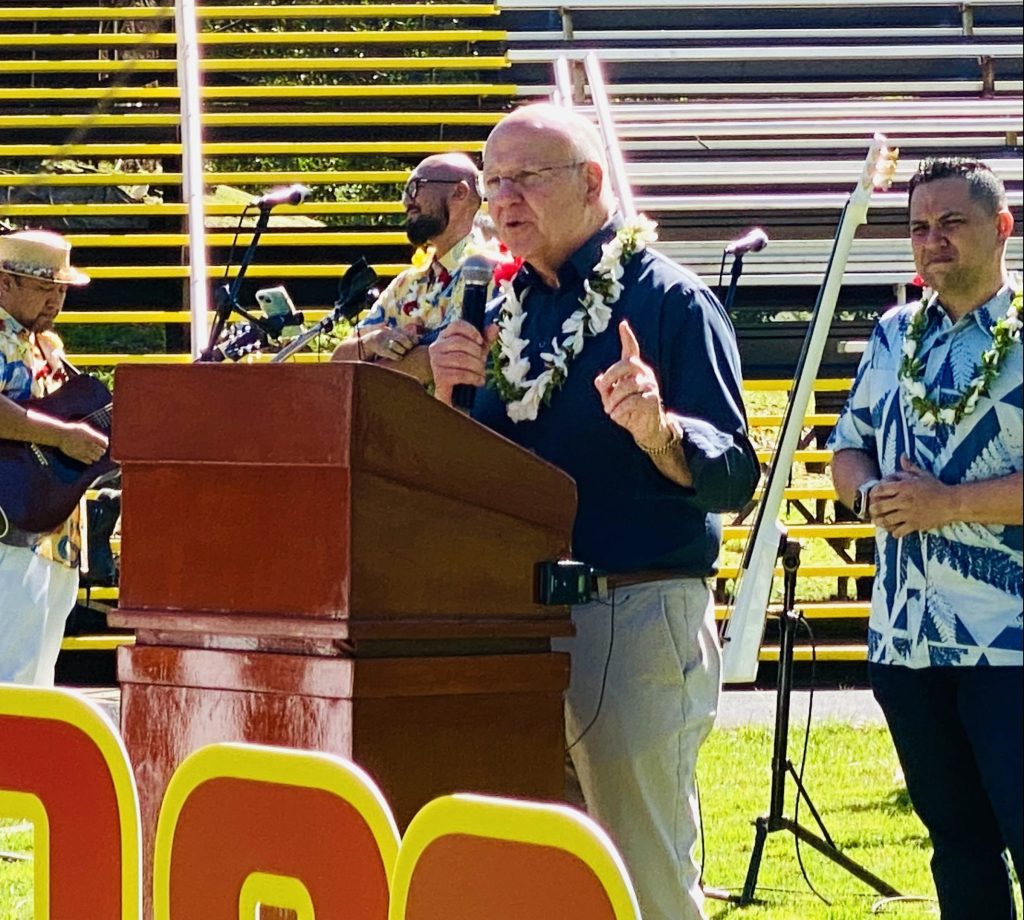
The Council for Native Hawaiian Advancement announced Thursday that in partnership with the city it will launch an “Authentic Hawaiian” hula show for free to the public at the Waikiki Shell.
CNHA said it will also sponsor a pop-up marketplace in connection with the free hula show, which will be held at 9:30 a.m. every Sunday through Thursday beginning Feb. 15.
The head of CNHA told me in the future the nonprofit plans to also stage evening Hawaiian entertainment with food service for paying customers on the same days at the iconic outdoor venue. That raised some questions.

Mayor Rick Blangiardi was at the news conference announcing the daytime hula show. He said I was the first to ask about CNHA plans to also offer evening performances for a charge.
The mayor said he preferred to talk about the benefits of the free daytime hula shows as something special for both visitors and residents.
“We have done everything right, I am centered on this now,” he said.
CNHAʻs promotion displays described the future evening events as luaus. And Native Hawaiian chef Kealoha Domingo — showcasing his culinary dishes at a table at the news conference — spoke about his interest in serving authentic native foods at evening events at the Shell.
The daytime show will be held at the site of the old Kodak Hula Show, which faced similar concerns.
Kuhio Lewis, CEO of CNHA, said the revenue from the evening shows will be necessary to help offset the cost of offering free, daytime hula shows, which he estimated will cost the organization $100,000 a month. He didn’t say how much would be charged or when the evening shows would begin.
Lewis said he has no lease for the shows but rather a day-to-day revokable permit from the city.
“We are taking a risk. The permit could be revoked at any time,” he said.
At issue here is the question of whether it is legal to allow one group ongoing, exclusive commercial use in Kapiolani Park since it is protected from ongoing commercial uses by a public charitable trust.
The Kapiolani Park Preservation Society, a nonprofit dedicated to upholding requirements of the Kapiolani Park Charitable Trust, said the plan for the commercial evening entertainment in the Shell and the pop-up marketplace during the daytime hula shows violates the conditions of the trust that was originally created in 1896.
Alethea Rebman, an attorney who is also the society’s president, wrote to state Attorney General Anne Lopez on Jan. 8.
“As you are aware, the Waikiki Shell is located within Kapiʻolani Park and subject to the terms of Trust. Allowing the Proposed Action for exclusive use of the park grounds is not an appropriate or legal use of the Park, as it would restrict the free use of Park recreational resources of the public and dedicate a space for the benefit of one organization,” she said.
Rebman said the group will file a lawsuit if the plan the CNHA has made with the city for continuous use of the public facility is allowed to go forward.
“The City is charged with managing Kapiolani Park, but it does not own it. The public owns it,” Rebman said.
The Attorney General’s Office said it is working on a response to the letter from the Kapiolani Park Preservation Society and declined comment at this time.
The Kapiolani Park Charitable Trustʻs provisions allow groups to charge for events in the park but only on a short-term basis, not long term.

In the past, the Kapiolani Park Preservation Society has successfully sued to prevent the city from leasing part of the Honolulu Zoo to a permanent Burger King concession.
Its legal actions have resulted in limits on other ventures, including the Kodak Hula Show which was mandated by the court to always be offered without charge.
And the society successfully fought an early attempt to take open park lands and the Waikiki Shell and the zoo for a convention center.
In her letter to the Attorney General, Rebman says the arrangement the city is making may be advantageous for the Council for Native Hawaiian Advancement and for the city but not for the public.
She also says such a permanent entertainment venue would greatly reduce the number of free public parking spaces behind the Kapiolani Park Bandstand and the Waikiki Shell.
Rebman says she was told in a meeting the Council for Native Hawaiian Advancement would need 60 parking spaces for its employees — parking spaces now heavily used by the public.
And in addition, customers coming to the hula show, the pop-up marketplace (makeke) and to evening shows would be taking more parking spaces from public parkgoers.
The Council for Native Hawaiian Advancement in a news release said to minimize traffic and the parking impact, it will promote the use of public transportation or walking from Waikiki hotels.
It is enticing to think about free Hawaiian entertainment at the site of the old Kodak Hula Show, but not if it comes at the expense of handing over priceless park assets to a single group on a permanent basis.
 Sign up for our FREE morning newsletter and face each day more informed.
Local reporting when you need it most
Support timely, accurate, independent journalism.
Honolulu Civil Beat is a nonprofit organization, and your donation helps us produce local reporting that serves all of Hawaii.
ContributeAbout the Author