What Has Happened To East Honolulu’s Public Landscapes?
We continue to design and install road landscapes featuring plants that require micro-climates and specialized maintenance. It’s a waste of money.
August 30, 2024 · 5 min read


About the Authors


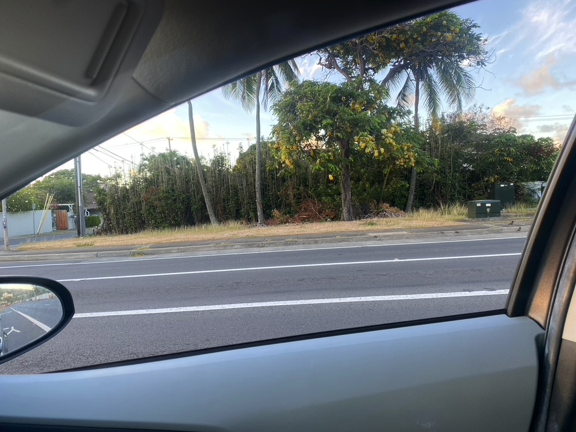
Along Kalanianaole Highway, not far from our home in Kuliouou Valley, sits a mini park that was destined to become “naturalized.”

The 1,000-square-foot public space used to feature ice plant, but it lasted only as long as the hand weeding. Now all that is left is a shower tree and panax hedge, both surviving despite the care they receive.
Evidence of this inevitable evolution continues to the east, as 70% of the naupaka has died in the median strip at the entry to Hawaii Kai. No one has repaired the irrigation systems. It’s a systemic problem for public landscapes.
Traveling west, you will see Manila palms are penciling. Some with missing tops have been cut to ground level. The palm trunks, like the growth rings of a tree, are a living record of irrigation problems and inadequate maintenance.
Entering Kahala, the planters in the middle of the H-1 Freeway were first planted with spider lilies that thrived. They were inexplicably replaced with Manila palms that struggled in the elevated freeway’s strong winds.
They in turn were replaced with bromeliads that thrived but were removed over concerns that they were a breeding ground for mosquitoes. Then, for a brief period, they were replaced by endemics.
Now, despite the cement surface and rocks, there is a healthy ground cover of invasive grasses.
Let’s Take Ownership
Continuing in the Ewa direction and approaching Kaimuki, the embankments used to be filled with Wedelia that survived as long as its irrigation system did. Now, instead of Wedelia there is a combination of grasses, haole koa, Christmas berry trees and a handful of other plants, “invasives.”
None of these naturalized landscapes are what the public paid for, but they are what we have, and they are holding the soil, producing oxygen, and mitigating global warming. Instead of planting things that die, we should thank Mother Nature for her gift.
We’re not suggesting we plant invasives in our public spaces, but we do think that our industry must take a long, hard look at what we are doing and stop wasting the public’s money.

We’ve been in the landscape industry for close to 50 years now, and we’ve learned over the years that if someone takes ownership, plants thrive.
With climate change, days are hotter and drier. In addition, in today’s economic landscape, good, consistent labor is equally scarce and unpredictable.
Yet Honolulu continues to design and install landscapes that often feature plants that require micro-climates and specialized maintenance just to survive.
Life-Sustaining Plants
We realize we are often not included in the decision-making process when planning these public landscapes, but we as an industry should look the legislators in the eye and explain that their plans are unrealistic.
Because of the lack of water and labor, we should look at what has been successful and repeat what is working — large weed lawns, ground covers and trees.
We do not have all the answers, but we would like to call your attention to our Polynesian forebears. Early Polynesian voyagers assembled what would later be called “canoe plants,” important, life-sustaining plants that could not only survive a long ocean voyage but would also be adaptable to the variety of conditions found in their eventual destination. Some of these plants included kalo, ulu, kou and lauhala.
The Hawaii Sugar Planters Association with the help of Dr. Harold L. Lyon used the same criteria when selecting plants to restore Hawaii’s watersheds damaged by cattle. Many of the plants continue to thrive at the Lyon Arboretum Botanical Garden in the back of Manoa Valley.
We think it’s time for us to compile a list of 21st-century canoe plants, an updated and realistic listing of plants that can survive and thrive in todays and tomorrow’s conditions, both environmental and fiscal.
We, the Landscape Industry Council of Hawaii, have a decision to make. A few of us are making a very good living at the taxpayers (our neighbors) expense.
This should not be the definition of sustainable landscaping. We need to take ownership, not blame the gardener.
We’re inspired by young environmental activists in Montana who won their lawsuit claiming state agencies violated their constitutional right to a clean and healthful environment. The lawsuit inspired Hawaii’s youth with their own recently settled lawsuit.
But the fossil fuel industry is not the only one damaging the environment.
 Sign up for our FREE morning newsletter and face each day more informed.
Community Voices aims to encourage broad discussion on many topics of community interest. It’s kind of a cross between Letters to the Editor and op-eds. This is your space to talk about important issues or interesting people who are making a difference in our world. Column lengths should be no more than 800 words and we need a photo of the author and a bio. We welcome video commentary and other multimedia formats. Send to news@civilbeat.org. The opinions and information expressed in Community Voices are solely those of the authors and not Civil Beat.
Local reporting when you need it most
Support timely, accurate, independent journalism.
Honolulu Civil Beat is a nonprofit organization, and your donation helps us produce local reporting that serves all of Hawaii.
ContributeAbout the Authors