Here’s Another Tool To Address Hawaii’s Cost-Of-Living Crisis
Carbon cashback legislation is an energy and climate policy but would also provide real financial relief to vulnerable families.
September 9, 2024 · 4 min read

About the Author

According to Aloha United Way, a staggering 44% of households in Hawaii do not earn enough to meet what is known as the “survival budget,” the minimum cost of household necessities. They are unable to save any money because they do not have enough income to cover all of the necessities of daily living.

Support to these families is being provided through policies such as the increase in the minimum wage and child tax credits. But it’s not enough, and more must be done.
A policy that needs to be added to the mix is carbon cashback. The carbon cashback bill is an energy and climate policy at its core, but it also would provide real financial relief to kamaaina families, particularly the most vulnerable ones.
The first part of the policy takes climate action by hastening the transition to clean, renewable energy.
The carbon cashback legislation considered by the Legislature this past session (Senate Bill 2525 and House Bill 2178) would have imposes a gradually increasing carbon fee on fossil fuel products through the existing barrel tax. It would start at the equivalent 5 cents per gallon of gasoline and peak at about 90 cents per gallon in the 10th year of the program.
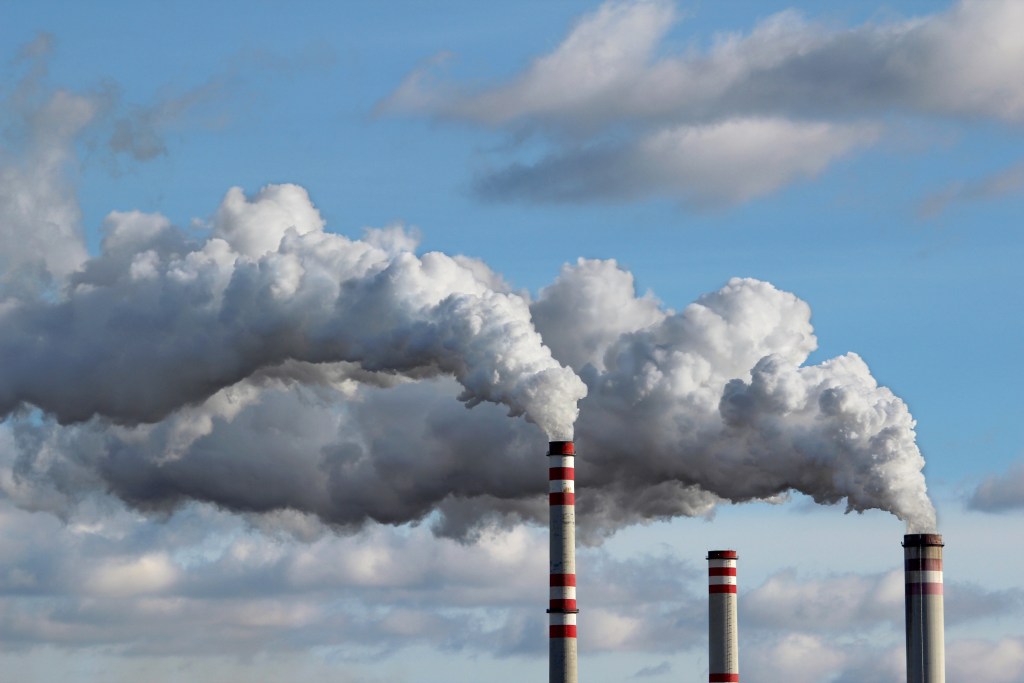
The fee would spread throughout the economy. The resulting higher cost for products made from fossil fuel would incentivize businesses and consumers to use less of them.
This pricing pressure would work synergistically with state and federal incentives that subsidize investments by individuals and businesses in energy efficiency, clean transportation, and renewable energy. Together, they would accelerate the transition to cleaner, energy-efficient alternatives.
The result would be a shift toward energy self-sufficiency and progress toward the state’s goal of net-negative greenhouse gas emissions by 2045.
Weaning Hawaii’s economy away from fossil fuels would lead to more stable and predictable energy prices. Reducing and ultimately eliminating energy price shocks from events well outside Hawaii’s control (e.g., the Russian invasion of Ukraine) would benefit lower-income families the most.
They are the most vulnerable to price spikes, and they have less disposable income to absorb these shocks. Importantly, it would lead to a sustainable clean, renewable energy economy.
Net-Negative Emissions Goal
The second part of the policy enables a socially responsible transition to that clean, renewable energy future. The policy makes progressive use of the revenues generated by the carbon fee, which would eventually reach about $600 million per year.
As envisioned in the carbon cashback bills, the revenues (less a small amount for administration) would be distributed to people as a climate rebate — the same amount for each person in the form of a refundable tax credit (half shares for dependents). The annual cashback payment for an individual would reach $600 after 10
Hawaii’s 2020-2022 Tax Review Commission, which put carbon cashback at the top of its recommendations, found that “returning the proceeds (of the carbon fee) can leave the average household in each income quintile better off economically.”
According to the calculations in a 2021 study by the University of Hawaii Economic Research Organization, in the 10th year of the program the rebate would be $655 (converted to 2023 dollars) more than the increased costs caused by the carbon fee for the average household in the middle-income quintile. For the average household in the lowest income quintile, the net gain would be even more — $1,180 annually.
The rebate would peak in the 10th year, then decline as the goal of net-negative emissions is approached. Carbon fee revenues would eventually shrink in size and disappear, and so would the rebate.
Carbon cashback would accelerate our transition to a clean energy future.
But for 20 years the great majority of families would be financially better off despite the rise in the price of some goods and services.
This result is partly due to tourism. Tourists would naturally pay the carbon fee through their purchases in the state. They would contribute to the climate rebate, but they would not qualify to receive it. In that respect, the policy would be akin to a “green fee” or “climate fee.”
Carbon cashback would accelerate our transition to a clean energy future and ensure that most households would end up with extra cash — especially those with the lowest incomes.
It would put no additional pressure on the state’s budget. It is just the kind of policy we need now as we develop solutions to Hawaii’s cost-of-living crisis.
 Sign up for our FREE morning newsletter and face each day more informed.
Community Voices aims to encourage broad discussion on many topics of community interest. It’s kind of a cross between Letters to the Editor and op-eds. This is your space to talk about important issues or interesting people who are making a difference in our world. Column lengths should be no more than 800 words and we need a photo of the author and a bio. We welcome video commentary and other multimedia formats. Send to news@civilbeat.org. The opinions and information expressed in Community Voices are solely those of the authors and not Civil Beat.

Local reporting when you need it most
Support timely, accurate, independent journalism.
Honolulu Civil Beat is a nonprofit organization, and your donation helps us produce local reporting that serves all of Hawaii.
ContributeAbout the Author