Kirstin Downey: Devastated Lahaina Restores Its History First
What will surround them remains in doubt, but many historical buildings are making a comeback in the burn zone.
March 7, 2025 · 7 min read

About the Author

Bit by bit, slowly and haltingly, the Lahaina Historic District is being brought back to life.

More than a dozen old buildings burned in the 2023 fire — representing hundreds of years of Hawaiʻi’s rich cultural heritage — are being restored, providing anchor points in the historical town’s resurrection. Meanwhile, a new county proposal to expedite building permits within the historic district could help spur things along.
The Lahaina Restoration Foundation is preparing a master plan to restore and renovate eight of its properties in Lahaina, including the Baldwin Home, Hale Aloha museum, the Old Lahaina Courthouse Building and the Masters’ Reading Room, where ship captains once gathered to share news and swap navigation advice. The board expects most of the money to come from the federal government, but it is ramping up fundraising efforts as well. A benefit lūʻau May 10 will jumpstart the push.
“We’re marching forward,” said Dora Millikin, a foundation board member.
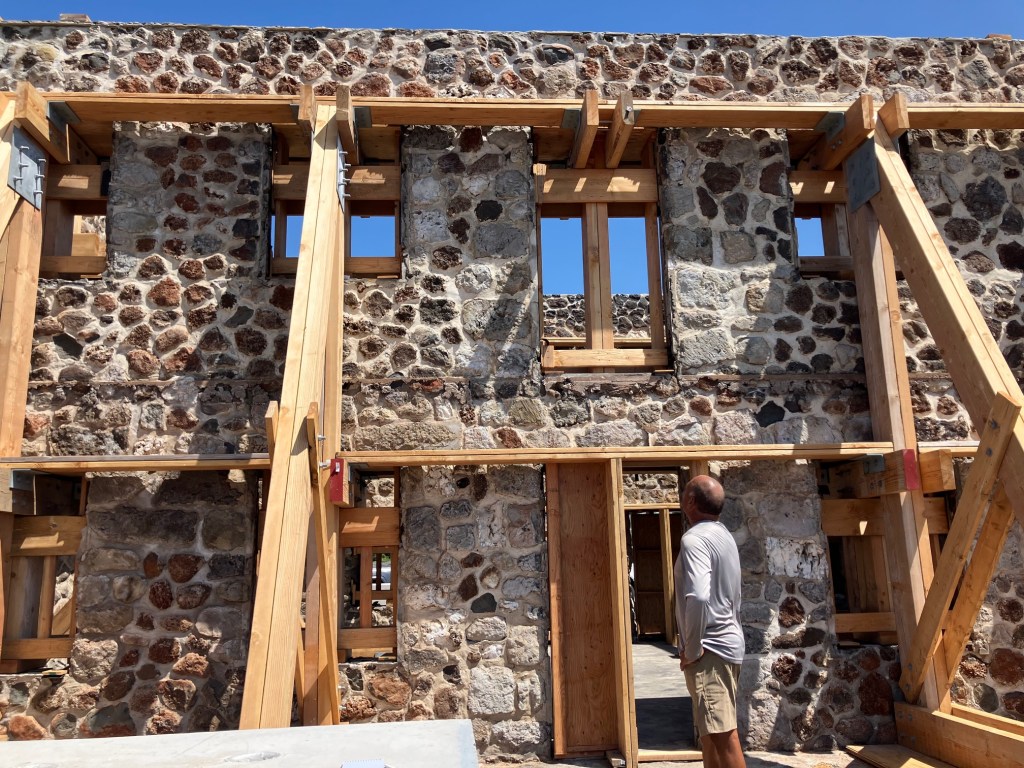
There are visible signs of progress. The wooden interiors of these buildings may have burned but their stone walls survived. Solid bracing systems have been installed to stabilize their shells, making them ready for the next round of work.
Debris surrounding the old Lahaina jail has been stripped away, revealing the pale yellow coral enclosure that served as the prison yard. Two vintage railroad locomotives have been relocated to a central site near Baldwin House and the Masters’ Reading Room. Three feet of toxic debris that fell into the basement was meticulously sorted by archaeologists at the Old Lahaina Courthouse, allowing preservationists to cull for artifacts that survived.
Much of this initial work was done by the federal government. Cultural monitors who were employed to supervise the sites helped local people who were not allowed on site to specify what was important and needed to be preserved, said Jesse Neizman, the foundation’s chief engineer.
“They were our eyes and ears in the burn zone,” Neizman said.

Some Projects Start From The Ground Up
The most visibly precarious of the structures is the Baldwin House, the oldest building on Maui, whose end walls are visibly cracking and is at risk of collapsing inward. It will need substantial repairs quickly, foundation officials said.
One victory for historic preservationists is that a building that was nearly lost, a stone structure built in 1823, has been retained. The Spring House, an important watering station for visiting ships, appears to have been unaffected by the fire and now has survived the post-disaster wrecking ball.
Waiola Church, which burned to the ground, needs to be entirely rebuilt, a process that trustees hope will begin this year. They are seeking a project manager to begin the work. The rock walls surrounding the property are already being reconstructed, thanks to a Hauola grant from Lele Aloha, a nonprofit group founded by Hawaiʻi waterman Archie Kalepa.

Waiola is one of the most significant historical structures in the state, housing the graveyard where Queen Keōpūolani, King Kaumualiʻi and Princess Nāhiʻenaʻena were buried, surrounded by some of their missionary friends. Although the church and its community hall were destroyed, the cemetery was untouched by the fire. The grounds have been beautified with the help of a $50,000 grant from Maui’s Rotary clubs. The money was used for lawn maintenance equipment and a new irrigation system that will help keep the lawn green and maintain flowering trees on the site.
Historic grave markers at the cemetery, placed there in 2023, identify the many members of the aliʻi families buried there, including the ancestors of the people buried at Mauna ʻAla, the royal mausoleum at Nuʻuanu on Oʻahu.
“These are the kūpuna, the elders of the people at Mauna ʻAla,” said state Rep. Elle Cochran, who represents Lahaina. “These people are lesser known but they are more important.”
In late January, U.S. Sen. Brian Schatz announced he had secured nearly $10 million in funding from the Federal Emergency Management Agency to support historic restoration efforts. In a press release, he identified Hale Aloha, the Old Lahaina Courthouse, the Masters’ Reading Room and Waiola Church as recipients.
Progress On Many Fronts
Other property owners are also pushing ahead. The family that owns the Pioneer Inn, built in 1901, recently told state lawmakers they are committed to restoring it. The owners of the Lahaina store, a landmark structure that survived the 1916 fire and became known for housing Fleetwood’s on Front Street restaurant, have said the same. Supporters of the Wo Hing Society, a Chinese social and fraternal organization, have told foundation officials they also intend to rebuild.
The leaders of the Lahaina Cultural Center, Nā ‘Aikāne O Maui, have pledged to rebuild their facility.
Native Hawaiian groups have proposed reconstructing Mokuʻula, a 1-acre royal compound on an island surrounded by a spring-fed fishpond that once served as the home to Queen Keōpūolani and her son, King Kamehameha III. The island was abandoned in the late 1800s and later turned into a trash dump and then a park. Supporters have long dreamed of it being rebuilt, and the fire is providing momentum in that direction.
It’s now possible to imagine what that project may look like. The Lahaina Restoration Foundation, in collaboration with cultural practitioners, has produced an immersive 360-degree animated audiovisual exhibition about the island palace that permits viewers to envision it for themselves. This unusual new film is being shown once a month at the Sphere at the Maui Ocean Center at Māʻalaea.
But supporters of all these projects recognize there are real obstacles standing in the way. Many expect to receive federal disaster relief funding, so the owners of the properties are watching presidential cost-cutting initiatives with considerable worry.
“The present administration — Donald Trump — is really messing with things, so we don’t know what will happen,” Millikin said.
“We are all sitting here wondering what will happen tomorrow or next week or next month,” said Kent Stewart, who is chairing the Waiola Church’s rebuilding committee. He said that so far, officials at the Hawaiʻi Emergency Management Agency have told church leaders they should assume all is well.

One new county initiative that would help projects proceed more quickly is a proposal that would allow historic properties that are being restored, like for like, to get building approvals more quickly. This would ease the workload on the Maui County Cultural Resources Commission, the agency that oversees construction in historic districts.
The commission has struggled to handle its workload. Its board has only met a handful of times in the past year and a half because of a repeated failure to gain a quorum. It met in December, but its last two meetings have been canceled.
And even if all the projects proceed, the bigger question is what will happen to the remainder of the properties in the Lahaina Historic District. According to the planning department, there are 106 lots in the district where reconstruction may be needed. While these particular buildings, the crown jewels, may be restored, they may end up marooned within a very different context than what was there before.
“We’re going to restore everything if we can,” said Penny Wakida, a foundation board member since the 1980s. “Getting that restoration will be beneficial to the town. It will give people a sense of place we are losing. The historic sites will help restore the feeling.”
 Sign up for our FREE morning newsletter and face each day more informed.
Local reporting when you need it most
Support timely, accurate, independent journalism.
Honolulu Civil Beat is a nonprofit organization, and your donation helps us produce local reporting that serves all of Hawaii.
ContributeAbout the Author