Kirstin Downey: This Gorgeous Big Island Bay Could Soon Be More Accessible
Kealakekua Bay is best known as the spot where Capt. James Cook met his demise.
March 21, 2025 · 6 min read

About the Author

For many decades, up until the attack on Pearl Harbor, the most famous site in Hawaiʻi to people outside the islands was the place that controversial ocean navigator Capt. James Cook met his death during a bloody affray with Native Hawaiians in 1779.
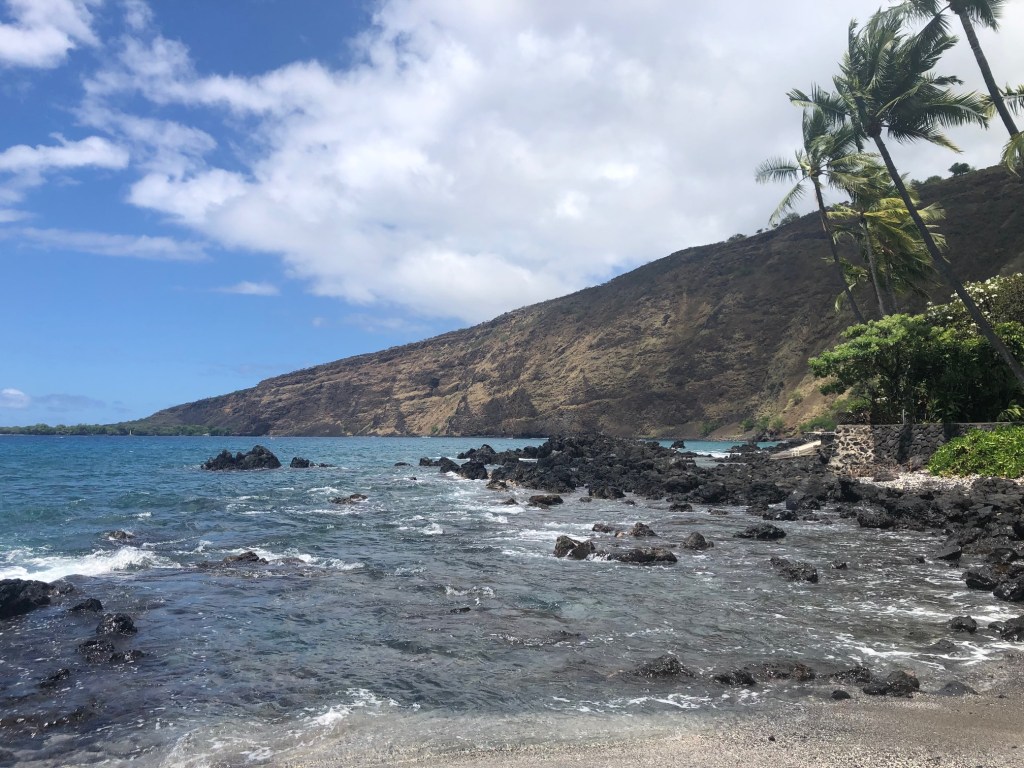
Now home to a marine life conservation district complete with spinner dolphins, Kealakekua Bay is a beautiful, serene cove on Hawaiʻi island’s western coast that still looks remarkably like the surviving drawings made by Cook’s shipmates.

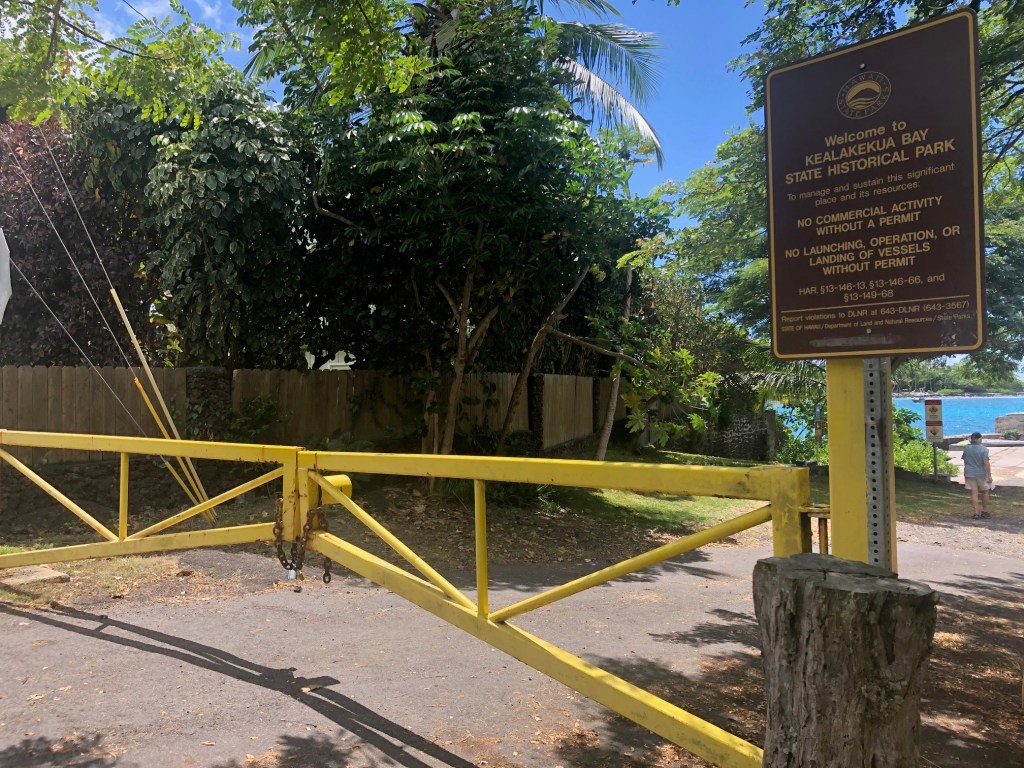
But while it is a particular place of interest, Kealakekua Bay is also notoriously hard to visit, with limited parking and misleading signage, with the only vehicle access ending in a residential street bristling with no-parking signs and a small parking lot that bars entry. Visitors who want to see the site must pay to join a snorkeling boat tour, struggle for parking or try to scramble down a dangerously steep and rocky hill from a highway perched high above the water.
But new state funding through the Legacy Land Conservation Commission is going to give a local community group money to improve, maintain and supervise the trail down to the water.
A Native Hawaiian nonprofit, Ho’āla Kealakekua Nui, in collaboration with the Hawaiʻi chapter of the Trust for Public Land, says it will protect and care for a property that sits near the top of the Kaʻawaloa trailhead. This will serve as the gateway to Kealakekua Bay State Historic Park, which contains a British-funded monument to Cook and the remains of an important sacrificial temple, Hikiau Heiau, which served as a Hawaiian religious and governmental complex.
The group is also planning to establish an interpretive center that will help orient visitors to the site and explain its significance.
On April 11, the state Board of Land and Natural Resources is scheduled to act on a recommendation that the nonprofit be given a $700,000 grant for land acquisition for the trailhead property.
The Legacy Land Conservation Program was created by the Legislature in 2005 to provide permanent funding for land conservation. The money comes from a fixed share of the state real estate conveyance tax. A nine-member commission reviews applications for the funds and makes recommendations about which appear to best serve the public interest. The commission seeks to identify projects that would protect valuable cultural or archaeological resources, habitats for endangered species or lands of unusual aesthetic value that have been placed at risk in some way.
This year, a pot of some $6.7 million has been made available for legacy lands projects. Five projects, including Kealakekua Bay, have won the approval of the commission. State lawmakers and other government agencies still need to weigh in on the process. Ultimately the governor needs to approve the release of funds as well.
The Kealakekua Bay project received enthusiastic support from more than two dozen environmental and community groups, many of whom said action is long overdue.
It is estimated that about 100 people a day take the Kaʻawaloa trail down to the bay. Local residents say that visitors and tourists park haphazardly along the highway to start their treks. There are no sanitary facilities and no drinking water. It’s a 1,300-foot climb down, and it seems even higher on the way back up.
“The Kaʻawaloa trail remains unmanaged,” National Park Service officials said in testimony. “Most trail users enter unprepared for the elevation change, heat, lack of hydration.”
“This is an unsafe environment that will lead to tragedy,” said Mike Vitousek, president of the Hōkūliʻa Park and Cultural Sites Association in Kealakekua.
In fact, Kealakekua has long been famous as a scene of tragedy. Dozens of people were killed there after British explorers led by Cook clashed with Native Hawaiians. The Hawaiians had hosted the rowdy and argumentative British sailors for weeks at great expense.
Then a rowboat went missing. For the British, most of whom could not swim, rowboats were essential because, in a landscape without piers and docks, that was the only way to get to shore. For Hawaiians, the metal nails used in rowboat construction were attractive and valuable new tools to be used to fashion into fishhooks and weapons.
Cook wanted the rowboat back and he decided to use a tactic that had worked for him on other occasions when something valuable had been stolen from his ships. He decided to kidnap Hawaiʻi Chief Kalaniʻōpuʻu and hold him aboard his ship until his subjects restored what had been lost.
In this case, however, the British had worn out their welcome and Cook’s strategy backfired. Hawaiians grew suspicious of his motives and overwhelmed him. Cook and four other British sailors were killed. The British in turn immediately killed about 20 Hawaiians. Over the next days, the British massacred dozens more.
A best-selling new book, “The Wide, Wide Sea,” a biography of Cook during his last voyage, updates the historical record on these tragic events and provides new context as to how they unfolded. In his telling, author Hampton Sides depicts Cook as growing increasingly unstable and cruel as the voyage progressed but generally paints a favorable and larger-than-life picture of the mariner as a skilled and resourceful navigator whose exploits opened up knowledge of the Pacific basin.
In Hawaiʻi, Cook is viewed with considerably more jaundiced eyes as the leader of a disease-bearing expedition force that inflicted venereal disease in the form of syphilis and gonorrhea that weakened and decimated the Hawaiian population and introducing death-dealing weaponry that made mass slaughter easier.
The people of Hawaiʻi were strong and healthy when Cook and his men arrived, but within 20 years, visiting ship captains noted that many Hawaiians were visibly ill. As civil war spread through the islands in those decades, the cannons, rifles and guns the British brought multiplied the death toll still further, allowing larger numbers of people to be killed than ever before.
Lisa Greenwell Hummel, president of the Kona Historical Society, which has endorsed the Hoʻāla Kealakekua Nui proposal, said the entire site is important, not particularly because of the Cook monument but also because of its significance to Hawaiian history. Kealakekua Bay became a commercial hub for foreign trade for several decades after Cook’s death, with arriving ships from throughout the Pacific using it as a supply-replenishment and recreation destination. A powerful local warrior, Kamehameha, encouraged these contacts and, trading with these visitors, built up the arsenal he would use to conquer the other islands.
“It’s neat to know some very important things happened in that bay,” she said. “Cook’s death happened to be the most famous. But the monument is not the attraction. The bay is the attraction.”
Civil Beat’s coverage of environmental issues on Hawaiʻi island is supported in part by a grant from the Dorrance Family Foundation.
 Sign up for our FREE morning newsletter and face each day more informed.
Read this next:

Local reporting when you need it most
Support timely, accurate, independent journalism.
Honolulu Civil Beat is a nonprofit organization, and your donation helps us produce local reporting that serves all of Hawaii.
ContributeAbout the Author