Lee Cataluna: 'Aloha Isn't Always Being Nice. Aloha Is Being Real'
Kamaka Pili says the first step toward avoiding culture clashes is education.
March 23, 2025 · 6 min read

About the Author

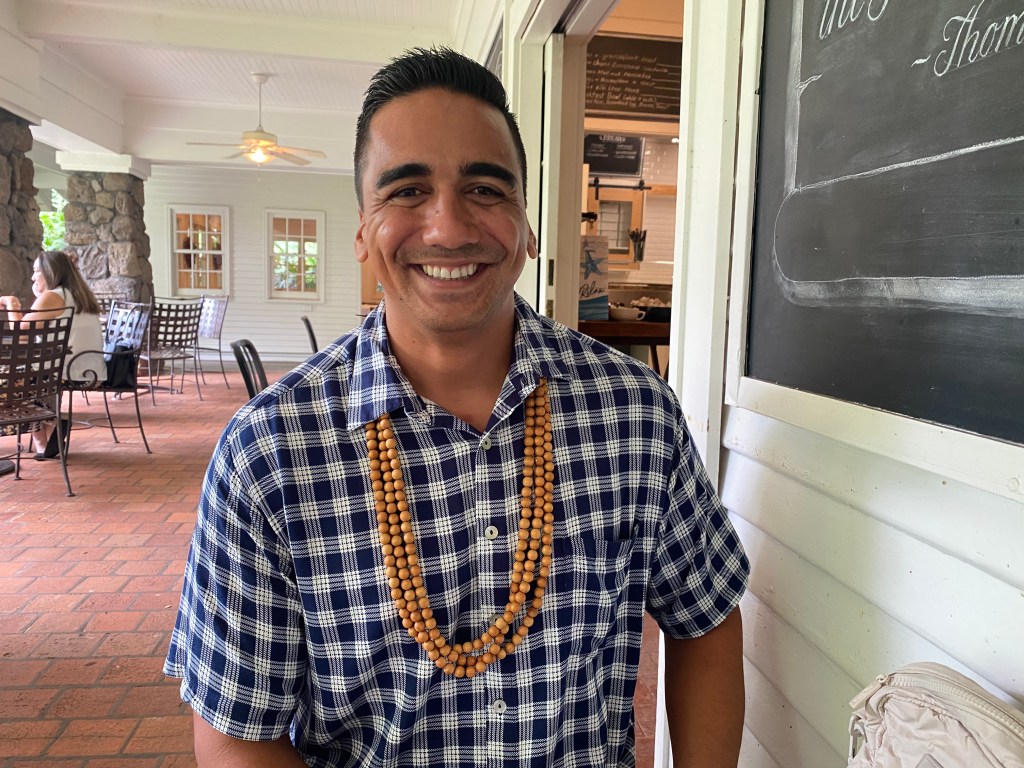
Kamaka Pili is on a journey.
His lessons on Hawaiian culture are becoming ubiquitous, and his mix of academic research, gracious interviews and unguarded personal stories set him apart from most of the negativity and self-promotion of traditional and social media.
His videos don’t come off as pedantic or hectoring or staged. He makes you feel like he’s letting you in on a valuable piece of information, like he’s offering you a story of great worth. There is a lot of cultural misunderstanding and misappropriation in the world. Pili is offering an antidote.
The inciting incident that called Pili to his current path was a video a friend sent him in 2017 of a kid spray painting the Prince Kūhiō statue in Waikīkī. At first, he got angry. And then he got busy.
“I looked up every email from every television station in town and wrote to them saying ʻIf you took the position of educating people about Hawaiian culture and what Prince Kūhiō did, maybe this sort of thing wouldnʻt happen.’” He let them know he’d be willing to provide that cultural content.
KHON2 responded, and a few months later, he started appearing on the Channel 2 Morning News one day a week doing a segment about the meaning of street names around the islands. He did the gig for free, but it eventually turned into a full-time position doing the weekend weather and reporting on community stories.
Pili, 36, is a 2006 graduate of Kamehameha Schools Kapālama. He went to college at the University of Hawaiʻi Hilo, studying Hawaiian language and graduating with a degree in political science.
After that, he floundered for a while. For two years, he was a dishwasher at Bubba Gump Shrimp Co., eventually working his way up to bartender. “I was taking lomi classes during the day, learning how to heal people, and then mixing drinks, giving them poison at night,” he said.
He started a business making Hawaiian-inspired jewelry and clothing, selling the items at craft fairs. He enjoyed talking to people who came to look at his designs, and would share stories with them. One customer told him he should have his own talk show on ‘Ōlelo Public Access television, and that’s how Aloha Authentic, a brand he still owns, began in 2015.
Another incident around that time shaped how he approached educating people about Hawaiian culture.
He was taking a kapa class, learning how to make cloth from bark fibers in the traditional Hawaiian way, and went hiking into Maunawili Valley to look for a flat stone to use as the base for beating the kapa with a pounding stick. He wore a malo on the hike, his thought being that it was the most natural thing in the world for a Hawaiian to wear traditional Hawaiian clothing to do a traditional Hawaiian thing in a Hawaiian forest.
He came upon a group of hikers who were young, rowdy, and not exactly in the frame of mind to be respectful and peaceful on the trail. They started yelling, laughing and making rude comments about him. Pili stood his ground and said, “You shouldn’t be laughing at this. This is what my ancestors wore. This is Hawaiian and you’re in Hawaiʻi.”
He continued on to the stream bed in the valley. After a while, one of the hikers turned back to find him and offer an apology. “We talked and I explained to him what I was doing,” Pili said. “If I got in a fight, that would have defeated the purpose. Education has to be Step One.”
Aloha Authentic, which started at ‘Ōlelo Community Television and continues on KHON2, is his production company. He continues his jewelry and craft business under the name Naʻau Walaʻau. Up until a few months ago, he was also a hula dancer for Hawaiian Airlines, a job he held for 11 years that took him around the world. Since then, he has expanded his presence on Instagram and Facebook, offering passages from history books he’s just read or lessons from kūpuna.
“Social media is so horrible. I wanted to add more aloha and a feeling of positivity,” he said.
One recent example: Pili sits on the grass beside his great-grandmother’s grave, smiling at the camera. He has a lei for his Tūtū and a story to share with his followers. It’s about how his Tūtū, who died last August at 106, loaned him $2,000 to buy a beat-up car when he was in college. He paid her back $100 a month. When he graduated, his Tūtū came with a gift.
“I opened the envelope and there was $2,000 cash inside, all the money that she lent me which I paid back to her, she gave it to me,” Pili recalled. “For someone who just graduated into the new world, $2,000 meant a lot.”
When he tells stories about himself, they’re often like this. He’s not the hero of the tale, he’s the grateful recipient or is searching for meaning in something he’s been through. He shares stories about being a gay man closeted in his youth. He talks about depression. He talks about God. He talks about not being able to pass third-year Hawaiian language.
“Hawaiians love to share,” he said. “Aloha isn’t always being nice. Aloha is being real.”
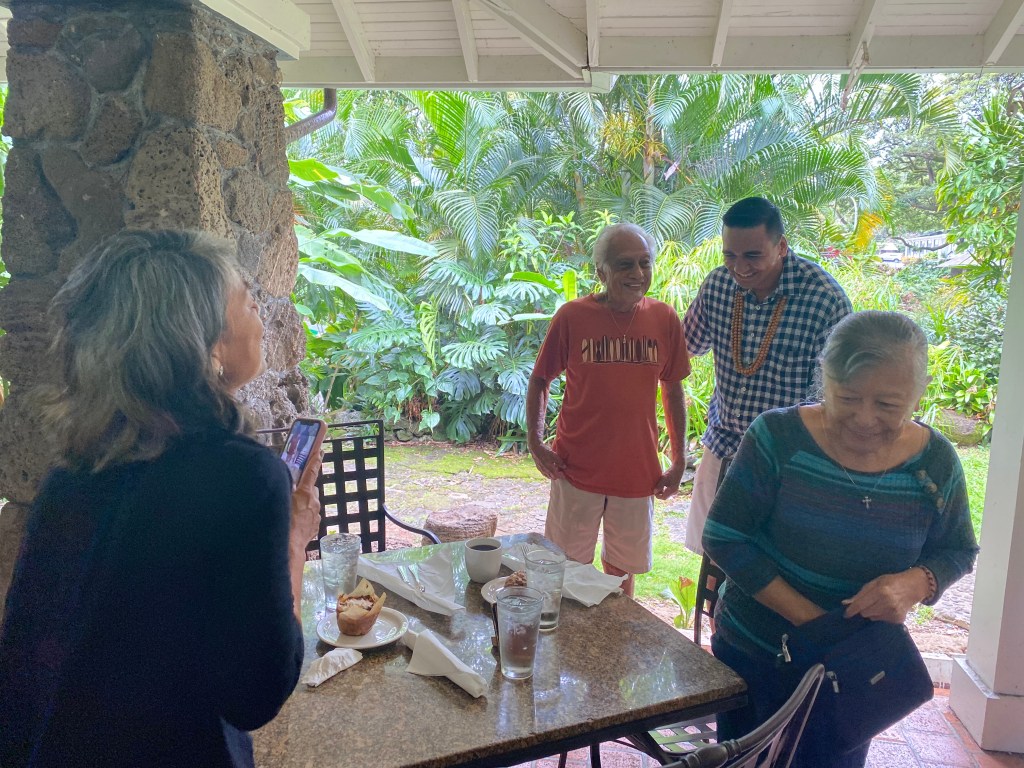
I am having tea with Pili at the wildly popular Waiʻoli Tea Room, enjoying his stories and reminding myself that I am on the job and need to take notes. An older gentleman walks over from another table with a smile on his face like a kid seeing his favorite ball player.
“Mr. Kamaka Pili! I watch you every Wednesday! You’re terrific!”
Pili is very warm with the man, standing to greet him and posing for pictures. Before the gentleman and his family leave, he stops by two more times just to say a few words to Pili. He’s so thrilled to meet him.
Here is a fan who is most likely not on social media, but nevertheless knows Pili. Pili’s reach is impressive.
Next, he is planning to launch walking history tours in Waikīkī and is thinking about how to get Aloha Authentic to a national and global audience. Pili wears his celebrity graciously. He makes ambition sound noble.
“If you look up kuleana in the dictionary, Pukui mentions privilege first and responsibility second. It is my privilege to have this responsibility to share Hawaiian stories.”
Still, his career comes down to feeding his own curiosity and the way sharing a good story is more fun than keeping it to yourself.
“This whole journey is personal for me,” he said. “I need this.”
 Sign up for our FREE morning newsletter and face each day more informed.
Read this next:

Local reporting when you need it most
Support timely, accurate, independent journalism.
Honolulu Civil Beat is a nonprofit organization, and your donation helps us produce local reporting that serves all of Hawaii.
ContributeAbout the Author