Neal Milner: The Courts Are No Match For Trump (AKA The Big Landlord)
If you think the legal system is fast enough to save us from the chaos being unleashed by the White House, think again.
March 20, 2025 · 7 min read


About the Author

“The law still matters.” — Hawaiʻi Sen. Brian Schatz, regarding Donald Trump’s attempt to eliminate the federal Department of Education.
“You’re fired!” — Donald Trump, former host of “The Apprentice.”

Golly, the things people believe about the power of the law.
Last week MSNBC had yet another panelist, this time a retired federal judge, tell us that Donald Trump is violating the rule of law.
Oh, please stop. Those are empty words about only words — deceptive words that are faith-based rather than fact-based.
Pure law worship, as if the rule of law is going to come down from on high and smite the evildoers.
The judge’s proclamation tells us nothing about how the law actually works or how Trump works.
Trump is winning. The rule of law is losing. There’s little evidence this will change and lots of reasons to believe it won’t.
The best way to understand what’s happening is to think about Trump and the law this way: The legal system is a venture, and Trump is a Big Landlord.
The Legal System As A Venture
Four characteristics of the legal system will help you understand Trump’s onslaught.
First, many awful things can happen before a person even decides to go to court. For example, you have no work and no money while waiting for the courts to give you your job back. Or, your landlord continues to let rodents run wild in your basement.
Second, the legal process is slow. It is supposed to be. Deliberation and due process require it. “You’re fired” is a TV show. Fast and furious. “Process and procedure” is fairness.
Court injunctions can happen quickly to delay a bad thing from continuing, but injunctions are often temporary, pending more litigation.

Delay isn’t neutral. Some benefit from the delay while it increases the vulnerability for others. Laid off or fired government workers suffer in the interim while DOGE and Trump revel in it.
Third, even if a court rules in your favor, that’s only partial vindication. Think: “We’re glad we won, but it doesn’t bring our son’s life back.” A university wins a court case that restores millions of dollars of funds — that’s a victory but the effects of the angst and chaos linger.
Fourth, there is no automatic compliance with court decisions. The move from impermissibility to vindication depends on willingness to enforce and willingness to comply. The impact of a court decision is often cat-and-mouse rather than definitive. That’s guaranteed to happen with controversial decisions.
This is just a primer, a rough guide to understand Trump’s legal strategy. Now for Trump himself.
The Big Landlord
When it comes to litigation, Trump cut his teeth as landlord, first when he and his father were sued by the government for civil rights violations, but especially his campaign to remove tenants from a New York city high-rise.
Trump of course is now in a different league entirely, as are the people he is trying to get rid of, but his presidential strategy looks like the time when he owned that Manhattan high rise. He’s all landlord. His tactics mirror what Matthew Desmond described in his wonderful book “Evicted: Poverty and Profit in the American City.”
Because they go to court so often, landlords are repeat players who know the legal ropes, know the best attorneys for the job, and learn how to speak and fill out paperwork in just the right way.
Trump is the ultimate repeat player. For most tenants, court is an awful place. For the repeat player landlord, courts are just another day in the life — a tool to be used or an impediment to work around.
Even before tenants go to court, landlords can harass them by refusing to make repairs — furnaces that don’t work, filthy hallways, inoperable fire alarms.
Illegal? Sure, in a technical sense. But only if someone in authority like a judge says so, and that takes time, money and initiative on a tenant’s part.
It’s a way to make life so miserable that the tenant gives up and leaves. Legality is just another annoying impediment to work around or ignore.
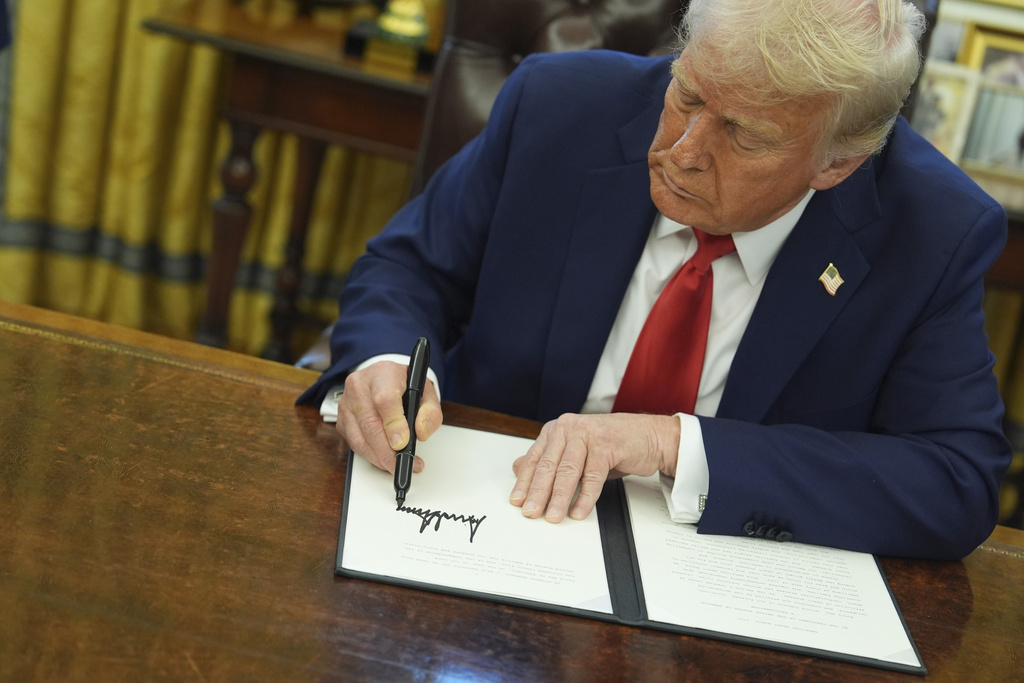
That is Trump today: issuing executive orders that may turn out to be illegal but have an immediate and possibly long-term impact whatever happens later.
Firing people and closing down agencies even if that’s only within Congress’s legal powers because once they are decimated — think the Department of Education or the Voice of America — the damage is done.
Legal or not, the threat of layoffs gets some people to give up the fight and retire or live with the legally shady consequences because life moves on as the courts deliberate.
Trump and his minions don’t have to win court cases to accomplish what they want.
Here’s the latest example. Without warning, Trump deported a large number of Venezuelan immigrants to El Salvador where that country’s president promised to put them in jail. The ACLU sued, claiming that was illegal and a violation of the rule of law.
But by the time the judge heard the case and in fact ruled against the president, the planes carrying the deportees were already in the air on their way to a place where the judge has no jurisdiction.
Trump has argued that he followed the law, but the bottom line is this: He figured out a way to avoid the legal process and to render it powerless.
That’s a classic landlord move. As is creating onslaughts and chaos, like the overwhelming it’s-a-done-deal blitz of executive orders, policies and decisions.
Onslaughts create chaos. They scare the crap out of people and disempower them.
Anticipatory Obedience
Institutions like universities are retreating in fear of what might happen next. The dean of Columbia School of Journalism warned its foreign students that they should not rely on the school to protect them.
All of this not because courts have definitively said that what Trump is doing is legal, but because under the circumstances victims anticipate the worst. The tide rolls on, and the fear of drowning grows.
This one’s right here at home, coming from Carl Bonham, the director of the University of Hawaiʻi Economic Research Organization, who told legislators last week his agency can’t answer key questions.
“Just thinking about whether we’re going to be impacted by all the chaos that’s going on now, we don’t have any hard data yet on those impacts,” Bonham said.
Judges keep saying different things about the legality of layoffs, he complained. “Now, some of them, I think, are still happening, but we don’t have hard data.”
Paralysis induced by uncertainty and fear.
As for Schatz himself and his confidence in the law? He was one of the few Democrats to support the Republican bill that prevents the government shutdown because he anticipated that if the government shut down, Trump would use that as an opportunity to lay off even more people.
Our senator’s strategy is a form of anticipatory obedience — obeying in advance, rather than resisting.
It shows the difference between Schatz’s confident assertion that “the law still matters” and his government shutdown vote indicating that law does not matter very much at all.
 Sign up for our FREE morning newsletter and face each day more informed.
Read this next:

Local reporting when you need it most
Support timely, accurate, independent journalism.
Honolulu Civil Beat is a nonprofit organization, and your donation helps us produce local reporting that serves all of Hawaii.
ContributeAbout the Author