The Sunshine Blog: Campaign Reform Measures Are Dropping Like Flies
Short takes, outtakes, our takes and other stuff you should know about public information, government accountability and ethical leadership in Hawai‘i.
March 21, 2025 · 7 min read


About the Author

Walking on sunshine: Every week is Sunshine Week for The Blog. But we are now in the midst of the official week where people who care about accountability and transparency make a point of shining a light on government actions. Now marking its 20th anniversary, Sunshine Week is a nonpartisan collaboration in the journalism, civic, education, government and private sector worlds to illuminate the importance of public records and open government.
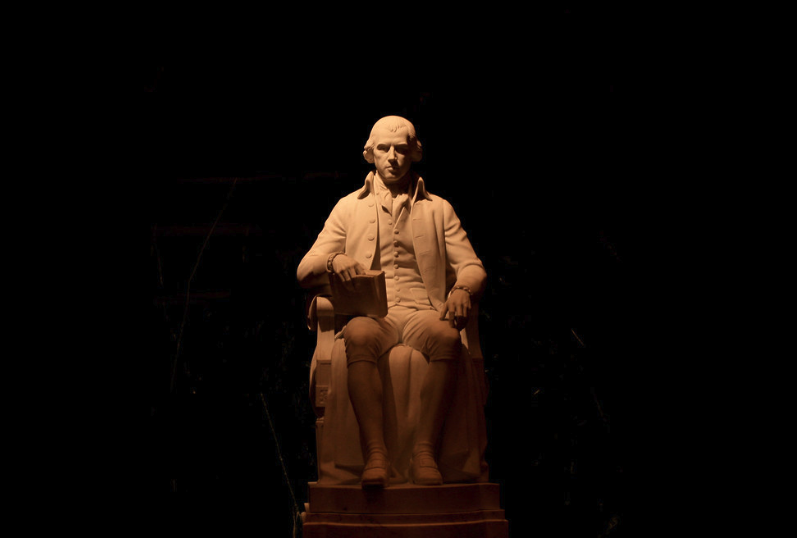
The week of March 16-22 also includes the birthday of President James Madison, author of the U.S. Constitution — a document that appeared to still be intact as of last check, though starting to burn a bit at the edges.
But it’s helpful to be reminded just how serious, and immense, the work is nationally.
The nonprofit political finance data cruncher OpenSecrets, for example, reported this week that outside spending reached a record $4.3 billion in 2024 federal elections, “with more than half of that amount coming from groups that do not fully disclose their funding sources.”
Campaign finance proposals at the state level “face long odds” this year, says OpenSecrets — but with some notable exceptions:
From Jan. 1 through early March, state lawmakers considered 319 bills covering campaign finance issues across 45 states plus Guam. That’s according to data maintained by the National Council of State Legislatures, a bipartisan organization.
Hawaiʻi, with 32 bills by OpenSecrets’ count (which is pretty close, when you include similar bills in both chambers and a couple of ConAms), was second only to New York which had 37, followed by Virginia (21), Minnesota (18) and Arizona (16) considering this kind of legislation. Connecticut, Illinois, Mississippi, Missouri, Montana, Tennessee, Texas and Utah trail not far behind.
But sadly, Hawaiʻi lawmakers have already made quick work of most of those campaign finance-related proposals, leaving the vast majority dead or dying. The Blog sees only seven remaining as we enter the last month or so of session. Those still with us include the proposal to close a pay-to-play loophole with more restrictions on donations by state contractors and grantees, a beefed-up partial public financing bill and a measure allowing candidates to use campaign funds for child care while campaigning.
But Friday is the day they need to have cleared all but their last remaining committee or they too will be in the graveyard of dead bills. And the governor’s veto pen still looms.

Don’t defund the politics police: And speaking of campaign finance issues, a small but important part of the state budget, House Bill 300 now in the hands of the Senate Ways and Means Committee, includes $200,000 to expand the staff of the Campaign Spending Commission.
At long last.
The CSC was formed in 1973, the year President Richard Nixon was being buffeted by scandal after what his press secretary called “a third-rate burglary” in the Watergate building.
At its outset, the CSC had a staff of five people. More than a half-century later, it still has five employees.
But now the staff manages a vastly heavier workload, tracking more than 550 candidate committees and more than 300 non-candidate committees (PACs, etc.)

You’d be hard-pressed to find another state office that has grown not at all in 52 years. What a coincidence that it happens to be the one that polices the financial practices of our elected leaders, eh?
The CSC requested the $200,000 to hire two more people, including its first-ever investigator.
The same request was made last year, but the governor’s office chose not to include it in the proposed budget. This year it’s there — at least for now. But this is a good one to keep an eye on during the chaotic final days of the session when spending plans can change drastically.
Bills this session to increase the public campaign finance system have also included the requested $200,000 appropriation, but as often happens with amended bills headed for conference committee those amounts are currently zero.
Just the staffing increase the CSC has gotten for 52 years!
Excuses, excuses: Bills die for all sorts of reasons at the Legislature, including that lawmakers say they just flat ran out of time. (Year-round Legislature, anyone? Anyone?)
An increasingly common refrain from committee chairs in the 2025 session is that the state simply may not have enough money to fund certain bills, given the tremendous fiscal uncertainty fostered by the Trump administration and its unelected DOGE master, Elon Musk.
For instance, a bill to pay for a comprehensive public financing program for local political candidates died earlier this month when House Judiciary and Hawaiian Affairs Committee Chair David Tarnas announced that the bill would be tabled for the year due in part to budget concerns. A beefed-up partial public financing bill is still alive but advocates worry it will ultimately meet the same “sorry, no money” fate.
Two more measures were recently quashed, too, for very similar reasons.

Rep. Greggor Ilagan, chair of the House Economic Development and Technology Committee, gutted a bill to exempt the sale of groceries and nonprescription drugs from the general excise tax.
A reduced GET for nonprescription drugs is still alive in an amended version of the bill, but Ilagan nixed the food section … even though food is expensive in Hawaiʻi, there are lots of people struggling to get by and the GET is a regressive tax.
“The reason for this amendment is we understand the financial situation we are in this year, and we know that if we exempt the tax out of groceries, that’s going to cost us upward of $200 (million) to $300 million into affecting our budget, and we already have received from the council of revenue some not favorable projections,” Ilagan said at the hearing.
And on Wednesday yet another bill was axed because of all the fiscal anxiety.
Rep. Mark Hashem, chair of the House Water and Land Committee, deferred a bill to use interest from the state’s so-called rainy day fund to pay for the impacts of climate change. It’s one of a handful of “green fee” or “visitor impact” or “climate mitigation” bills this session.
“I discussed this with the finance chair, and because of the federal situation that is going on right now, we have no clarity, and we’re going to need all the money that we need, all the cash that we can reserve,” said Hashem. “So we’re going to keep the funds.”
The Blog projects with some confidence that many more measures will be chopped away this session for the very same reasons.
Thinking caps on: The Trump administration may be trying to scuttle the federal Department of Education, but the essential business of teaching the children goes on here at home.
The Legislature spent the entire week celebrating education and honoring educators. It included displays from schools across the state Thursday on the fourth floor.
The displays included these students and a teacher from Kailua Elementary School, who are on their way to Long Beach, California, in late May to participate in a robotics competition.

 Sign up for our FREE morning newsletter and face each day more informed.

Local reporting when you need it most
Support timely, accurate, independent journalism.
Honolulu Civil Beat is a nonprofit organization, and your donation helps us produce local reporting that serves all of Hawaii.
ContributeAbout the Author