Neal Milner: Mass Layoffs Are Easy If We Dehumanize Government Workers
Supporting whatʻs happening to federal employees requires buying into the stereotype of lazy bureaucrats.
April 17, 2025 · 7 min read

About the Author

It’s easy as pie to get rid of government employees if you don’t consider them people.

It’s harder to shoo them out if you see them for what they really are and what they actually do.
If you want to do bad things to people, dehumanize them. That way there is no real flesh and blood involved. Just things. No human dimension.
That’s the strategy driving the Department of Government Efficiency-Trump mass cuts of federal government workers.
Here are three ways to see federal workers. One is the DOGE-Trump view that’s in vogue right now, which doesn’t recognize civil servants at all. The other two are more sympathetic and also more complex. The sympathy and complexity go hand in hand.
The second features Michael Lewis who wrote “Moneyball: The Art of Winning an Unfair Game” and “The Fifth Risk,” among other terrific books. He and his collaborators have a new one out, “Who is Government: The Untold Story of Public Service.”
The final example is from Hannah Anderson’s recent article, “Loving Your Neighbor’s Job,” in the Faith section of the conservative newspaper The Dispatch.
When you read about the last two, keep in mind the terms ”untold story” and “neighbor” because they’re at the heart of the differences.
Government Workers As Non-Persons
“Good heavens,” a commenter on a Civil Beat article wrote about the cuts. “This is all because our President is cutting waste, fraud and abuse out of our federal govt and the left is seeing its money laundering grift exposed. I never voted to pay for this fraud and grift in federal or state govt, did you?
“Why is anyone opposed to stopping it?”
This statement couldn’t be more confident. “Good heavens,” “why is anyone …” Bright colors with no shading, and mostly loaded words. There is no humanity in it. Not a word about people. Nothing about what government workers actually do.
This depersonalizing makes it easier to make such sweeping claims and by implication put all government workers into the mix of grifters, frauds, wasters and abusers.
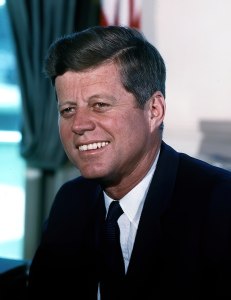
In his 1961 State of the Union speech, President John Kennedy said, “Let the public service be a proud and lively career. And let every man and woman who works in any area of our national government, in any branch, at any level, be able to say with pride and with honor in future years: ‘I served the United States government.’”
That sentiment seems out of style and out of date today, even for people who are not on the DOGE-Trump team.
But for today’s mass workforce cutters, JFK’s view is worse than out of style. It’s a curse, a protective blanket concealing the Deep State, and coddling the workers instead of putting them in their place by kicking them aside. Pest control.
Question: Why are you doing this?
Answer: Because we can.
Who Civil Servants Are
Like the superb storyteller he is, Michael Lewis looked at the federal bureaucracy from the ground up by actually interviewing workers about what they are like and what their jobs actually are.
Why? Because, he writes, “We never ask: ʻWhy am I spending another minute of my life reading about and yapping about Donald Trump when I know nothing about the 2 million or so federal employees and their possibly lifesaving work that the president is intent on eliminating?ʻ”
Lewis and his collaborators break this silence by writing long profiles of individual civil servants. None is known to the public at all, nor do they want to be. Each prefers to stay under the radar.

All of them work exceptionally hard. They all know how to follow the rules and how to work around them when the rules limit doing their jobs right.
They accomplish truly amazing things. Among others, there is someone who on his own made a scientific breakthrough in coal mine safety. Another runs the national veterans cemeteries. An employee of the IRS — that regular Republican bogeyman bureaucracy — figured a way to apprehend cryptocurrency fraudsters to the tune of millions of dollars as well as helping to shut down fentanyl suppliers and terrorist organizations.
The most touching story is about a Food and Drug Administration employee who, against all odds and with only ambivalent approval from her bosses, tracked down a cure for a rare brain disease that saved a little girl’s life.
Often important parts of this work are done on their own time.
ʻLoving Your Neighborʻs Jobʻ
Hannah Anderson’s “Loving Your Neighbor’s Job” is a nice apropos title. It suggests that work has a deeper dimension than simply what a person’s job is.
People losing their jobs are your neighbors in the sense that they are connected to you.
As a Christian from the South (stereotypes about “those evangelicals,” beware), Anderson says that the mass layoffs are un-Christian because “in the Christian tradition, one’s vocation is deeply tied to one’s very existence.”
A person’s vocation “should be mutually rewarding, serving both the world and flowing from this deeper sense of divine purpose and dignity.”
If you want to change something for the better, you need to understand the situation and the problem first.
That’s not just a religious message, though. It’s consistent with powerful secular messages about the importance of work and respecting the worker.
There is a spiritual and psychological essence to work. It’s an integral part of your humanity.
Consider these workers as your neighbors, she says. This does not mean that everyone in public service is entitled to their job. But it does mean that a person deserves a respectful and fair assessment of the work they do.
The stereotypical view of the bureaucrat as a lazy, plodding, rule-oriented slacker is so common. “Those state workers.” “The stupid DOE.” The state or federal office impossible to reach by phone.
Like so many stereotypes, there’s an element of truth to it. Hey, I should know. I worked at the University of Hawaiʻi.
But we need to check ourselves, not in order to go easier on public servants but rather to understand them and their work.
We need someone to write a book called “Who is Hawaiʻi Government: The Untold Story of Hawaiʻi Public Service,” because we know squat about them and their work, relying instead on those stereotypes in our heads.
Hawaii looks like a fountain of knowledge compared to what’s going on at the national level where insensitivity is celebrated, stereotypes and ignorance are honored, and where the results are going to be awful.
Still, one lesson for Hawaii is the same as the lesson for the federal government: If you want to change something for the better, you need to understand the situation and the problem first.
Bluster doesn’t pass muster.
 Sign up for our FREE morning newsletter and face each day more informed.
Read this next:

Local reporting when you need it most
Support timely, accurate, independent journalism.
Honolulu Civil Beat is a nonprofit organization, and your donation helps us produce local reporting that serves all of Hawaii.
ContributeAbout the Author