Oʻahuʻs Neighborhood Boards Need A Long-Overdue Facelift
The hyper-local system has been around for 52 years, but our democracy has probably never needed it more.
April 20, 2025 · 5 min read

About the Author

The events of the last few months and years have underscored how delicate our American democracy actually can be and how vital it is to preserve our way of governance.
From the sanctity of the vote, the independence of the press, to the jurisdiction and powers found within our three branches of government, all of it feels under attack lately.
For some, writing letters to elected representatives and watching the steps of every piece of legislation is their solution to this time. For others, joining get-out the vote efforts and/or protesting regularly at the State Capitol feels right. Sadly, still others have tuned out and resigned themselves to a “whatever happens, happens” attitude, at least until the next election.
While we each need to find our niche, I find involvement in local issues and problems to be the most satisfying use of my time, especially as a volunteer representative on the Downtown-Chinatown Neighborhood Board.

Through this involvement, I have also seen the flaws and limitations of the neighborhood board system, and through interpersonal discussions and now a concerted Islandwide effort, I am doing what I can to improve, update and refresh this amazing system introduced on Oʻahu in 1973.
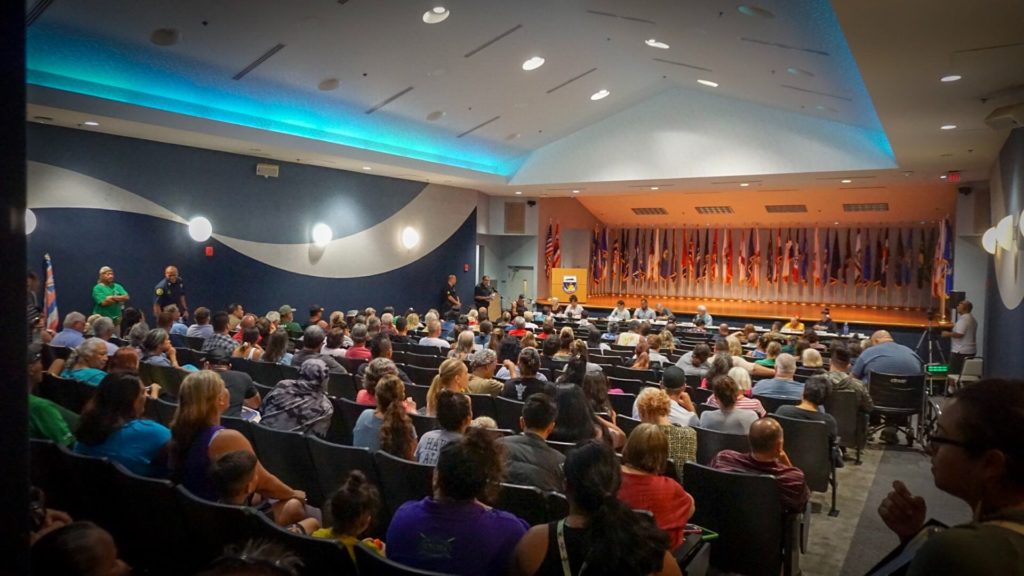
Our neighborhood board system is an impressive effort to increase democracy and community participation by dividing our island into 33 micro-governmental districts, a sort of minor league to our current nine-member City Council. Here, citizens are democratically elected and host, often in excruciating detail, discussions about the issues and concerns in the areas where they live.
Like democracy itself, it is an imperfect system, requiring great attention, stamina and patience, but like many around me, I think it’s the best way toward improving governance in the City and County of Honolulu and keeping it democratic for future generations.

Making A Good System Better
Like most things 50 years or older, it’s time for a facelift. These aren’t improvements for the sake of change, rather, these are ideas and topics discussed for a very long time but, unfortunately, haven’t been formally addressed by city officials since its inception.
Recently, about 40 non-affiliated citizens from all walks of life and nearly every corner of the island came together to begin this arduous process of renewal and to identify the changes they want to see. As the organizer of the process, I have tried to keep the discussion polite and inclusive, not impose my opinions or experiences onto the group, and help steer the conversations into something productive.
In the intervening months, these earnest and sincere grassroots comments were synthesized and classified into eight broad areas of discussion for another meeting coming up Saturday. Collectively, we will address (in no particularly order):
— The city administration/oversight/future of the Neighborhood Commission Office, the Neighborhood Commission itself, and its 33 neighborhood boards.
— The current boundaries of each board and the future viability of universal at-large districts versus sub-districts currently in place in many jurisdictions.
— The current board election administration, inclusion, publicity and transparency procedures.
— Each board memberʻs knowledge, requirements, training and possible implementation of term limits.
— The boardsʻ complaint process, adjudication and disposition of concerns.
— The board minutes (or written summaries) process, social media policies and electronic record keeping procedures.
— The boardsʻ external communications to the community and across-board and/or sharing of such information and decisions with the City Council.
— The application, appropriateness, and re-examination of the Sunshine Law and transparency rules as they relate to board business, procedures and notifications.
Future City Charter Changes
At the same time, a small appointed group of insiders who make up the City and County of Honolulu’s Neighborhood Commission — completely separate from the above effort — has also started a similar, and long overdue survey of possible actions and improvements.
So clearly, there is an informal consensus that now is the time for review of our neighborhood board system!
While not all eight areas of concern may be resolved, nor will unanimity be achieved when the process concludes, it is hoped some important and more democratic improvements to our impressive neighborhood board system and its governance will be made in time to make it onto the City Charter ballot next year.
If they are approved by voters and embraced by city leaders, we have a good chance of making local governance better, streamlined and more responsive.
No one wants to scrap our system or harm the progress our neighborhood board system has made thus far. However, after more than a half-century, it is obvious to nearly all that we need to improve and fortify what is working and think anew about how to anticipate our collective needs and procedures of governance for the future.
To me, this is the best way to keep and hold our democracy.
Join us in this effort Saturday, April 26, at 10:30 a.m., in the Van Holt room at the Cathedral of St. Andrew’s, 229 Queen Emma Square, in downtown Honolulu.
 Sign up for our FREE morning newsletter and face each day more informed.
Read this next:

Local reporting when you need it most
Support timely, accurate, independent journalism.
Honolulu Civil Beat is a nonprofit organization, and your donation helps us produce local reporting that serves all of Hawaii.
ContributeAbout the Author