The Sunshine Blog: Look Who's Taking Big City Council Pay Raises After All
Short takes, outtakes, our takes and other stuff you should know about public information, government accountability and ethical leadership in Hawai‘i.
April 20, 2025 · 10 min read

About the Author

Flip-floppers ‘r us: Gosh, it’s been two years but the cries of protest from certain Honolulu City Council members over the humongous pay raises they were being forced to take are still ringing in The Sunshine Blog’s ears.
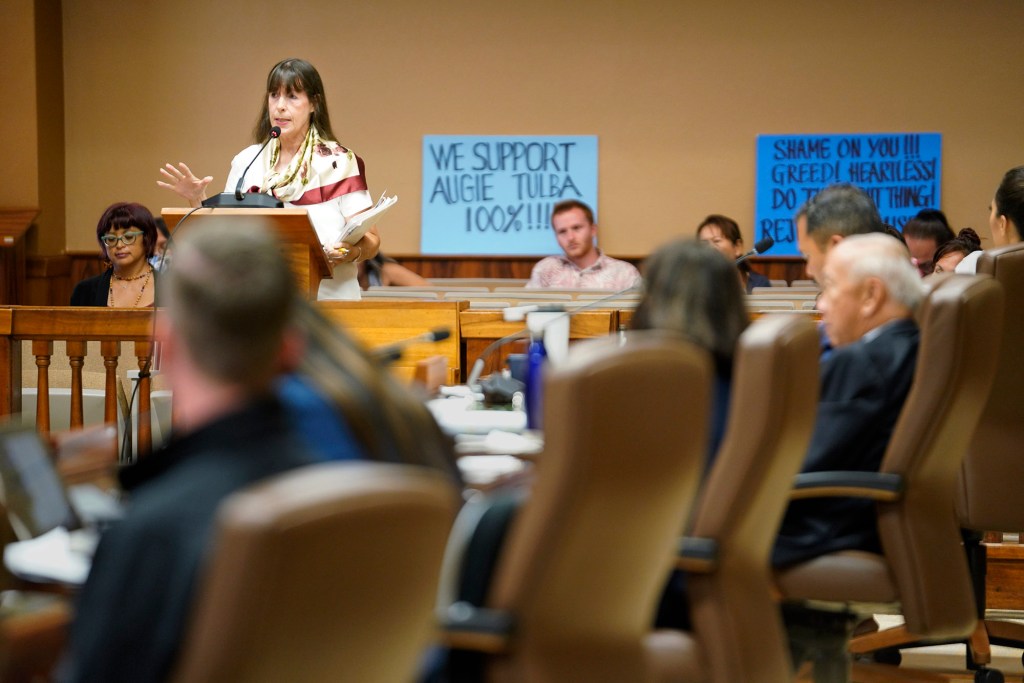
Yes, the Blog is talking about Andria Tupola, Augie Tulba and Radiant Cordero who rode a wave of public outrage over the 64% pay hikes and very publicly opposed them. When the raises couldn’t be stopped, Tupola, Tulba and Cordero made quite the show out of refusing the raises individually, telling everyone they would stick with $69,000 a year rather then abuse the public trust by accepting a boost to $113,000 annually.
Well, that was then and this is now.

Guess who is getting paychecks of $113,000 a year. Uh huh.
Tupola and Tulba. And pretty soon Cordero too, now that she knows the other two have been taking them.
Tupola told Civil Beat reporter Ben Angarone earlier this month that she actually started cashing the higher paycheck last year, right after she was reelected in August. Tulba says he did too.
“Starting our new term, we both wanted it to be par with the rest of the council members,” she told our intrepid reporter.
Tupola says now that she makes more money as a council member “I don’t need to do as much side stuff.” Last year she had an outside consulting job that paid six figures.
After the gigantic raises in 2023, voters this past fall approved a city charter amendment that limited council member raises to 5% each year.
Tulba says that’s why he now feels OK to take the 64% raise.
“I didn’t do it for a year,” he said, “and I felt like I needed to fix the charter.”
Angarone checked with Cordero to see if she had started taking the raise. She told him she wasn’t and didn’t know Tupola and Tulba were.
But now that she knows, she says she’ll take the raise, too.
Cordero says she was already thinking about doing it this year since she was reelected last year, too. She also pointed to the charter amendment that puts an end to big council pay raises.
Still, she says, “it is a big amount.”
All The Blog can say is: Wow. Just wow.
Fiscal gobbledygook: Has anyone actually tried to watch the legislative budget conference committees? If you have, can you please tell The Blog what the heck is happening?
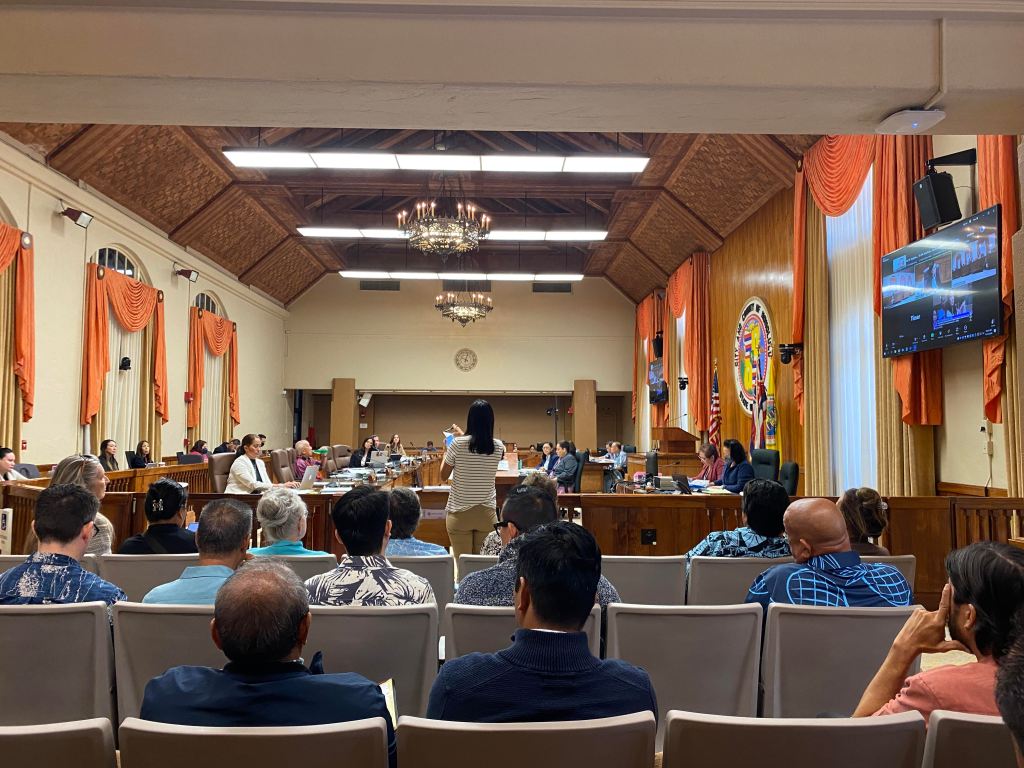
Sen. Donovan Dela Cruz and Rep. Kyle Yamashita, the chairs of the money committees, are sitting at tables across from each other, surrounded by other members of their Senate Ways and Means and House Finance committees. And the room is actually pretty packed with spectators.
“AGR192 sequence 1100-001 House,” says Dela Cruz.
“OK, AGS111 sequence 100-001, we’ll go with the Senate,” Yamashita says.
And on it goes. For dozens and dozens of items. Tuesday’s session lasted less than 15 minutes and they disposed of dozens of line items.
The Blog hates to be the one to say it, but WTF?
You have to watch this video. It’s quite something.
If, like The Blog, you’re a random citizen tuning in to see what lawmakers have decided to spend money on you are out of luck. You would have to know what those numbers are, where to find them and how to follow along as the committee chairs scurry through the reading.
The Blog scoured the Legislature’s remarkably great website and could find nothing resembling “A Citizen’s Guide on How to Follow a Budget Decision-Making Meeting.”
Fortunately, Civil Beat’s legislative reporters have been at this a while and provided this advice on how to crack the code.
Those program ID numbers – like HMS555 or EDN100 – are tied to specific offices and agencies in the various state departments. There’s a full list of program ID numbers posted online by the Hawaiʻi Department of Budget and Finance.
The series of numbers they read after the program IDs are called sequence numbers and refer to specific line items in the Legislature’s budget worksheets. You can find those on the Legislature’s website by going to “Laws and Research” near the top of the homepage and then clicking “Budget” in the dropdown menu.
Then it’s a matter of picking those numbers out of the 844-page haystack that is the executive budget worksheets. And even then, it’s not that easy to understand. Here’s a sample.

The conference committee took the Senate’s position on the line item at the top of the page, sequence 106-001. So it looks like the Department of Education won’t be getting funds for an education specialist, as requested in the governor’s budget submittal.
The Blog remembers happier times when Dela Cruz was still speaking to us and invited us to his office for a briefing on the budget. He had his own whiteboards and handouts and everything. He is really very good at explaining these things and we wish he’d go back to doing it, not only for us but for the public in general as it’s being announced. Maybe Green could loan a few of his whiteboards to the conference committee.
Still, in two sessions last week the committee announced agreement on parts of the budget that would give more resources to state law enforcement and public schools. Here are a few fiscal year 2026 items of note:
- $5 million for the Enhanced 911 Board
- $1.4 million for additional positions at the Hawaiʻi Emergency Management Agency
- $8.6 million for medical coverage of developmental disabilities
- $6 million in special funds for an airport smartphone app
- $3 million for part-time teachers and classroom supplies
- $500,000 to support victims of sex trafficking
- $1.2 million for administration and operating expenses at the Department of Hawaiian Home Lands
- $876,000 to fund wellness and resilience coordinators for Oʻahu, Kauaʻi and Maui
- $2.5 million for training for the Department of Law Enforcement
- $3 million for a software project at the DLE
- More than $700,000 for additional positions at the University of Hawaiʻi West Oʻahu
The budget conference committee is set to reconvene on Monday. Major items still outstanding include millions of dollars for the University of Hawaiʻi and whether or not lawmakers will put $200 million in the state’s rainy day fund.
Once the budget is set, lawmakers can start filling in the blanks in all the bills they already approved without knowing how much they’re going to cost or how much money they’ll have to spend.
The budget primers: If youʻd like to pull back and better understand the Legislatureʻs budgeting process in general, The Blog has two items for your reading list:
The Legislative Reference Bureau website offers “Deciphering the Budget,” which provides “a peek at how the budget process has worked in the past.”
A more thorough look at the process chock-full of information about the current budget comes courtesy of the Hawaiʻi Appleseed Center for Law & Economic Justice.
The nonprofitʻs Hawaiʻi Budget Primer 2024-2025 is easy reading by budget standards, and youʻll come away with a new appreciation for what all goes into the state governmentʻs spending plans and where the money comes from.
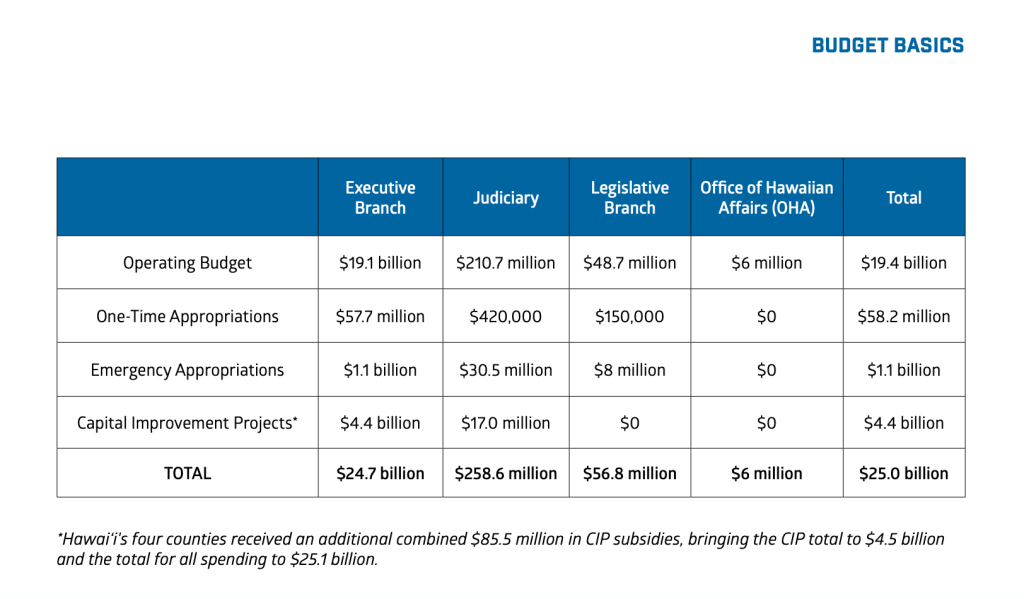
For instance, did you know there are actually four budget bills each session? In addition to the gargantuan executive budget known this session as House Bill 300, there are much smaller budgets for the Judiciary (House Bill 400), the Office of Hawaiian Affairs (House Bill 410) and the legislative branch (House Bill 1440).
Those first three are all proceeding through conference committee, with their next hearings scheduled Monday. The legislative branch budget bill has already been passed by the Legislature and signed by the governor.
We don’t need no stinkin’ badges: On Thursday, lawmakers agreed to a measure that would require police officers to inform residents when they conduct warrantless searches of their property when they aren’t home.
The measure, Senate Bill 601, was spurred by a Civil Beat story from 2022 about Glen Murray, who discovered officers had entered his home without him even knowing.
“This is about good democracy,” said Sen. Glenn Wakai, the lawmaker behind the measure this year.
SB 601 still allows officers to enter homes unannounced and without warrants in emergency circumstances. But it requires them to leave a notice stating why they entered a dwelling, and also requires police to close the door behind them when they leave.

Agreement on the bill marked an early win for police reform advocates.
Conference Room 325 erupted in applause while lawmakers took the vote as staff and well-wishers congratulated Murray, who called the bill’s imminent passage a “victory for the people.”
The 67-year-old is no stranger to politics. He said he began his career as a deputy sheriff guarding the State Capitol. And he’s spent the last few years advocating for search notice measures at both the state and county level.
He was surprised to see lawmakers reach an agreement on SB 601 this year after watching a similar measure die in 2024.
“There are legislators who are here and do care and will actually help you,” Murray said.
“But, you got to work it, too. You can’t come in here expecting miracles.”
Advise and dissent: The Blog remembers how GOP Sen. Brenton Awa ruffled a lot of blue feathers on opening day of the Legislature Jan. 20. His main point: Past and present Democratic majority leaders are to blame for a state where many residents, especially many Native Hawaiians, can’t afford to live.
Awa’s rant pleased some but mostly flopped because it made a couple of ugly personal attacks. He promised more frank talk to come, but there hasn’t been a whole lot since.
Until Thursday.
During floor session Awa said he would vote against five of Gov. Green’s nominees to serve on boards and commissions. The reason? Because they had donated to many of the very same senators that were voting on the nominations.

The Blog checked campaign spending filings, and sure enough he was right.
For example, Jan Iwase and Michael Unebasami, picked to serve on the School Facilities Authority, each gave a couple of hundred bucks to Sen. Michelle Kidani, the chair of the Senate Education Committee.
“Pay to play,” Awa charged while acknowledging that the donations were perfectly legal. “My friends at Civil Beat, listen up!”
That was too much for Sen. Glen Wakai, who admitted he himself had donated to Kidani: “I really believe in her, and I think she does a fantastic job for the state, as well as particularly for our educational sector.”
Wakai also pointed out that the nominees, who were easily approved by the Senate, are volunteers and hardly looking to enrich themselves. Awa’s remarks, he said, “really sullies the entire process that we go through in this chamber.”
How time flies: The Blog remembers when these two were political enemies. Seems like it was just the last race for governor.
Gov. Green traveled to American Samoa and his pilot was OHA Chair Kahele.
— OHA (@oha_hawaii) April 15, 2025
"We should not be defined by the smallness of our islands but in the greatness of our oceans. We are the sea, we are the ocean. Oceania is us." Prof. 'Epeli Hau'ofa
We continue to journey across Oceania. pic.twitter.com/2dtNz0ba24
 Sign up for our FREE morning newsletter and face each day more informed.
Read this next:

Local reporting when you need it most
Support timely, accurate, independent journalism.
Honolulu Civil Beat is a nonprofit organization, and your donation helps us produce local reporting that serves all of Hawaii.
ContributeAbout the Author