Tia Lewis: UH Campus Would Be Safer With More Laws For Mopeds, E-Bikes
Hopefully a bill to accomplish that will make it out of conference committee this week at the Legislature.
April 20, 2025 · 6 min read

About the Author

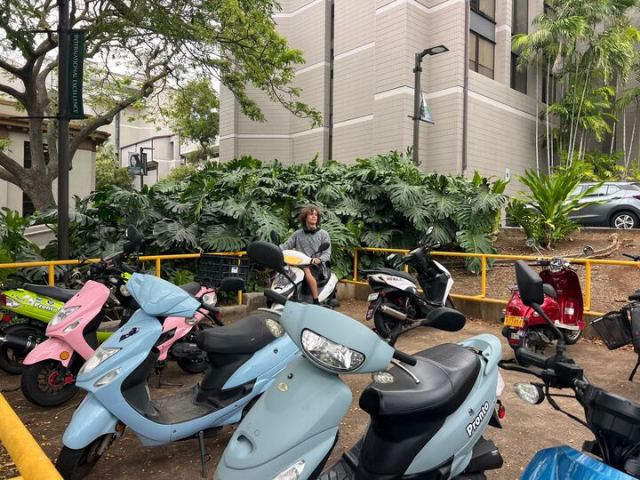
Mopeds and e-bikes are basically the unofficial mascot of student life at the University of Hawai‘i Mānoa.
You hear them buzzing all over campus, zipping past cars stuck in traffic and crammed into every possible parking spot. They’re affordable, convenient and way faster than walking.
But let’s be real, mopeds and e-bikes also bring a lot of chaos. Riders weave through traffic, blow through stop signs. Sometimes, they’re straight-up reckless. And when you mix in high-speed e-bikes and scooters, the situation gets even sketchier.
That’s why Senate Bill 1117 is so important. It’s not about ruining the fun, it’s about keeping everyone safe.

The measure focuses on electric vehicle safety. It bans mopeds and electric motorcycles in bike-only areas and sets rules for electric bicycles, including allowing them on sidewalks under certain conditions. It also updates the rebate program for electric mobility devices, making it easier for people in need to get help. And it raises the age for requiring helmet use to 18, prohibits kids under 15 from riding Class 3 e-bikes, and stops anyone under 18 from riding electric motorcycles.
Because different versions were approved by the Senate and House, SB 1117 is now in the conference committee stage where conferees will try to reach consensus.
Some Skin In The Game
I’ve had my fair share of close calls with mopeds. Recently, I was walking in the crosswalk connecting the engineering building and the dorms when a rider nearly clipped me. The dude wasn’t even wearing a helmet and was going way too fast. If he had lost control, it wouldn’t have just been him getting hurt, it would’ve been me too.
Trevor Hartnett, 21, has relied on a moped as his main form of transportation since last year. For him, the bill would be a welcome move toward safer streets.
“I think that’s a really good idea, honestly,” Hartnett said. “Because a lot of people I know, like probably five people, have crashed their mopeds and not been wearing helmets. So it’s probably for the best.”

Hartnett also shared a horrific incident that occurred within a month of buying his moped, near Mākālei, a residential area and popular beach park students.
“I was turning left out of a side street by Mākālei and it was dark and a car was coming but I was being inattentive and I tried to move out of the way but they clipped me and I ran face-first into a wooden street pole and broke my nose,” he said.
It was a wake-up call for Hartnett, who said he hadn’t fully grasped how dangerous riding a moped could be.
Now, SB 1117 is finally addressing these safety issues — and honestly, it’s overdue. One of the biggest changes? The bill raises the mandatory helmet age from 16 to 18.
Look, no one loves wearing a helmet. But it’s common sense. If you wipe out going 30 mph on concrete, you’re going to want that extra protection. Helmets save lives, and if a law is what it takes to get more people to wear them, then so be it.
Another solid move in this bill is keeping younger, inexperienced riders off powerful electric vehicles. The bill prohibits anyone under 18 from operating electric motorcycles or motor-driven cycles.
It also prevents kids under 15 from riding class 3 e-bikes, which are electric bicycles that can go up to 28 mph when a rider is pedaling. Because they are faster and more powerful than a regular bicycle, they come with more safety concerns.
These proposed restrictions are about making sure the people riding these vehicles actually know what they’re doing. You wouldn’t hand a teenager keys to a car with zero training, so why should they be able to hop on a high-speed e-bike without any regulations?
There Ought To Be A Law
The bill also tackles the issue of where these vehicles can be used.
It would ban mopeds and electric motorcycles from operating in certain bicycle-designated areas. And thank goodness for that. If you’ve ever biked around campus or through town, you know how jarring it can be when a moped suddenly zips past. This rule would help create safer spaces for cyclists by keeping motorized vehicles out of areas meant specifically for bikes.
Let’s talk about sidewalks. SB 1117 would allow certain e-bikes on public sidewalks under specific conditions. While some might see this as a compromise, I agree with concerns that it could create more safety risks.

The reality is, e-bikes move much faster than regular bikes, and allowing them on sidewalks could put pedestrians at risk.
At a Senate Transportation and Culture and the Arts Committee hearing Jan. 30, Germaine Myers shared her concerns.
“I oppose e-bikes riding on sidewalks and I oppose mopeds using bike paths,” she said “They go faster than bikes and should remain on the road and follow road rules. Respectfully, electric bikes also belong on the road or in bike paths, not on sidewalks. Electric bikes are stealth. They don’t have any sound to warn pedestrians they’re approaching.”
It would also help if bikers and riders were more mindful of their surroundings and used devices like bells to alert pedestrians when approaching.
Some people will argue that this bill just adds more regulations and makes things harder for riders. But honestly, if a few additional rules can reduce crashes, injuries and close calls with pedestrians, I’m all for it.
Having spent time around the moped and e-bike scene at UH Mānoa, I fully support SB 1117. Too many riders act like they’re invincible, only to face the consequences later. The helmet law, age restrictions, and new safety regulations are all necessary.
Mopeds and e-bikes are here to stay, and that’s fine, but if riders won’t prioritize safety, it’s time for the law to take action. SB 1117 is a crucial step toward ensuring safer roads for everyone.
 Sign up for our FREE morning newsletter and face each day more informed.
Read this next:

Local reporting when you need it most
Support timely, accurate, independent journalism.
Honolulu Civil Beat is a nonprofit organization, and your donation helps us produce local reporting that serves all of Hawaii.
ContributeAbout the Author