Chief Justice Says He’ll Retire On High Note After Rare Legislative Success
In his last year on the Supreme Court, Mark Recktenwald helped secure funding for Judiciary programs throughout Hawaiʻi.
May 18, 2025 · 9 min read

About the Author

Forty-four years ago, the future leader of Hawaiʻi’s court system began his professional career in the islands working for the Legislature.
The Harvard graduate was hired as a committee clerk by state Sen. Ann Kobayashi, then a Republican.
Mark Recktenwald would later earn his law degree from the University of Chicago and serve in the state’s executive branch as director of the Department of Commerce and Consumer Affairs before landing in the Judiciary — a rare trifecta for a public official.
As Recktenwald looks to his retirement this fall, he has in some ways come full circle, having notched an impressive series of wins at the Legislature.
It hasn’t always been that way. In fact the Judiciary and the Legislature have frequently been at odds in the past.
Recktenwald spent a lot of time at the Capitol this year, often sitting in on House and Senate judiciary committee hearings with staff in tow to monitor their progress.
He also spoke regularly with the judiciary committee chairs, Rep. David Tarnas and Sen. Karl Rhoads, whom he credits with shepherding the Judiciary’s legislative package along with the House and Senate leaders and money committee chairs.
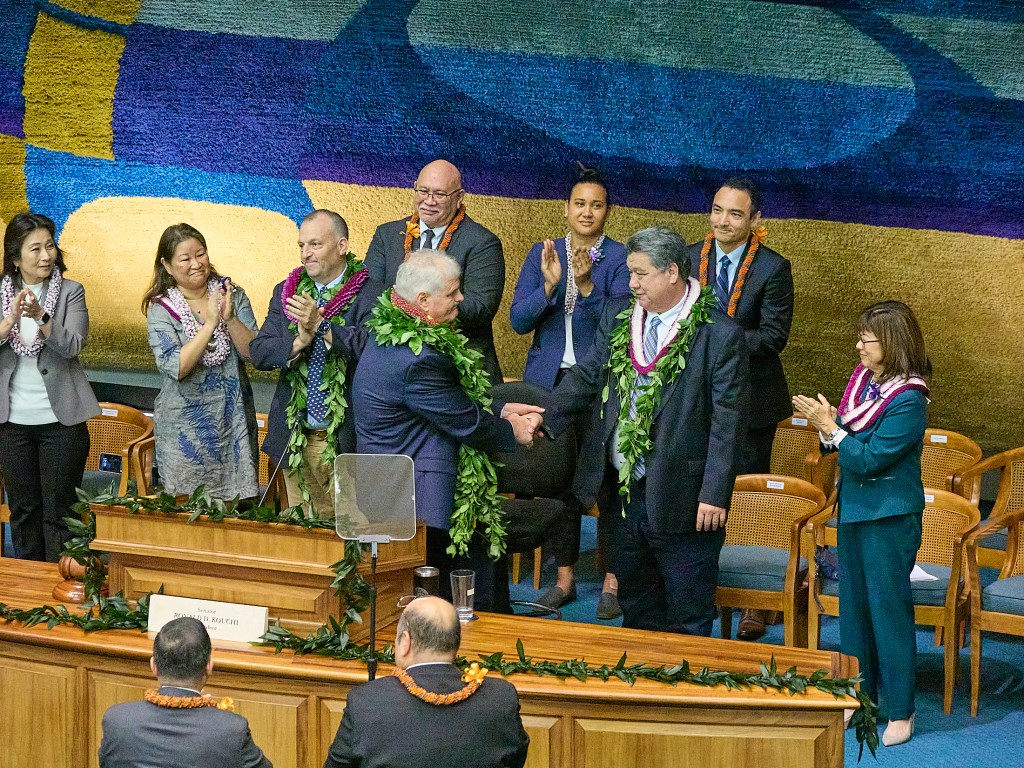
But Recktenwald said credit is also due to his staff, including Rod Maile, the administrative director of the courts who is also retiring this year. Maile has been a fixture at legislative sessions for years and has a history with the chief justice dating back to their shared time at the Department of Commerce and Consumer Affairs.
Relationships are key to getting things done in government, and Recktenwald has nurtured them over the years — helping him to navigate many turf battles between the legislative and judicial branches.
Those clashes included legislative efforts to take the power to reappoint state judges away from the independent Judicial Selection Commission. Another dispute centered on the House of Representatives asserting that it had sole jurisdiction over determining the residency qualifications of its members.
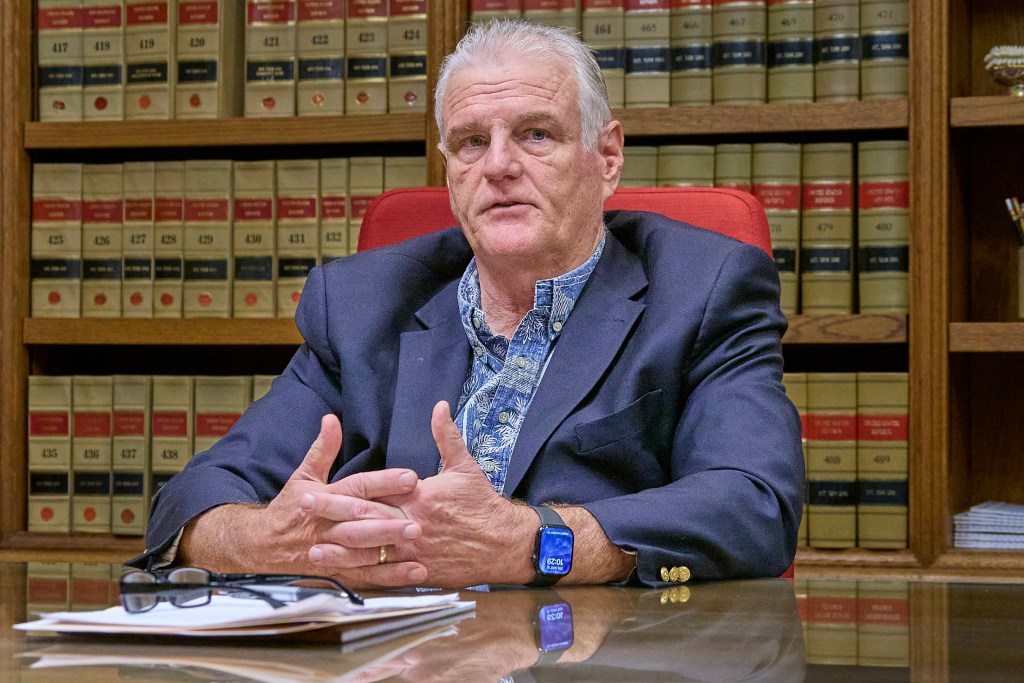
“There’s a natural tension between the two branches when our work intersects,” Recktenwald told Civil Beat Friday at Aliʻiolani Hale, home of the Hawaiʻi Supreme Court.
The Hawaiʻi State Judiciary has sometimes been disappointed in its requests for appropriations from legislators. Recktenwald had largely fallen short in his efforts to increase pay for judges and justices — until this year when the Legislature chose not to question the recommendations of the Hawaiʻi Salary Commission to raise the pay for judges, top state executives and lawmakers.
The raises will help the Judiciary recruit and retain judges, he said, although he described the pay increases as modest compared to salaries outside of the courts.
“The reality is, we’re competing against the private sector,” Recktenwald said. “Now, there are a lot of government attorneys who would want to become judges. That’s great, and for them it’s probably a pay increase, generally speaking. But for folks in the private sector, frankly, lawyers make a substantial amount of money, more than we were paying and actually more than we are going to be paying now.”
“We’re competing for the services of highly educated, very well compensated people, and we want to get the best, absolute best judges we can to be here and to serve,” he added. “So I think the raises were very important for that reason.”
‘A Very Successful Year’
The Judiciary saw much of its legislative package of bills pass this session.
At the top of its wish list was its budget for the next two fiscal years, which appropriates more than $400 million for operating and capitol improvements costs. The budget bill — which was fully funded — will pay for two new district court judges in Kona and Honolulu and design of a new South Kohala courthouse.
The Legislature also agreed to increase compensation for court-appointed attorneys in criminal proceedings, in family-court proceedings and for private examiners who evaluate the fitness of defendants in felony cases.
According to a May 8 press release from the Judiciary, such cases can be “extraordinarily complex, requiring higher levels of expertise and experience.” But the pay for all three positions had not been increased in decades.

Rhoads, chair of the Senate Judiciary Committee, praised the passage of the bills.
“Some may view these as minor problems in the broad scheme of things, but our constitution requires that criminal defendants be assigned a lawyer if they cannot afford one,” he said in an April 30 floor speech.
With the state Office of Public Defender “stretched past its limit” and with few attorneys willing to accept a judge’s appointment at a low reimbursement rate, Rhoads said, “serious cases can be dismissed for constitutional reasons, and those accused of serious crimes released without a trial. These bills make that nightmare scenario much less likely.”
Other wins for the Judiciary came through bills introduced by lawmakers. One makes the Community Outreach Court a permanent program of the First Circuit District Court and adds positions within the Public Defender’s Office, the City and County of Honolulu Prosecutor’s Office and the state’s Department of Law Enforcement.
That bill came from Tarnas, chair of the House Judiciary Committee.
“This was a very successful year for the Judiciary, and I really appreciate the Legislature’s support for the Judiciary’s requests that over the years we haven’t fully met,” Tarnas said during an April 30 press conference. “And so now I think we’re catching up.”
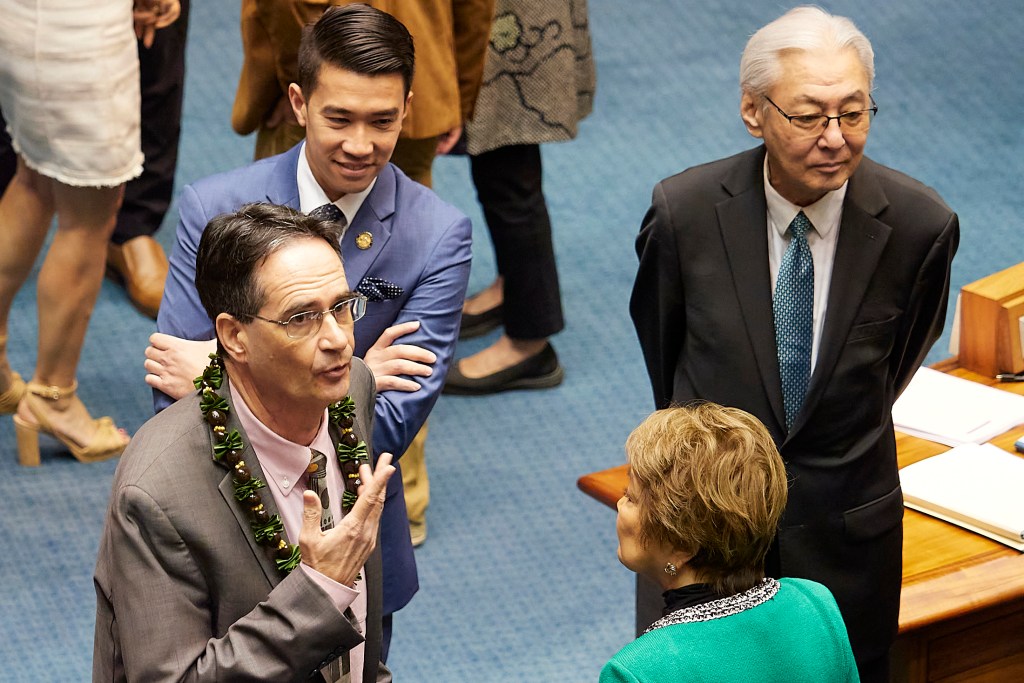
This year’s success didn’t just suddenly materialize, Recktenwald said.
“I think it was a culmination of a lot of projects we’ve worked on for a long time, and I think we’ve built credibility up for those projects, like Women’s Court here on Oahu,” he said. “It’s done very, very well, and I think it’s met the initial vision of us being able to more effectively address the needs of women, adult women, in the criminal justice system.”
The program is designed to help nonviolent offenders navigate the justice system without going to jail.
House Bill 727, introduced by Rep. Mahina Poepoe at the behest of the Women’s Legislative Caucus, permanently establishes the Women’s Court in the First Circuit in Honolulu. It also sets up a temporary two-year women’s court pilot program within the Kona division of the Third Circuit.
The Judiciary also saw eight new judges confirmed by the Senate this session, including Karen Nakasone to lead the Hawaiʻi Intermediate Court of Appeals — a position that Recktenwald held prior to being elevated to chief justice of the Supreme Court in 2010.
A Reluctant Retirement
Recktenwald and the Judiciary did not get everything they wanted from the Legislature. One bill in the Judiciary’s package would have raised the pay for jurors and prospective jurors, which has been stuck at $30 a day for years and is significantly less than juror pay in federal court.
“I think we need to show respect and aloha to people who come in to serve,” Recktenwald said. “Obviously, no one does it for the money. And I think what we find is that people, when they do come in to serve on a jury, they end up having a very positive view of the process.”
There also remains a backlog of cases before the Intermediate Court of Appeals, something that Rhoads remarked on in confirming Nakasone. The senator was able to add a seventh judge to the ICA a few years ago to help hear more cases, and Recktenwald said there has been some improvement.
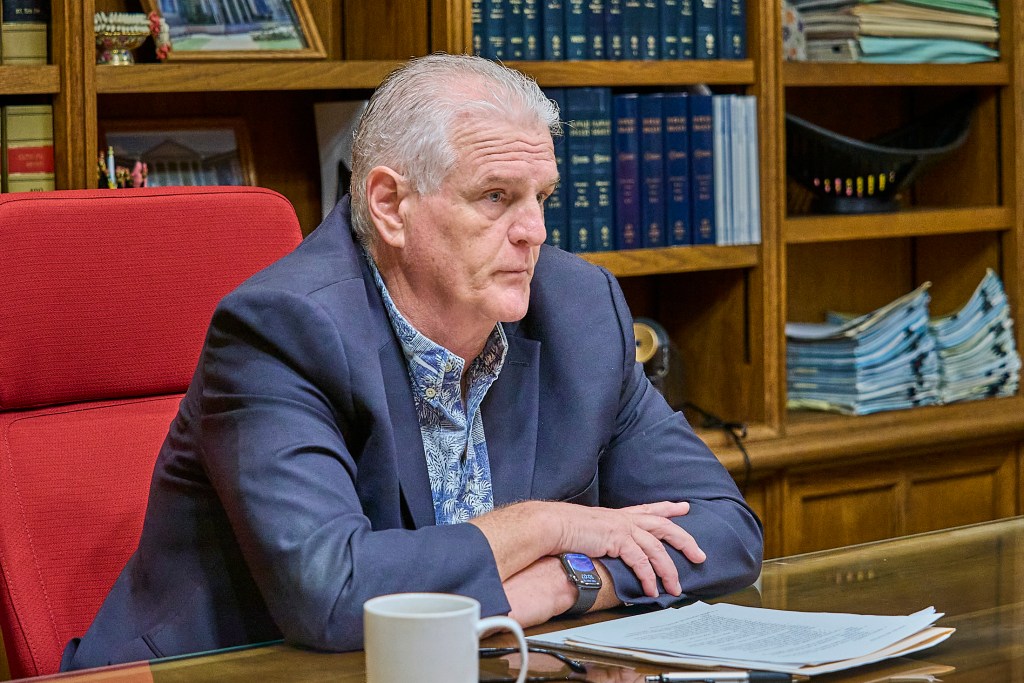
In January 2022 there was a backlog of 251 cases pending for at least two years. As of May 1, according to the Judiciary’s communications director, Brooks Baehr, that had been reduced to 42.
“The ICA anticipates reducing this number to zero — or nearly so — by the end of the calendar year,” Baehr said in an email Friday. “With the addition of a seventh judge, the court may be able to accelerate this timeline.”
There remains, however, an associate judge vacancy on the ICA. And the application period for Recktenwald’s own position had to be extended to September because there were not enough qualified applicants.
“I think that’s a very telling fact,” said Recktenwald, underscoring his point about judges’ pay.
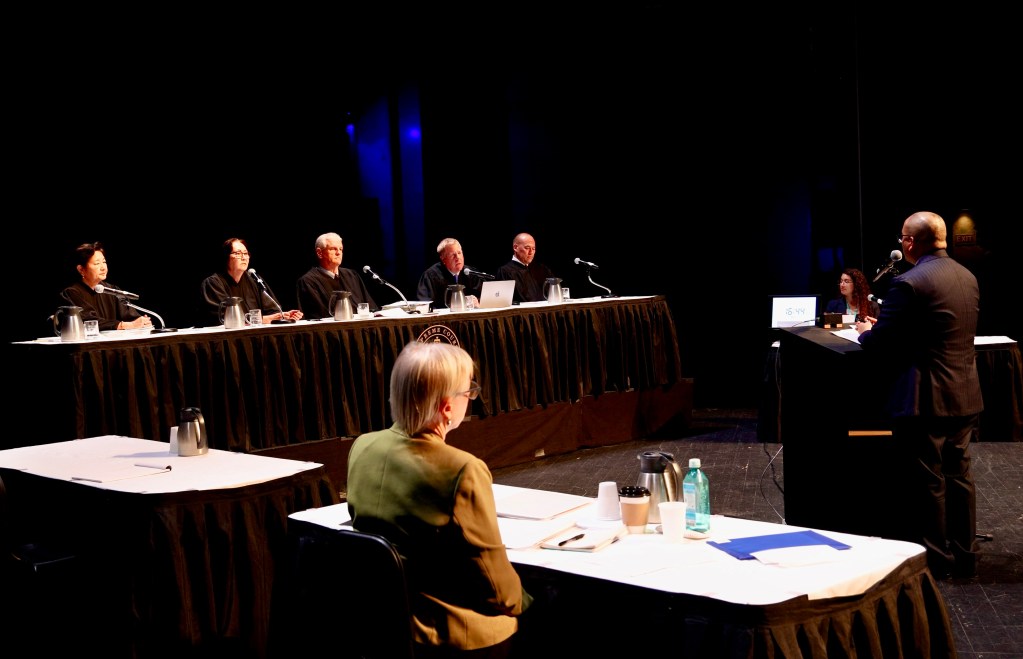
By then, the chief justice will have retired because he turns 70. Associate Justice Sabrina McKenna will become acting chief, and the Senate will likely not confirm a new chief justice until the 2026 session that begins in January.
Recktenwald has called the mandatory retirement age of 70 “a relic of a different era.”
He doesn’t know what he will do next, saying he is focused for now on “pushing to the finish line.”
He’s always had interests beyond the courts. In addition to his service in all three branches of government, he worked as a journalist in Hawaiʻi for United Press International in the early 1980s.
It was politics that first brought Recktenwald to Hawaiʻi in 1980, when he was an advance man for John Anderson’s presidential campaign. Anderson was a little known Republican congressman from Illinois who lost to Ronald Reagan in the primaries but ran in the general election as an independent.
 Sign up for our FREE morning newsletter and face each day more informed.

Local reporting when you need it most
Support timely, accurate, independent journalism.
Honolulu Civil Beat is a nonprofit organization, and your donation helps us produce local reporting that serves all of Hawaii.
ContributeAbout the Author