Fighting Back Against Authoritarianism In My Civics Class
We need to be instructing students to enunciate their political views based upon their personal values and lived experiences.
May 15, 2025 · 6 min read

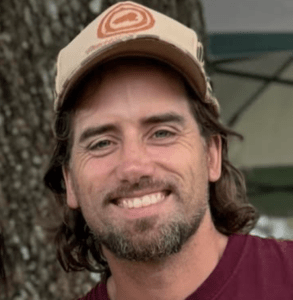
About the Author
As our community calls for a more engaged and nuanced way to teach our youth civics, it is now time to share the strategies I have been developing in the classroom for the past 12 years.

There are numerous systematic issues that need to be fixed to truly battle authoritarianism. But there are two things that need to be addressed immediately: the way we teach political discourse and involving students in real world politics.
We need to be instructing students to enunciate their political views based upon their personal values and lived experiences. From there, students need to learn to listen to other people’s thoughts and then work together to create consensus.
Our current pedagogy in developing political opinions is purely academic: read competing articles, analyze the arguments, weigh the data and make a logical choice. This ignores the phenomenon that people will interpret data differently based upon their own moral values. Worse than that, it alienates students who have differing views. Political opinions are not a list of standards to be addressed, but rather a framework of decision making that is unique to each student.
In my class, students begin each discussion with a “gut check.” They ask themselves how they feel about the issue at hand, then investigate why they feel that way through a written reflection. We open discussion by reading these reflections out loud. Discussion is based on the value of everyone’s stance, no matter how different.

We also create a massive disservice to our students by presenting political discourse as a binary choice that can be debated until we subdue the other side. Our community issues should not be decided by simple majority, but by consensus. We can no longer view our issues as “this OR that” but as “this, that, AND THEN what else?”
Recently, my students discussed the bill on legalizing sports betting. Instead of framing the debate as “pro or con,” we framed it to find agreement. What conditions would arise that would ease the concerns of your opponents?
We agreed that sports gambling should be legal, but the money taken in taxes should support gambling rehabilitation and high school sports. They also proposed licensing gamblers to limit their spending to a percentage of their income to prevent people going destitute.
While some may scoff and label these solutions as “unrealistic,” these students are developing something I see lacking in many adults: the ability to collaboratively problem solve to make a better world.
Real World Political Involvement
We must get students to reach outside the classroom to become involved in our politics.
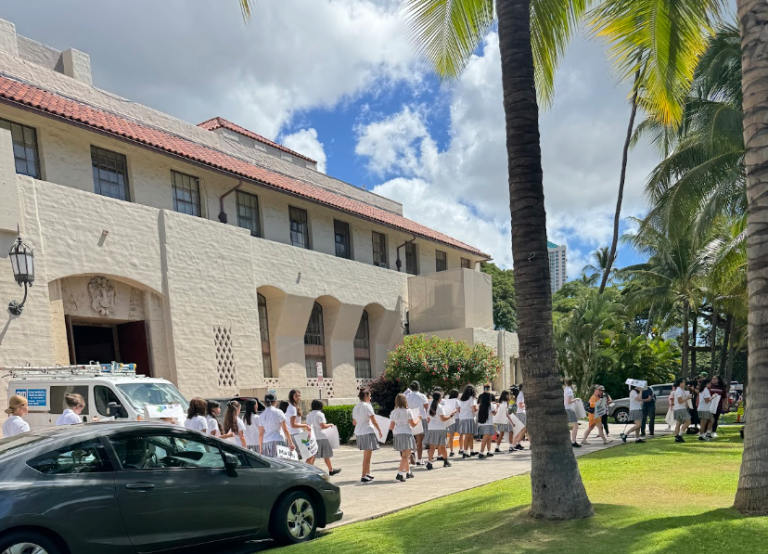
Politics starts local, within the school itself. Each year I have tasked my students with creating changes to the way we run our school. Past projects have included addressing dress codes, requesting fresh paint for school buildings, and asking for later start times.
While these projects do not always yield the result students are seeking, the practice of identifying issues, gathering data, bringing together interested parties, and presenting to people in power are the basic skills of an engaged citizen.
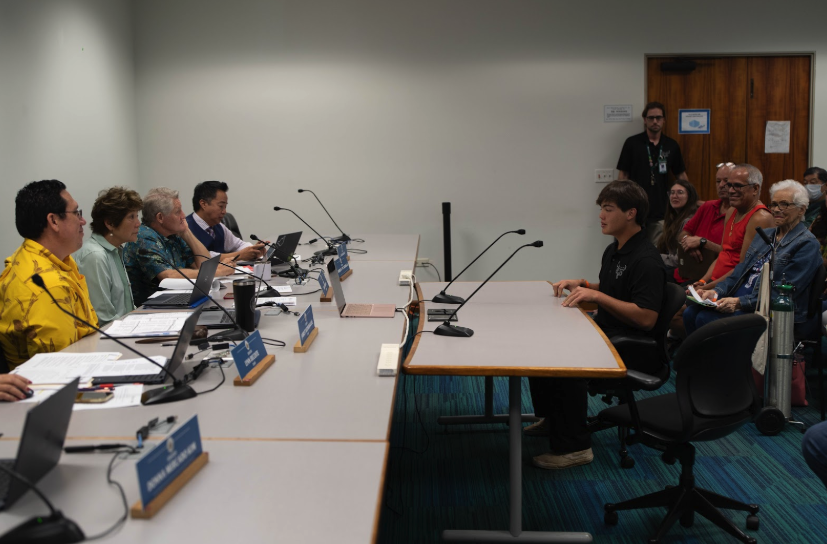
Widening our scope of local politics, city and state officials are usually more than willing to speak to students about their function and field questions. You may have to pressure them a little.
Having students focus on local or state level politics gives them an opportunity to see governance work (or not). These past two years, our class has visited the Capitol multiple times during session while we track and testify on bills students identify as important. We have watched bills die in front of us, and questioned how we can improve the process.
Finally, this past year I have been involved in Kanaeokana’s Our Kaiaulu Votes Coalition. OKV strives to preregister youth voters at 16 and give them a meaningful first voting experience at 18. Students participated in registration drives at multiple school campuses across the islands, participating in televised youth forums on the importance of voting, a public awareness event at SALT Kakaʻako, and multi-island “Walk to the Box” events.
We Have A Model
The question of how education can be used as resistance has been answered repeatedly through the efforts of the Native Hawaiian community to revitalize the language and history of these islands.
I want to acknowledge that my entire teaching philosophy has been grounded in the work of Native Hawaiian educators and resistors. As a dumb haole kid at Kapolei High School I was privileged to learn from Joan Lewis who taught us there was no use in criticizing people in power if you were unwilling to do the work yourself.

When the slightly-less-dumb haole kid attended the University of Hawaiʻi Mānoa to major in Hawaiian Studies, I learned from amazing people who had spent their lives fighting against systems that deemed their values archaic or barbaric. My kumu; Jon Osorio, Lilikalā Kameʻelehiwa, Kekai Perry, Lia O’Neill Keawe, April Drexel, Noelani Goodyear-Kaʻōpua, and many more, instilled in us the importance of civic engagement at all levels and the interconnectedness of politics, history and aloha ʻāina.
It has been my aspiration to be worthy of the ʻike that has been so graciously granted to me. It has guided my practice to create meaningful civic education for students through my career teaching in public, private and charter schools. I count myself fortunate to be involved in a community of Hawaiian Culture Based Educators striving for a better future for our pae ʻāina.
The blueprints are there. You may actually listen to them this time.
This Will Not Be Easy
To reframe our civic education, we will have to reframe what matters to us as educators. It is easy for us to play it safe by discussing pre-approved content, regurgitating and assessing the same information year after year.
We will have to be preemptive in engaging with parents, perhaps even educating them on the tools we are building so they can have conversations at home. We will have to become more visible in our community, attending public meetings and making our voices heard; for how can we teach civic participation if we do not ourselves participate?
It will wreck our planned schedules to be responsive to current events. Students will use their new skills to advocate for things we may not agree with. We may face disciplinary action from unsupportive administrators.
But the changes must happen. They should have happened years ago.
 Sign up for our FREE morning newsletter and face each day more informed.
Community Voices aims to encourage broad discussion on many topics of community interest. It’s kind of a cross between Letters to the Editor and op-eds. This is your space to talk about important issues or interesting people who are making a difference in our world. Column lengths should be no more than 800 words and we need a photo of the author and a bio. We welcome video commentary and other multimedia formats. Send to news@civilbeat.org. The opinions and information expressed in Community Voices are solely those of the authors and not Civil Beat.
Read this next:
Local reporting when you need it most
Support timely, accurate, independent journalism.
Honolulu Civil Beat is a nonprofit organization, and your donation helps us produce local reporting that serves all of Hawaii.
ContributeAbout the Author