Kauaʻi Fourth Graders Share Their Tips On Dealing With Little Fire Ants
A teacher at an Anahola public charter school had her students brainstorm on curbing the spread of the invasive species. It’s advice worth following.
May 29, 2025 · 4 min read

About the Author

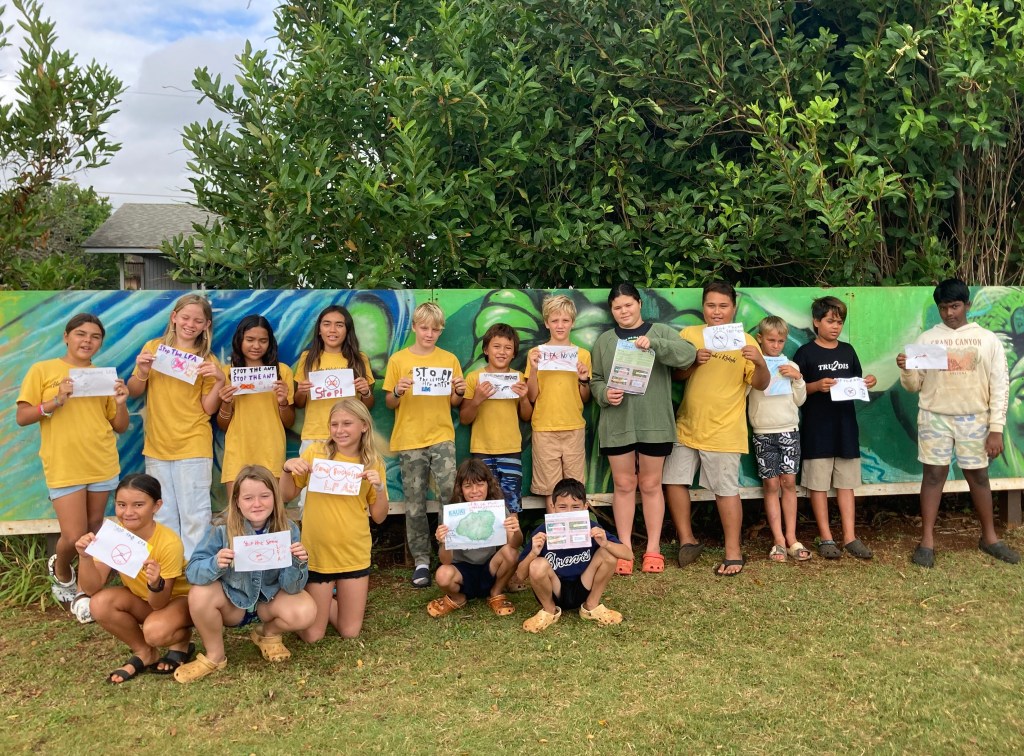
I am the fourth grade teacher at Kanuikapono Public Charter School in Anahola on Kauaʻi. We have just learned about the little fire ants and wanted to get the word out.

While we do know that October is Little Fire Ant Awareness Month, we believe that a little reminder is always important.
Lots of people will be buying plants in these summer months and we want to urge them to check their plants for little fire ants before they put them in their yard.
One of the big projects of our class is to send out a version of a public service announcement. We wrote this letter as a class.
To whom it may concern:
Have you ever heard about little fire ants? These ants are an invasive species. They are orange and only 1/16 of an inch. They are slow-moving and not easy to see.
They do not belong on our island but there are 18 known places here where they currently live. This may not seem like a lot of places, but these ants mean big trouble. These little fire ants have caused lots of damage on Hawaiʻi island, as well as many other places in the world. If we let their population grow, it is impossible to turn back. Let’s learn about some of these problems.
First, when they bite humans, it is painful and feels like fire. It can last for about a week and can easily get infected.
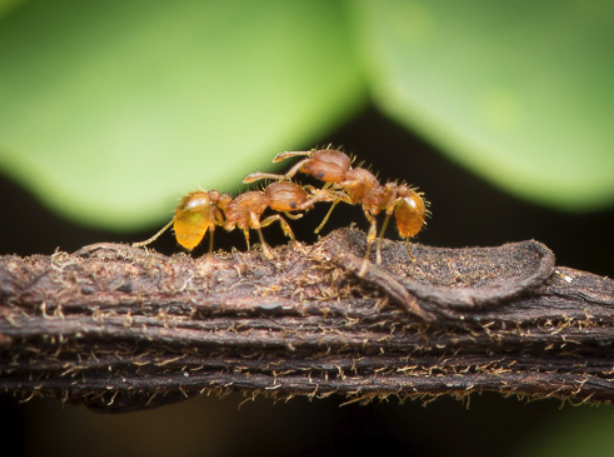
Second, if you have cats, dogs or domestic animals, they can be affected in a bad way. The ants crawl on their fur and bite them. The ants also crawl into their water bowls and bite the eyes of pets. This can cause blindness!
How do these little fire ants spread? If you buy a potted plant, it could have LFA on it. If you get a cutting from someone’s yard with LFA, you will bring them to your yard.
Fruits could also have them. Bee boxes, pallets, rubbish, construction materials, soil, mulch, compost, gravel, all of these things could have a small colony. If you transport them to your yard, you could bring trouble.
Here are some ways you can make sure that our LFA population does not grow.
First, test your own yard to make sure you don’t already have them. Put sticks with peanut butter around your yard in shady, moist places, on the ground and on trees.
After an hour, take the sticks and put them in a sealable plastic bag. Freeze this bag to kill the ants. Then send it to this address: Hawaiʻi Ant Lab, 16 E. Lanikaula St., Hilo, HI 96720. They will test to see if they are LFA, as we do have some look-alike ants on our island.
Second, check any potted plants that you buy from a nursery or store. These could have them. Test them before you introduce them to your hale!
Third, ask the nurseries and stores where you buy plants how they are making sure there are no LFA in their plants. Places selling plants and trees need to make sure they are not spreading LFA across the whole island.
Together, we can stop the spread of the little fire ants! Please go to littlefireants.com and stoptheant.org for more information. There is a great video that shows how easy it is to test your yard and so much more!
Mahalo for helping to mālama o ka ‘āina!
Sincerely,
Aaron, Cruz, Dylan, Finn, Hanakoa, Kaʻena, Kahekili, Kavalana, Kawena, Lehualani, Leila, Maika‘i , Makana, Nainoa, Nawaieha, Skyler, Ziesten and Auntie Elizabeth.
 Sign up for our FREE morning newsletter and face each day more informed.
Community Voices aims to encourage broad discussion on many topics of community interest. It’s kind of a cross between Letters to the Editor and op-eds. This is your space to talk about important issues or interesting people who are making a difference in our world. Column lengths should be no more than 800 words and we need a photo of the author and a bio. We welcome video commentary and other multimedia formats. Send to news@civilbeat.org. The opinions and information expressed in Community Voices are solely those of the authors and not Civil Beat.

Local reporting when you need it most
Support timely, accurate, independent journalism.
Honolulu Civil Beat is a nonprofit organization, and your donation helps us produce local reporting that serves all of Hawaii.
ContributeAbout the Author