Neal Milner: Hawaiʻi's Uncounted Homeless Are The People Sleeping On Your Couch
The uncomfortable truth is that Hawaiʻi likely has thousands more homeless people than the narrow definition used in the official count accounts for.
May 22, 2025 · 5 min read


About the Author

The homelessness problem in Hawaiʻi is much bigger than you think and includes people you never imagined.
Officially, Hawaiʻi has about 6,500 homeless. A more realistic estimate? Say hello to 30,000 more.

The official method that states like Hawaiʻi use to count homeless severely undercounts. In Chicago the actual rate is six times higher. In Atlanta the more accurate count may be as high as 15 times larger than it would be using Hawaiʻi’s method.
Government has a history of denying homeless problems and then, when they became too obvious to ignore, defining homelessness in ways that minimize the number and refer to them as an out-group different from the rest of us normies.
The official count doesn’t include people who aren’t in shelters or on the streets. The biggest miss of all is those “doubling up,” moving in with family or friends for brief or often extended, overextended really, periods of time.
Well, let’s see now. Working folks close to poverty and unable to afford housing:
Hawaiʻi doesn’t call these people “homeless.” We call them ALICE: Asset-Limited, Income-Constrained, Employed.
And half of Hawaiʻi’s families qualify as ALICE or worse.
They are working people, a recent ALICE report states, who “often struggle to keep their own households from financial ruin, while keeping our local communities running.”
They are not the homeless you complain about or try to avoid. They’re people who work for you or with you. There’s a good chance they have more than one job.
ALICE people, like many homeless people, work — an estimated 40% to 50% nationally and in Hawaiʻi —but don’t make nearly enough money to pay for housing.
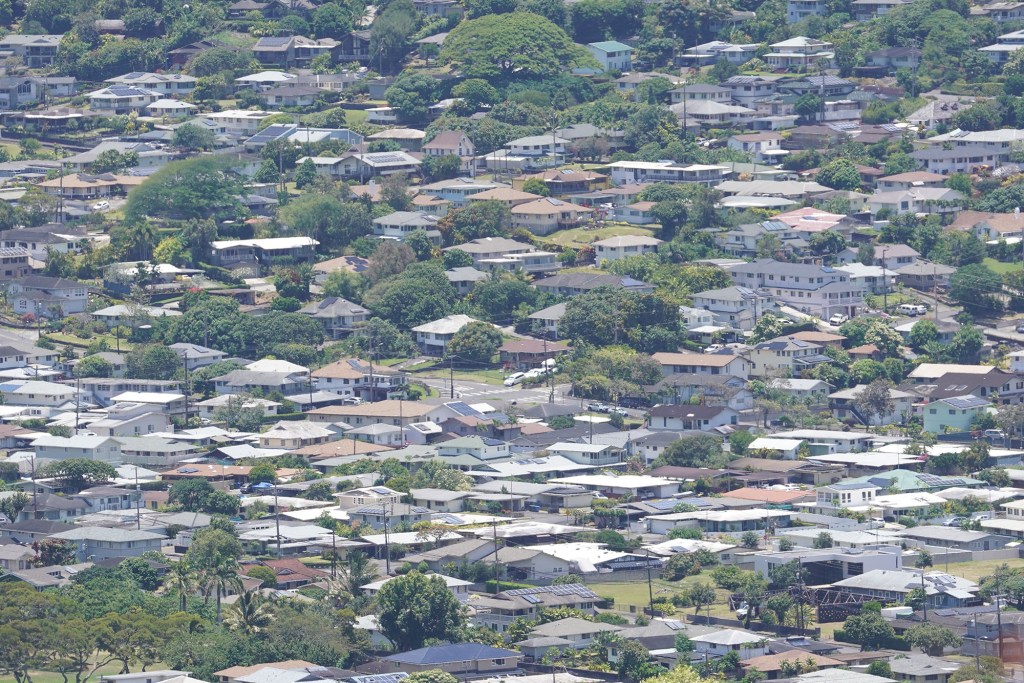
In Hawaiʻi, doubling up is not just a homeless strategy. It’s a way of life. Because of our huge, unattainable housing costs, doubling up is a general survival strategy. Honolulu has a greater number of people per household than most large U.S. cities.
People here celebrate this doubling up by sugarcoating it, calling it ʻohana.
We tend only to think about ʻohana’s strength and good “cultural” side — the willingness to take people into your household, to live as an extended family. Multigenerational families living under one roof not just surviving but thriving.
But also consider possible limits. Crowdedness is crowdedness — the lack of privacy, people doubling and tripling up sleeping arrangements. We’re talking about unfulfilled dreams in undersized quarters.
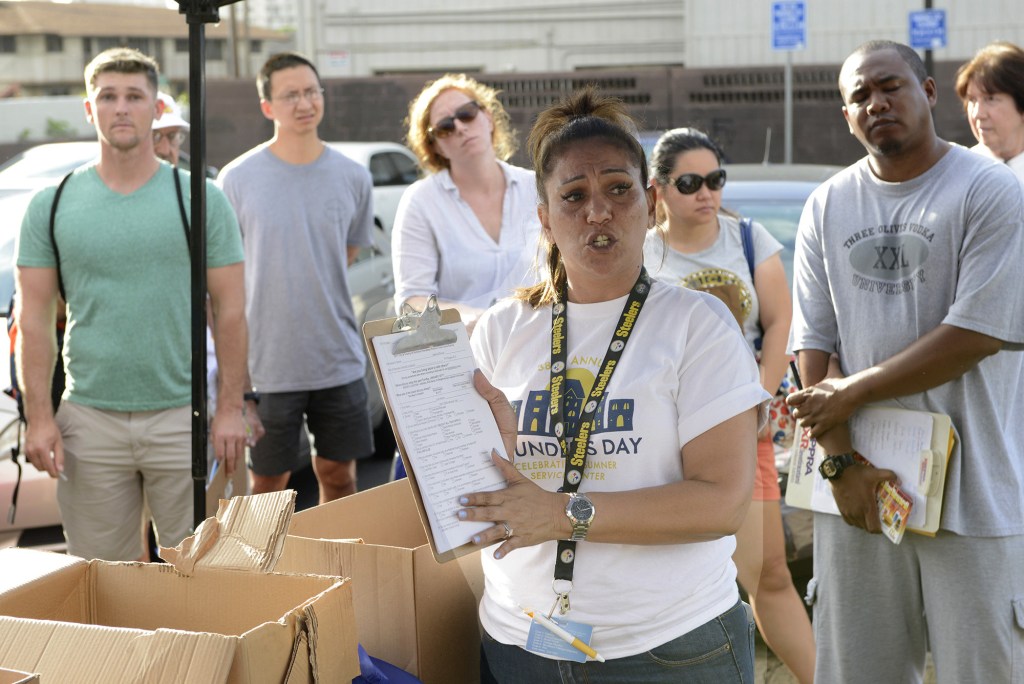
The Working Homeless
Most of what I say here comes from Brian Goldstone’s new book about five working homeless families in Atlanta, “There is No Place For Us: Working and Homeless in America.”
Of course, the fit between Hawaiʻi and Atlanta is far from exact, but don’t simply dismiss the comparison by assuming we have more ʻohana here.
The Atlanta people worked, some in fast food, hospitals, home health care and insurance companies. One was working on a degree in social work. Another started a meal service in her building.
They got sick — one was undergoing chemo for cancer — but continued to work anyway.
They lost homes that were torn down or destroyed by fire, they were evicted because they missed rent payments. Their apartments were converted to condos. In some cases, living with friends or extended families got to be too much.
They were not passive, never quit, and still had dreams for a better life even though these aspirations were constantly crushed. One common trait: Their lives were pretty good before they lost their homes. Whatever happened after that, the root cause was having no decent place to live.
And, most of all, they faced a housing market with no affordable housing and housing vouchers that were unusable because no units were available.
“This book is about not seeing,” its author said.
‘Everything Else Fails’
What does Goldstone’s book about Atlanta suggest about what we don’t see about Hawaiʻi? Three things.
First, home is the center of life.
“If we don’t have a stable home over our heads, everything else falls,” wrote Matthew Desmond, author of “Evicted.“
That stability is shaky for far more than the 6,000 or so counted as homeless in the islands.
Second, without knowing more of their stories, we wash away the plight of ALICE folks by not looking close enough at their own situations and sanitizing them by celebrating ʻohana. It’s a chauvinism that harms a lot of people by wishing their tough situations away
Third, it makes sense to broaden the term “homeless” to include ALICE people. Yes, there is a stigma attached to that term. The term has “metastasized beyond its literal definition, becoming a terrible threat,” wrote Jessica Bruder in “Nomadland: Surviving America in the Twenty-First Century.”
If we continue not to see the much larger number of homeless, we continue to downplay the seriousness of not having a stable place to live.
When it comes to housing, Hawaii has a cradle-to-grave affordability problem. Building more affordable housing is a good thing. It’s also a slow thing. Most ALICE families won’t benefit from it because that unit in Kakaʻako or Kapolei is well down the road. When it comes to housing, public policy is one thing. Private life is another.
Policy is about what happens then. As for what happens now, we can at least begin by realizing that many, many regular people who don’t scare or disgust you are really homeless too.
 Sign up for our FREE morning newsletter and face each day more informed.
Read this next:

Local reporting when you need it most
Support timely, accurate, independent journalism.
Honolulu Civil Beat is a nonprofit organization, and your donation helps us produce local reporting that serves all of Hawaii.
ContributeAbout the Author