Gov. Green Should Sign Solitary Confinement Bill
But Hawaiʻi needs to go further to take a stand against state-sanctioned torture.
June 15, 2025 · 4 min read

About the Authors


As physicians and national experts on the detrimental health implications of solitary confinement, we urge Gov. Josh Green to sign Senate Bill 104 into law and to go further to end solitary confinement.

This bill takes important initial steps to recognize the harms of solitary confinement, protect certain vulnerable populations from solitary confinement, require the Hawaiʻi Department of Corrections and Rehabilitation to report annually on the use of solitary confinement, and apply these protections to state-operated and state-contracted facilities. It should be signed into law.
At the same time, this bill does not go far enough and the governor and Department of Corrections and Rehabilitation should go further to end solitary confinement and utilize proven alternative forms of separation proven to reduce violence and better support people’s health.
Our decades of expertise — cultivated through clinical studies, research projects, and litigative evaluations — clearly show that solitary confinement is grossly inhumane and has deleterious effects on the health and safety of individuals and communities alike. Research shows that placement in solitary confinement exacerbates all forms of mental illness and often leads to self-mutilation, heart disease, anxiety, depression, and psychosis.
A large majority of deaths by suicide in jails and prisons occur among the 5% (on average) of the population who are consigned to some form of solitary confinement.
Heightened Risk Of Death
Research shows that even one or two days in solitary can lead to significantly heightened risk of death by accident, suicide, violence, overdose, and other causes. Research also proves that solitary worsens safety, and that people who spend any time in solitary are more likely to be re-arrested after returning home.
In fact, solitary inflicts long-lasting psychological and neurological harm that closely mirrors the effects of post-traumatic stress disorder. Brain imaging technologies show that prolonged anxiety and anger, which are caused by solitary, leads to structural changes in the brain, specifically the enlargement of neural pathways in the temporal lobe or “limbic system.”
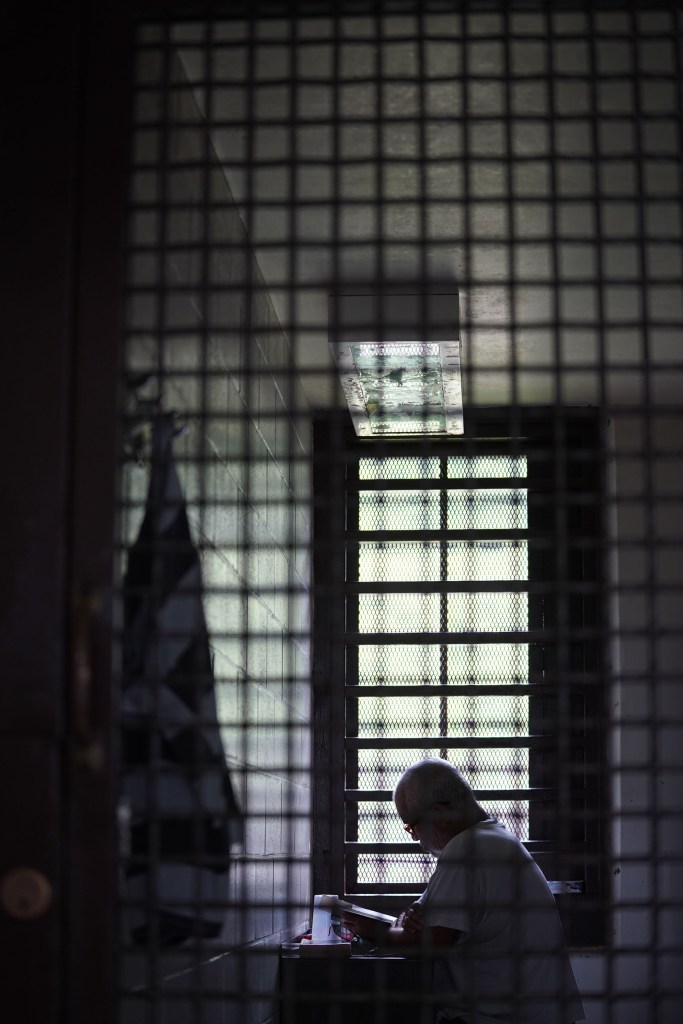
This area governs raw emotion and becomes hyperactive at the expense of the pre-frontal cortex, which is responsible for judgment, moral reasoning, and impulse control.
These structural changes and the enduring neurological patterns they create result in a brain increasingly wired for fear, rage, and impulsive behavior, making recovery from solitary incredibly difficult and the harm very long-lasting.
Given this evidence, ending the use of solitary confinement is not only a humanitarian necessity — it is scientifically imperative.
Meanwhile, alternative forms of separation that involve full days of out of cell time with group programming and engagement — such as the RSVP program, Merle Cooper program, and CAPS/PACE programs — have been proven to dramatically reduce violence and improve health and safety outcomes for incarcerated people and staff.
Rightfully defined as torture by international law, the use of solitary confinement should have no place in Hawai’i or anywhere else.
Like us, Gov. Green is a physician who believes in human dignity. His February 2024 executive order admirably advocates for the implementation of trauma-informed care across all of the state’s executive departments, which includes the DCR. Solitary confinement is the exact opposite of trauma-informed care; solitary is trauma-inducing.
Solitary inflicts long-lasting psychological and neurological harm.
It’s essential to note that SB 104 does not place any total limits on the use of solitary confinement and would continue to allow people to spend months and years in solitary.
Although insufficient, this bill is a necessary step in the right direction. More work will be necessary to build upon the enactment of SB104 to end solitary confinement for all people and stop the widespread daily infliction of trauma.
It is our fundamental duty as physicians to do no harm. We firmly encourage you, Gov. Green, to fulfill both the Hippocratic Oath and your own directive by signing SB 104 into law and then going further to end solitary confinement. Moreover, we call upon readers to take action by contacting the governor through his website and demanding the enactment of SB 104.
Solitary confinement in Hawaiʻi and across the United States is undoubtedly a public health emergency. Today, Hawai’i has the opportunity to make a real change and lead by example. We urge Gov. Green to sign SB 104 and go further to take a stand against state-sanctioned torture.
 Sign up for our FREE morning newsletter and face each day more informed.
Community Voices aims to encourage broad discussion on many topics of community interest. It’s kind of a cross between Letters to the Editor and op-eds. This is your space to talk about important issues or interesting people who are making a difference in our world. Column lengths should be no more than 800 words and we need a photo of the author and a bio. We welcome video commentary and other multimedia formats. Send to news@civilbeat.org. The opinions and information expressed in Community Voices are solely those of the authors and not Civil Beat.

Local reporting when you need it most
Support timely, accurate, independent journalism.
Honolulu Civil Beat is a nonprofit organization, and your donation helps us produce local reporting that serves all of Hawaii.
ContributeAbout the Authors