Some Hawaiʻi Counties Are Shortchanging Efforts To Keep Government Ethical
Experts agree full-time staff support is essential to the success of the neighbor island boards, but only Maui is taking that step.
June 15, 2025 · 9 min read


About the Author

Overseeing the ethical behavior of Hawaiʻi government officials has always been a balancing act for the commissions and boards charged with the task.
Focus too much on investigating complaints and meting out punishment to a few individuals and you might shortchange the opportunity to educate a lot more officials about ethical behavior in general.
Over-emphasize the administrative stuff such as inspecting officials’ financial disclosures and responding to questions and you’ll end up light on enforcement and create the perception that bad behavior doesn’t have consequences.
Take the Honolulu Ethics Commission. A decade ago, its aggressive approach to investigations led to significant achievements, including a $50,000 fine for former City Councilman and state Rep. Romy Cachola for his alleged acceptance of unlawful gifts and accusations that he used his city vehicle fund to cover thousands of dollars in expenses even though his political campaign fund had already paid for the same expenses.

And the commission was the first to investigate former Police Chief Louis Kealoha and his then-city prosecutor wife Katherine Kealoha in what became a federal case that led to prison sentences for both of them.
But the commission’s take-no-prisoners approach also ruffled political feathers at Honolulu Hale and ultimately led to the demise of its executive director, Chuck Totto.
His successor, Jan Yamane, has taken a decidedly less aggressive approach, launching fewer investigations and emphasizing ethics training to encourage good behavior.
At least the Honolulu commission has a choice. Like the State Ethics Commission, its executive board is supported by a full-time staff. The Honolulu commission has 11 staff members and spent $962,345 during the last full fiscal year.
That’s not the case for the state’s other three counties, where all-volunteer boards with no full-time staff struggle to do more than process financial disclosures and answer employees’ questions about ethics. Occasional investigations may be conducted with the help of each county’s corporation counsel, but much more could be done on Maui, Kauaʻi and Hawaiʻi island.
In Maui County, that’s about to change.
A ‘Night And Day’ Difference
When it comes to monitoring the ethics of county governments in the islands, Michael Lilly is familiar with the haves and the have-nots. He served for nine years on the Honolulu Ethics Commission. After moving to Maui, he’s been on that county’s Board of Ethics for the last two years.
“The difference between what we did in Honolulu and what we do here on Maui is just night and day,” said Lilly, also a former state attorney general. “Because we don’t have full-time staff, we don’t do any training. Honolulu trains every year.”
Worse, Lilly said, “Because we don’t have full-time staff, we can’t investigate ethics violations, we can’t prosecute ethics violations without getting outside counsel.”
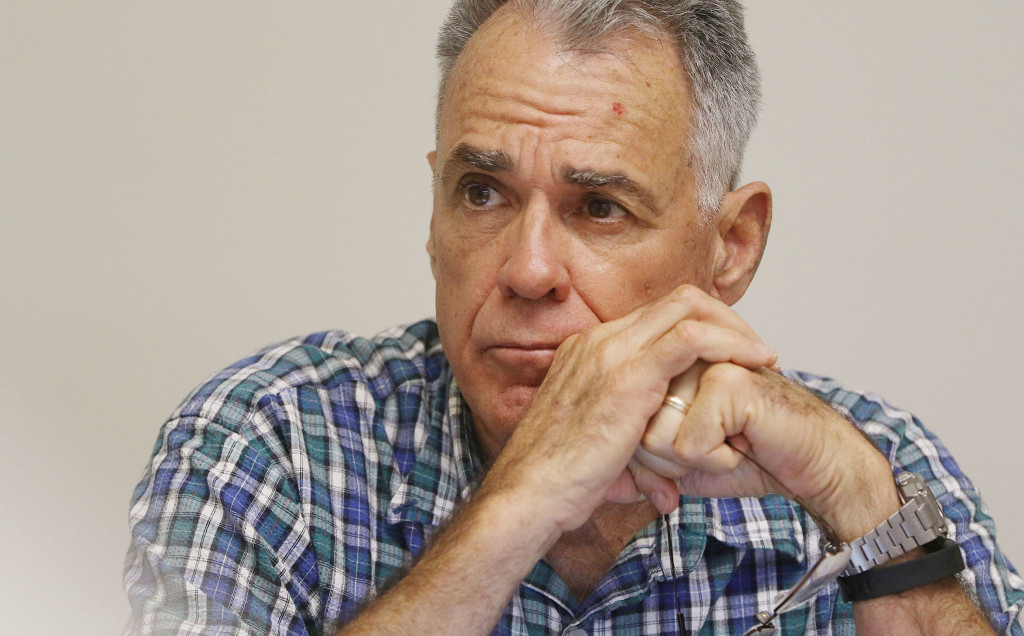
“As a commissioner I frankly don’t want to be involved in the initial stages of an ethics complaint, because I want to remain as an independent body. I want to be like a judge. Can you imagine a judge working with a prosecutor to bring a case against a defendant and then adjudicate that defendant’s guilt?
“In Honolulu the commissioners never knew what the staff was investigating until they found what they perceived was an ethics violation, and then they would bring it to us as a probable cause hearing.”
Now, thanks to voter approval last November of a county charter change, Maui is on the verge of hiring an executive director for the Board of Ethics. That person, who must be a Hawaiʻi attorney, will in turn hire an investigator and an administrative assistant.
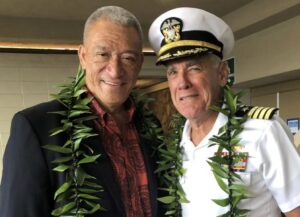
“Having full-time staff will elevate the responsiveness of the Ethics Board to stratospheric levels,” Lilly said. “The difference between what we can do now and what we’ll be able to do six months to a year from now is huge.”
Members of the Board of Ethics currently spend copious amounts of time poring over the financial disclosure statements of county officials and confirming the information.
“Reviewing the financial disclosures is about as much in the weeds as you can get,” Lilly said. “It takes hours and hours of our time. In nine years in Honolulu, I never saw one except if it came up in a complaint.”
Long-Sought Changes
Every county has had its own code of ethics and a board to theoretically enforce it for at least 45 years — a requirement of a state constitutional amendment approved in 1978. The Honolulu Ethics Commission has had full-time staff support since 1984, but that hasn’t been the case for the other three counties.
The call for providing that support has grown louder in recent years after a spate of scandals involving public officials in every county.
Among the reform proposals of the state Commission to Improve Standards of Conduct was House Bill 134 in 2023 to provide one-time state grants to the counties to nudge them in that direction.
“Many of the county ethics boards or commissions lack the necessary resources to adequately meet their constitutionally mandated obligations,” the bill stated. “Limited or no staffing prevents these entities from sufficiently investigating complaints, providing advice to current county employees, or offering training on how to follow the pertinent code of ethics.”
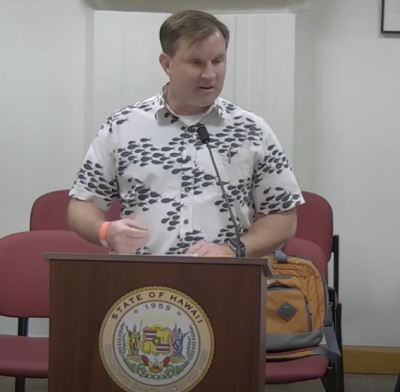
The grants might have totaled $200,000 per county, bill supporters said, but the concept ran into trouble when House Judiciary Chair David Tarnas said, “I’m baffled as to why we should spend state money for the counties to do what they’re supposed to do.”
In the end, the House passed only a resolution that session urging the counties “to devote sufficient funding to their respective county ethics boards.”
That same year, the Hawaiʻi State Ethics Commission hosted an all-day training session for members of ethics boards throughout Hawaiʻi.
“We did it in part as an effort to address the issue of essentially staffing time, capacity, and to provide resources for those county ethics commissioners or board members to start exploring this option of what would it look like if they were to ask for a budget,” said Robert Harris, executive director of the state commission.
So far, in addition to the long-staffed Honolulu Ethics Commission, only Maui County has heeded the call.
‘We Don’t Fix What’s Not Broken’
To Harris it’s a no-brainer for all the counties to provide full-time staff for their ethics board.
“As I understand it from the Maui folks, who’ve helped successfully get the funding into the charter, they had support from the mayor and the legislative branch,” he said. “And I think it really just required them asking and sort of pushing the topic.
“Part of all this discussion really is just trying to encourage folks to start thinking about it and asking. Because the sum of money spent on a few staff is relatively small.
“My guess is there isn’t huge fundamental opposition to the concept. It just requires people asking.”
Harris may be wrong on that last point, at least when it comes to Kauaʻi and the Big Island.
Their mayors were in Washington, D.C., for the Hawaiʻi on the Hill event last week and their offices said they were unavailable for interviews.
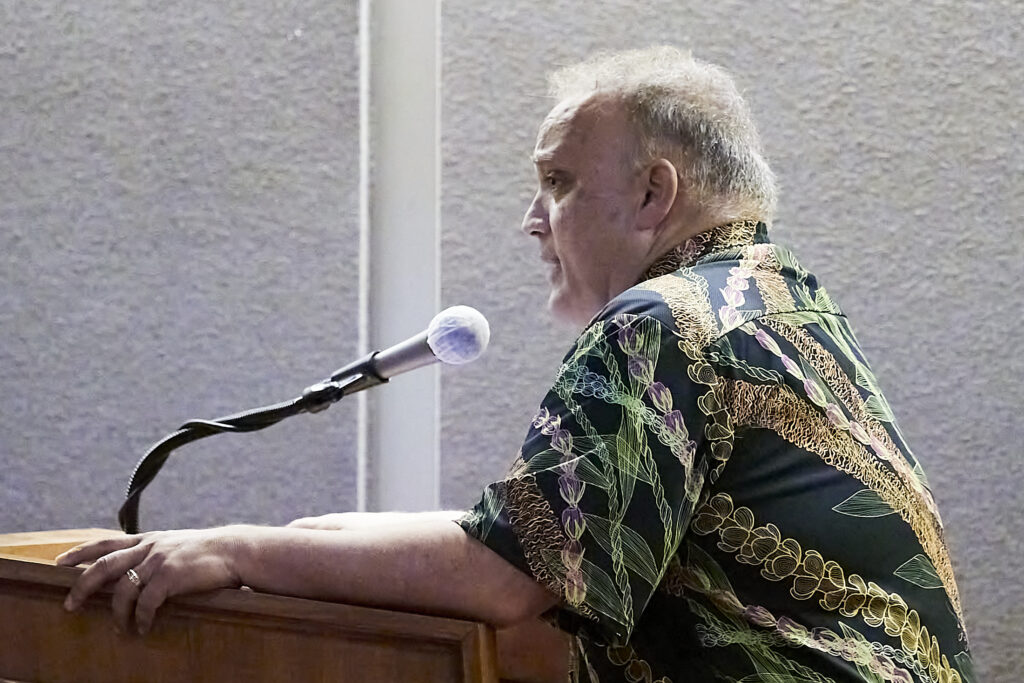
But, Hawaiʻi County Mayor Kimo Alameda said in a statement, “I believe there is no necessity to allocate full-time staff exclusively to the county’s Board of Ethics, as we have dedicated volunteers who possess a strong understanding of our ethics, rules, and guidelines.”
Hawaiʻi County Council Chair Holeka Inaba, who did speak with Civil Beat, agreed with Alameda.
“We don’t fix what’s not broken here,” Inaba said. “It’s actually working here, and we’re getting timely results and good discussion and what I think is fair and impartial decisions from our Board of Ethics. And we have a lot of other projects and a lot of other initiatives for transparency and greater efficiency at our county right now.”
Those initiatives include sharing information with the public about the budgeting process and a program-by-program review of county government, he said.
“It’s not enough to justify a full-time position.”
Ellen Ching, Kaui County Office of Boards and Commissions
Both Inaba and the mayor’s office said Hawaiʻi County does not produce an annual report that would show how many complaints the Board of Ethics has dealt with, but Inaba could recall only one complaint within the last year and said he did not know what it involved.
Such reports are staples of the state and Honolulu ethics commissions, and Lilly said Maui County plans to start producing a Board of Ethics annual report once it has completed its staff hires.
The Kauaʻi County Board of Ethics “has not received many complaints, it’s not enough to justify a full-time position,” according to Ellen Ching, administrator of Kaua’i’s Office of Boards and Commissions. In fact, she said the board had received no ethics complaints for the last two fiscal years for which she had records, and had settled only one complaint in the last five fiscal years on record.
That raises a what-comes-first question. Both Harris and Lilly said their experience shows that people are only willing to lodge ethics complaints if they’re confident that there is a system in place to professionally deal with them.
Kauaʻi and Hawaiʻi counties both contend their all-volunteer ethics boards receive sufficient legal and administrative assistance to do their jobs, but the chairs of those boards either did not respond to requests for interviews or said they were unavailable.
No one from either county provided any specifics to indicate their boards of ethics are currently accomplishing any more than the long-frustrated Maui board that is about to be transformed with the hiring of a full-time staff.
Civil Beat’s coverage of Maui County is supported in part by a grant from the Nuestro Futuro Foundation.
 Sign up for our FREE morning newsletter and face each day more informed.
Read this next:

Local reporting when you need it most
Support timely, accurate, independent journalism.
Honolulu Civil Beat is a nonprofit organization, and your donation helps us produce local reporting that serves all of Hawaii.
ContributeAbout the Author