Celebrating 50 Years Of Community Gardens In Honolulu
The Department of Parks and Recreation program is integrating and expanding.
July 29, 2025 · 6 min read

About the Authors
The community gardening program was founded in 1975 under Honolulu Mayor Frank Fasi’s Administration, with the first community garden located in Makiki District Park.

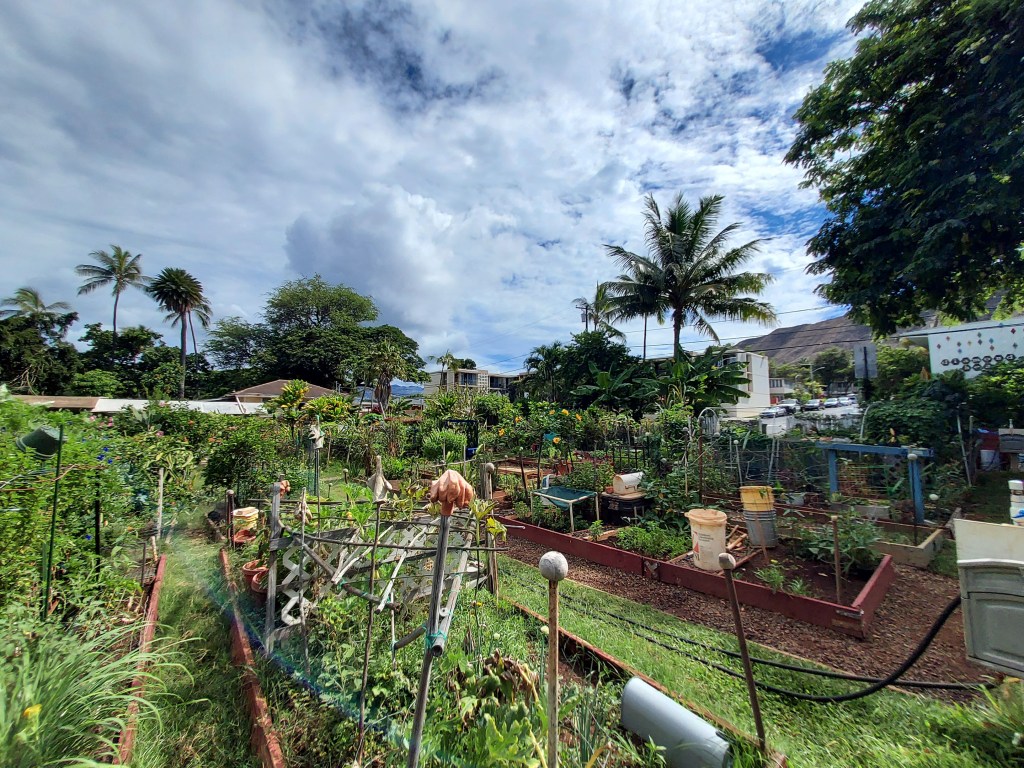
Since then, the community gardening program has grown to 11 communities on Oʻahu. Each garden has its own unique character, with more than 2,000 gardeners actively engaged in growing vegetables, herbs, flowers, and other bio-diverse greenery.
Community gardening isn’t just about growing plants, but also growing relationships. In addition to the harvests that their garden plots yield, gardeners enjoy: social interaction, creative problem solving (“how do you get your tomato to grow?”), recreational opportunities, and exercise in our park settings.
This program is administered by the City and County of Honolulu Department of Parks and Recreation and led by teams of volunteers who facilitate garden meetings and workdays, coordinate special projects, and communicate with neighborhood organizations about common concerns.
Their goal is to be an integral element of our city parks, as they share these public spaces with a diverse community of park users, such as youth sports teams, tennis and pickleball enthusiasts, and walkers. They’re all about staying healthy, exercising, enjoying the outdoors, and growing with our communities.
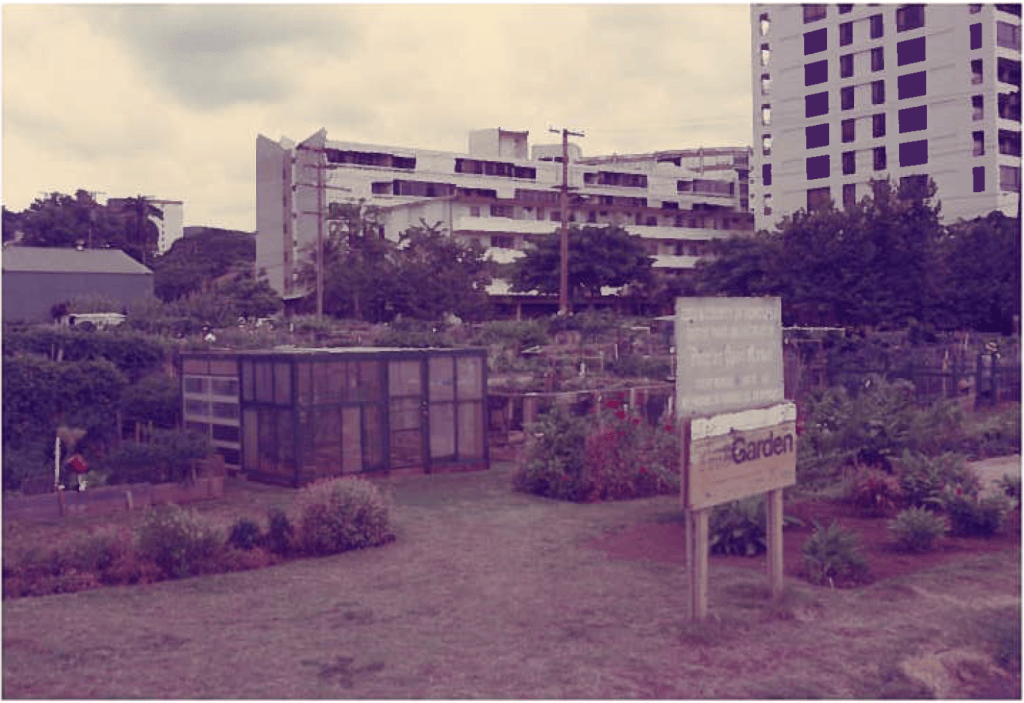
“Keep Growing” is the theme of our 50th Anniversary event: “keep growing” as individual gardeners, “keep growing” in our knowledge and gardening skills, “keep growing” as a program so that more people can enjoy the benefits of gardening.
In fact, growing the program is already taking root. Thanks to a federal Covid relief grant from the American Rescue Plan Act, which funded a new position in 2022.
This position was made into an ongoing contract position, which supports a number of improvements to the program including a new website stocked full of gardening guidance, and revising the 40-year-old rules and regulations governing the community gardening program. Perhaps the most exciting is that this position created the capacity to start siting new community gardens, a long-awaited goal of Parks and Recreation and gardeners around the island.
There’s no doubt that there is demand for more community gardens. Since the pandemic, nearly everyone who attempted to get a plot has been placed on a wait list. At some gardens, the wait can be as long as three years. Various articles (“There Are 10 Community Gardens on Oahu. None Of Them Are On The Westside” and “Catherine Toth Fox: The Demand For Community Gardens Is Intense”) and local governmental policies (2020 Ordinance 20-45 and 2024 Senate Concurrent Resolution No. 152) also highlight this need.
The community gardening program, with contractor Supersistence, conducted geospatial analysis to narrow down locations for community gardens. With this information, we can analyze which park land is suitable for a new community garden that also meets the department’s equity goals — to expand gardening opportunities to populations underrepresented in the program, to those who don’t otherwise have access to growing space, and in park areas accessible to necessary amenities such as curb cuts, parking, bathrooms and bus lines.
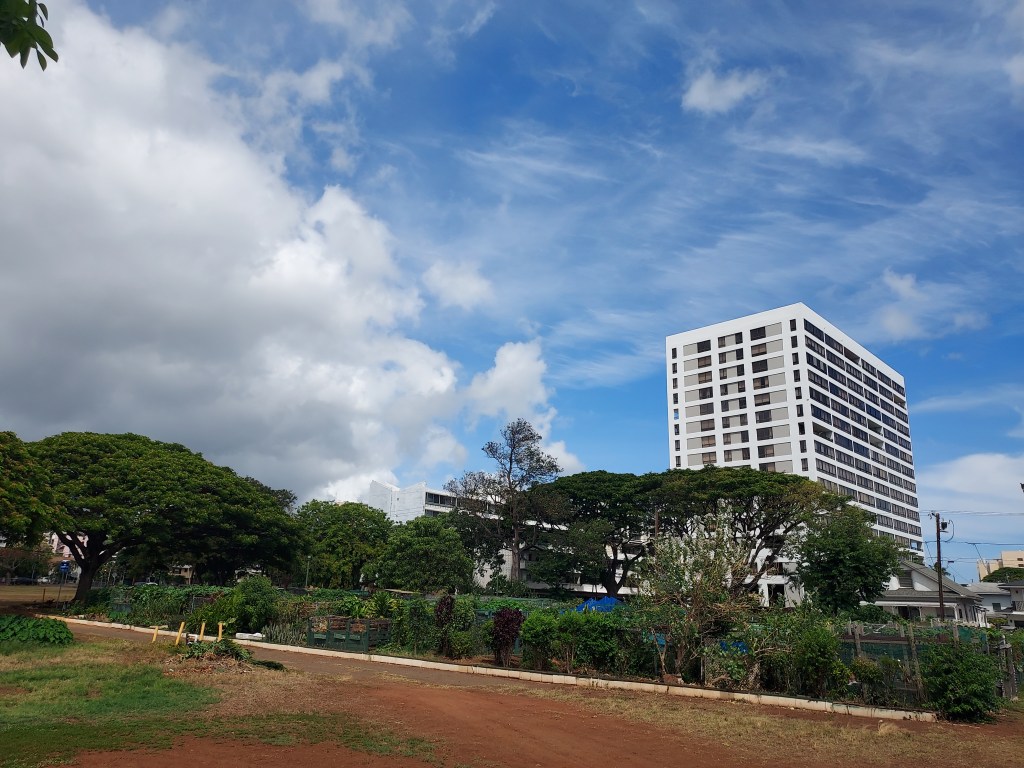
The Department of Parks and Recreation will have more information later this year about which sites specifically meet these goals. Learn more about the process for identifying sites and for establishing community gardens on the “Planning for Growth” page on our program’s website.
For a recreational program, community gardens uniquely offer a variety of benefits. Gardens create peaceful spaces in high density neighborhoods for residents who would otherwise not have gardening spaces of their own.
For Carrie at Hawai‘i Kai Community Garden, “The garden is a place where I can enjoy peace of mind.” Gardeners grow an assortment of vegetables that add to their family meals. Lettuce, beans, and eggplant are just a small sampling of what can be grown in a community garden plot.
“Home grown veggies are so tasty!” says Bernie, a gardener at Kāneʻohe Community Garden. “Chayote grows well in Kāneʻohe and is so versatile. You can use chayote in soups, stews, stir fry, pickles, and pies.”
In addition, community gardens offer a great social environment to make new friends. When asked how the community gardens enhance living, gardeners often mention the social aspect of the garden and meeting new people.
A survey conducted to community gardens in 2024 affirms these sentiments.
“My community garden connects me with a variety of people who show care for each other and for the planet we live on,” says Amber from Dole Community Garden. Of course, being in a community does not come without its challenges. Lots can be learned about how to be a good neighbor when you garden alongside dozens of other people.
In an activity related to our 50th Anniversary, we have been reviewing newspaper articles from decades past, and we learn that many of these benefits and challenges were discussed by first generation gardeners. In the end, across decades and across the island, gardeners come together and work toward solutions to meet the needs of gardeners and the needs of the larger community.
To further our history and research project, we are requesting former gardeners, their family members, and community members to share their memories or photographs of the community gardens. We have decades of history that we would like to preserve! Community gardens have hosted gardening education programs, guest speakers, volunteer projects, meet-ups, and so much more.
“Keep Growing” is the theme of the 50th Anniversary event.
We would like to document and preserve these stories as part of the community gardens’ living culture. If you would like to contribute to this living history, please contact communitygardens@honolulu.gov.
You’re invited to celebrate the 50th Anniversary of the Honolulu Recreational Community Gardening Program on Sept. 13t from 10 a.m. to 2 p.m., at Foster Botanical Garden. Admission to the event and garden are free, featuring educational displays, demonstrations, garden tours, entertainment, and food trucks.
This program that spans 50 years could not exist without the support of the generations of gardeners who came before us, nor without the inspiration and actions of our volunteer officers and city leaders. This includes Mayor Fasi and program coordinators such as the first Community Garden Coordinator Bonnie Goodell.
We stand on the shoulders of those who came before us, and we plan to grow their legacy to this current generation of gardeners and to generations to come. This celebration is not only a reflection of our past achievements but also a call to continue evolving and contributing to the vitality of our gardens and communities.
To learn more about the program, apply for a plot, or access gardening resources, click here.
With questions regarding the 50th Anniversary event on Sept. 13th at Foster Botanical Garden, contact communitygardens@honolulu.gov.
 Sign up for our FREE morning newsletter and face each day more informed.
Community Voices aims to encourage broad discussion on many topics of community interest. It’s kind of a cross between Letters to the Editor and op-eds. This is your space to talk about important issues or interesting people who are making a difference in our world. Column lengths should be no more than 800 words and we need a photo of the author and a bio. We welcome video commentary and other multimedia formats. Send to news@civilbeat.org. The opinions and information expressed in Community Voices are solely those of the authors and not Civil Beat.

Local reporting when you need it most
Support timely, accurate, independent journalism.
Honolulu Civil Beat is a nonprofit organization, and your donation helps us produce local reporting that serves all of Hawaii.
ContributeAbout the Authors