Less than 3 days left to help us reach 250 donors by May 15. Make a gift of any amount today!
This Senator Thinks Trump Is A Danger To Hawaiʻi. He Hopes To Convince You Too
Karl Rhoads worries that too many people are not paying close attention to the president’s “bleeding to death” of government.
July 20, 2025 · 7 min read

About the Author

Frustrated by what he sees as a near existential threat to Hawaiʻi from President Donald Trump, a state senator wants to raise public awareness of the impact of the president’s policies on the islands.
Karl Rhoads, the chair of the Senate Judiciary Committee, is planning a series of public briefings at the Legislature to hear from congressional leaders and others. The goal is to get real-time updates from the experts on exactly how Hawaiʻi is impacted by the Trump administration, and to strategize what can be done about it.
The first informational briefing is set for July 31 and will feature U.S. Rep. Ed Case discussing nothing short of “the Rule of Law,” as the agenda notice promises.

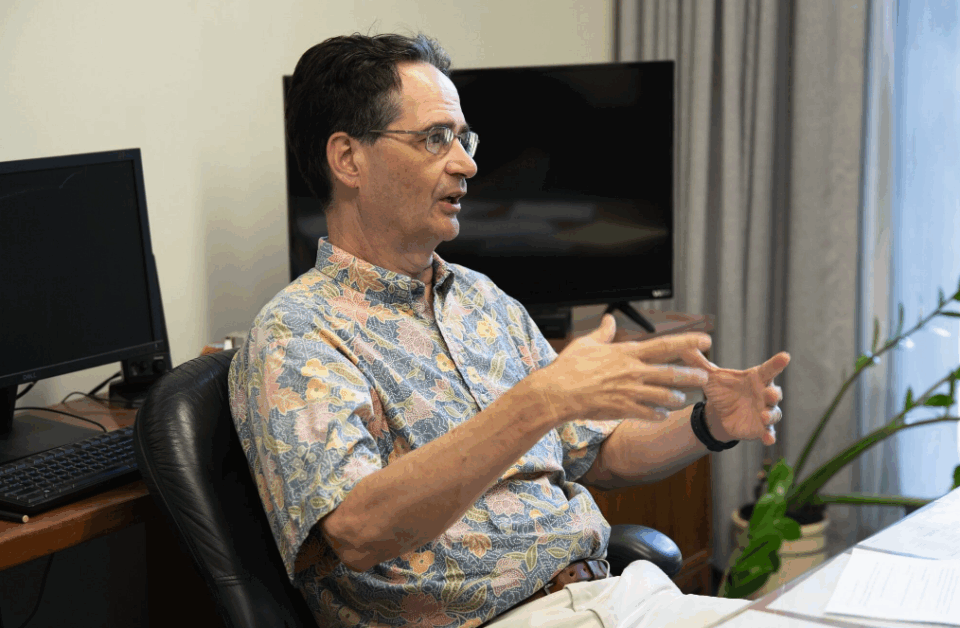
In an interview with Rhoads at his State Capitol office last week, the senator elaborated on his views about how Trump is ignoring the rule of law, especially when it comes to immigration, taxes, tariffs and grants — “The whole soup to nuts,” Rhoads said — pointing to ongoing national media reports on the Trump actions as well as Civil Beat’s own reporting.
Among his concerns are the gutting of the United States Agency for International Development by Elon Musk, now on life support under the control of Marco Rubio’s State Department, and the cuts to the federal Department of Education, which Trump wants to abolish.
Can Trump, Rhoads asks, legally shut down entire programs created or funded by Congress, a separate branch of government?
“Now you might be able to downsize it,” he said. “And I think the Trump guys are slowly figuring it out that they can. I mean, they’re pushing the boundaries at every point they can. They’re bleeding them to death, basically.”
Adding to his frustration is that, while the courts have frequently blocked many of Trump’s actions, extensive damage has already been done. Rhoads is also baffled by the U.S. Supreme Court’s response on several Trump initiatives, including appearing sympathetic to challenging birthright citizenship.
“Even if the courts come back and say, ‘No, you shouldn’t have done that,’ it’s too late, because everybody who worked there has been out of a job for four or six months or whatever it turns out to be at that point,” said Rhoads.
It will take organizations years to recreate the same expertise that was lost with all the firings and layoffs, he said.
“A lot of them probably won’t come back because they’re like, ‘What’s to keep Trump from doing that again?’”
Law And Politics
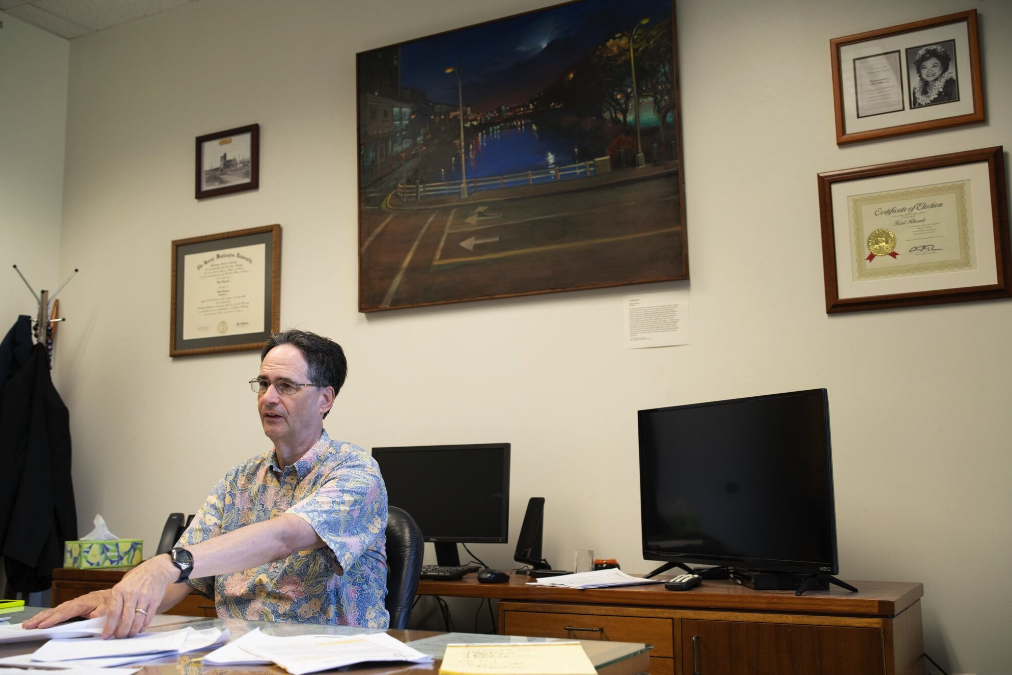
As judiciary chair, Rhoads knows well the responsibility and authority of the courts. His committee evaluates nominations of judges and justices.
His education and professional career are also rooted in the law. Rhoads holds a law degree from George Washington University and was a summer clerk for a U.S. Intermediate Court of Appeals judge and practiced law for two years.
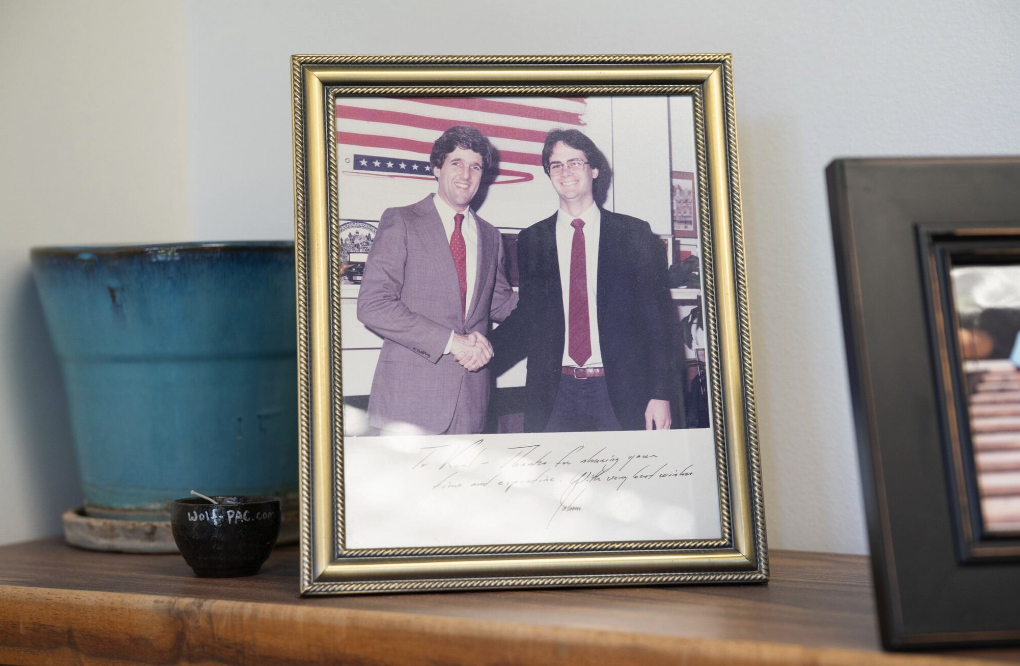
He also understands how other branches of the federal government work, and he understands politics. Before coming to Hawaiʻi, Rhoads served as a legislative assistant for U.S. Rep. Eliot Engle of New York, as a legislative aide to former U.S. Rep. Louise Slaughter of New York and as an intern for former U.S. Sen. John Kerry of Massachusetts.
Rhoads is not shy about his disdain for the current occupant of 1600 Pennsylvania Ave.
“Proudly a ‘never-Trumper’,” he said. “From the very moment he set foot on the stage, I was like, ‘He’s a joke’.”
Rhoads is well aware that politics has always been “a rough and tumble sport,” as he puts it. Where the country is under Trump, he says, is in many ways a “logical conclusion” from the ugly fights that were going on in the 1990s, like the savaging of Hillary Clinton and her proposal for universal health care and the rise of Newt Gingrich and his slash-and-burn Contract with America manifesto on government reform.
But what has transpired over the past six months, in Rhoads’s view, is at a different level, and he worries how it will hurt Hawaiʻi.
“As judiciary chair, I’m interested primarily in the legal aspect of it,” he said. “The ‘big ugly bill’ is probably the biggest thing that will affect us. I’ve been told already that 47,000 people will lose Medicaid under Med-QUEST coverage. That’s like the size of my entire district.”
To Rhoads, everything that Trump and his team want is “completely opposed” to what Hawaiʻi stands for.
His outspokenness has not gone unnoticed. Rhoads received threats for pushing an assault-weapons ban at the Legislature last session, a measure that was scuttled by local politics. At the beginning of session, in January, he also received a call from someone claiming to work for U.S. Immigration and Customs Enforcement.
“You have no idea what we do for a living,” said the caller, who had a Southern California area code. “You are wholly uneducated on the subject, and maybe you should just focus on the potholes in your district, which are atrocious, and on the level with a Third World country.”
Rhoads, who kept that recording and others, said the threats are being investigated by the Attorney General’s Office.
Shedding Light
Rhoads’ thinks his info briefings, which will be held through the legislative interim, can shed light on critical issues of the day by inviting experts to share what they know and letting lawmakers like him ask questions. No public testimony will be allowed.
Other briefings from Rhoads and his committee will examine democratic erosion in other countries. He also would like to bring in Attorney General Anne Lopez or her staff.
Rhoads said there is little the Legislature can do about Trump, except for making changes to budget funding and local taxes to cover any cuts. But that does not appear to be a priority for now.
Gov. Josh Green and Senate leadership said this month they don’t think a special session will be needed. House Speaker Nadine Nakamura said in an email statement Friday that lawmakers have reserved potential dates for a special session, “but it will not be clear whether we need one until the scope of federal budget cuts are clear.” The deadline for that budget is Sept 30.
In the meantime, Rhoads praises Lopez and other Democratic attorneys general for successfully challenging Trump in court on some issues. Just last week Hawaiʻi joined a coalition of 24 states and the District of Columbia suing the administration over its “unconstitutional, unlawful, and arbitrary decision” to freeze billions in federal funding just weeks before the school year in Hawaiʻi is set to start.
“I want people to realize that what the federal administration is doing does have an impact on Hawaiʻi,” said Rhoads. “Sometimes people sort of feel like, ‘Yeah, you know, it’s all happening in Washington. Nothing’s going to change.’ It’s just not true. It’s taken a bite out of our budgets.”
Ultimately, it’s the courts and Congress that are the first line of defense against this White House. But that doesn’t mean everyone else should just do nothing, Rhoads said.
“I think everybody who views Trump as a threat to democracy has to do their part, and that’s why I’m working on this stuff,” he said. “I realize being a state senator from Hawaiʻi in the broad scheme of things isn’t that big a deal, but everybody has to do their part.”
Civil Beat’s reporting on the Hawaiʻi State Legislature is supported in part by the Donald and Astrid Monson Education Fund.
 Sign up for our FREE morning newsletter and face each day more informed.
Read this next:

Local reporting when you need it most
Support timely, accurate, independent journalism.
Honolulu Civil Beat is a nonprofit organization, and your donation helps us produce local reporting that serves all of Hawaii.
ContributeAbout the Author