Will Bailey: The Everyday Reality Of Living Off The Grid In Puna
There’s no trash pickup or mail service and sometimes no power. But there’s plenty of rainwater if you can catch it.
July 16, 2025 · 5 min read

About the Author

You don’t really check the mail in Puna. You make a trip. Ours is in Hilo, 45 minutes each way if the weather’s good and traffic cooperates. You go to town for mail, trash, maybe water in Kurtistown. That’s the routine.

A private box costs about $75 a year at the Post Office. Technically, we’re supposed to get a free one in Mountain View or Kurtistown. The waiting list runs three years, if you’re lucky. In the meantime, if you don’t have gas or a working car, important mail — things from the city, county or state — gets returned to sender in three days.
We miss mail a lot. Even with a car.
Back in high school, we used to line up on the side of the road with whatever we had: old juice jugs, reused bottles — the 5-gallon blue ones from Walmart — maybe an Igloo cooler.
Decades later, nothing’s changed. Same muddy turnout, same fill points. The county never stretched the pipes into the neighborhoods.
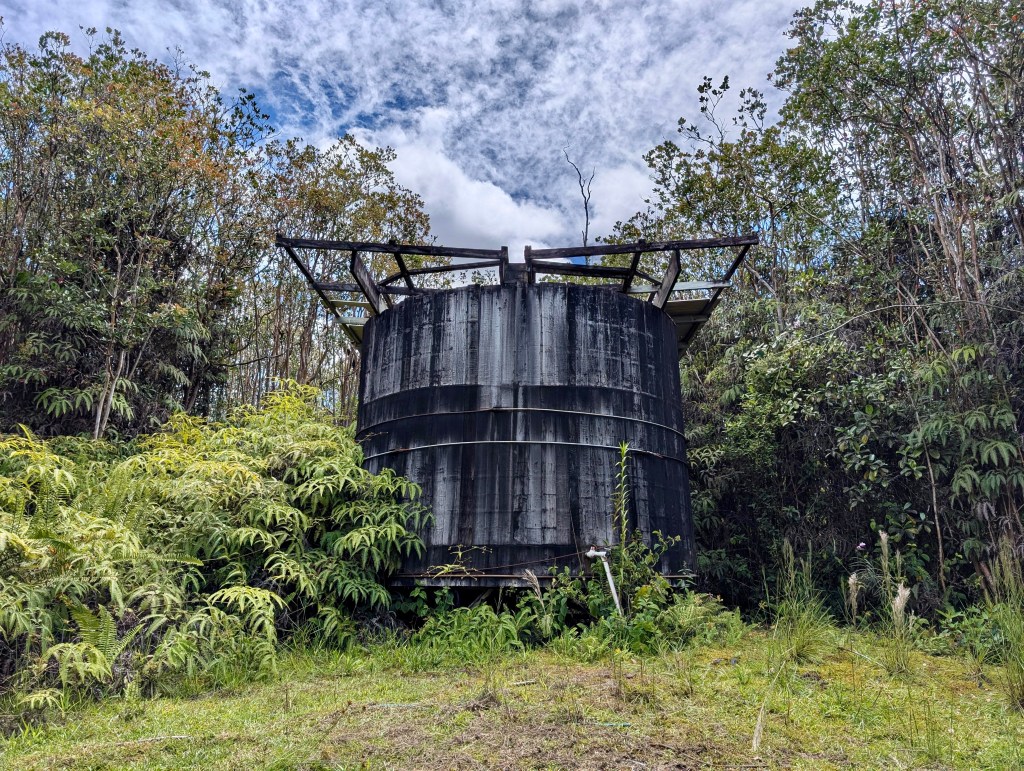
For drinking, it’s still jugs and coolers. For catchment, when it turns dry, folks show up with square tanks in the truck bed or strapped to a trailer. Sometimes even trash cans get hauled in to top off what’s left.
Old folks in the back neighborhoods, without a ride, rely on neighbors — or drink whatever’s in the tank. Some tanks are clean. Some aren’t. Rain’s a blessing, but no guarantee. You learn the sound the water in the tank makes when it’s almost gone.
Power’s another story. Puna Geothermal sits right here, pulling power from the earth’s core, and somehow, we still pay the highest electric rates in the country. Over 40 cents a kilowatt hour, double the national average.
When the power goes out there’s no timeline, no explanation. You wait. You adapt. You light a lantern and keep going.
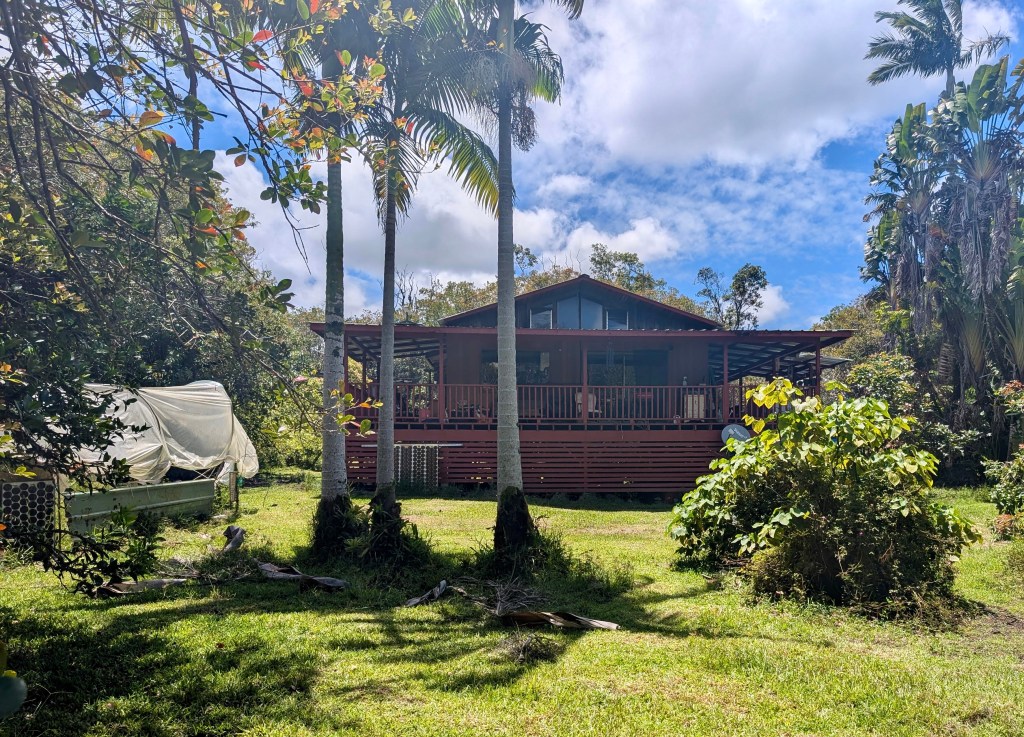
Most everyone cobbles together some mix of solar and generator, just enough to get by. A couple panels here, a battery there, maybe a backup when the clouds linger. Propane’s always a juggle: fridge, stove, hot water. When money’s tight, the fridge wins.
It’s less like a system and more like keeping an old sailing ship afloat, rigging lines, adjusting course, hoping nothing breaks mid-journey.
People talk about “off-grid” like it’s a lifestyle brand. Here, it’s just how you live. You check the catchment, the gas, the generator, the batteries. You’re always checking something.
You ration what you have. Run the washer when the sun’s out. Wash dishes when the pressure’s up. Cook early before the propane gets low or the inverter trips.
Too much rain and you’re wet and waiting. Not enough and you’re hauling again. If the power cuts, you reset the fridge, run a cord, maybe skip a meal. Not because it’s tragic — because it’s Tuesday.
There’s no landlord. No backup. If something breaks, you fix it or live without it.
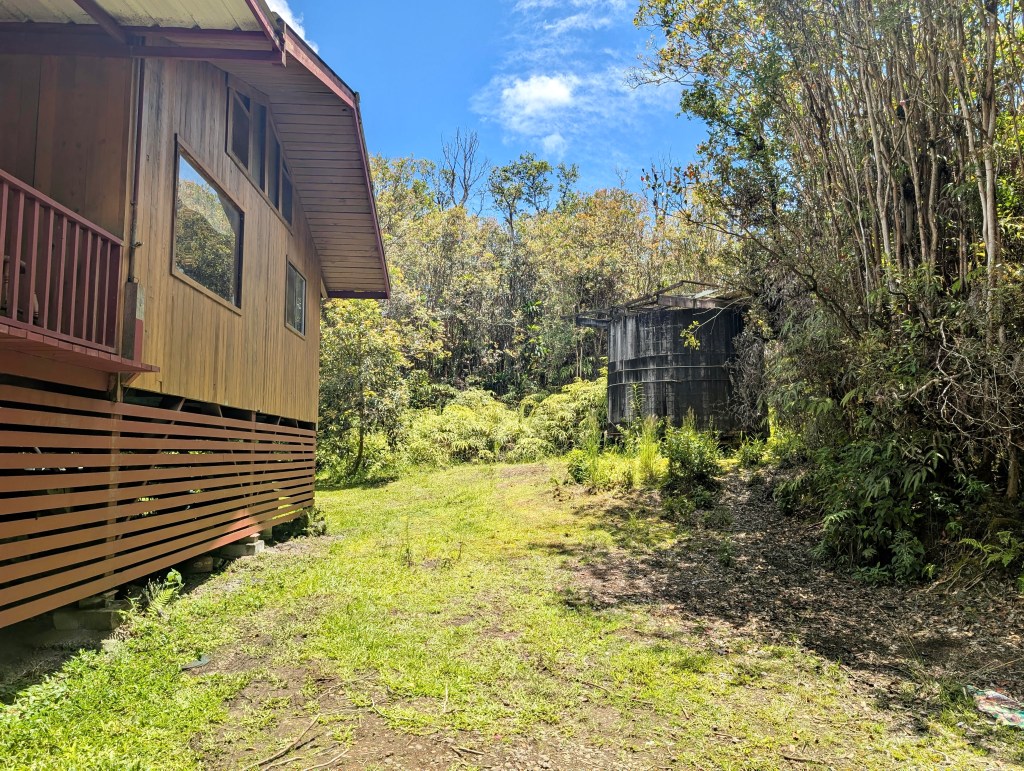
Like everyone out here, I rely on catchment because there’s no other option. The county doesn’t bring water, just rules.
If you’re building new, you’ll need double walls, oversized tanks, and to raise your own power poles. You’ll need to run poles yourself, across your own property, and only if you already have a permitted, approved structure.
Either way, it starts with a pre-inspection and ends with your wallet. These codes don’t protect locals, they price them out.
When the volcano’s going off, Hilo airport’s private runway chokes with personal jets. They appear overnight, lined nose to tail along the tarmac. You drive past on your way to town and wonder, which island belongs to which plane?
On the west side, resort properties rise straight from black fields of lava fully wired, fully watered. Gardens bloom where nothing grew. Golf courses drink freely. The grid bends toward them without question. Meanwhile, we’re still rationing power and praying for rain.
You don’t get trash pickup. You don’t get water. You don’t always get power.
What you do get is enforcement. Planes and helicopters sometimes fly low overhead for hours, scouting properties from above. If a home or shed doesn’t pass muster, the county can order you to remove it, or send crews to demolish it and bill you.
We get about 160 inches of rain a year in my neighborhood, so when it comes, we collect it. When it doesn’t, we haul. When the sun’s not out, you fight the generator. If you work from home, even more so. You time everything — calls, uploads, laundry — around weather and wattage.
No tech support. No buffer. Just your choices, and the systems you keep running.
They call it a lifestyle, but it’s not curated. It’s commitment. And here, it’s common.
This side of the island powers the grid, hauls its own trash, and lines up for water — same as we did in high school. But we keep showing up. We help each other. We build what isn’t built for us.
They call it “off-grid,” but the truth is simpler: The grid never came.
Civil Beat’s coverage of environmental issues on Hawaiʻi island is supported in part by a grant from the Dorrance Family Foundation.
 Sign up for our FREE morning newsletter and face each day more informed.

Local reporting when you need it most
Support timely, accurate, independent journalism.
Honolulu Civil Beat is a nonprofit organization, and your donation helps us produce local reporting that serves all of Hawaii.
ContributeAbout the Author