Denby Fawcett: Seeking Love For The Endangered Hawaiian Land Snail
Some people say they’re icky and slimy. But these scientists think they’re beautiful.
August 18, 2025 · 8 min read


About the Author

Hawaiian land snails are among the most endangered creatures in the animal kingdom.
Described by their admirers as “the jewels of the forest,” thousands of snails once dotted the leaves of native plants from the shore to the mountains on all the islands.
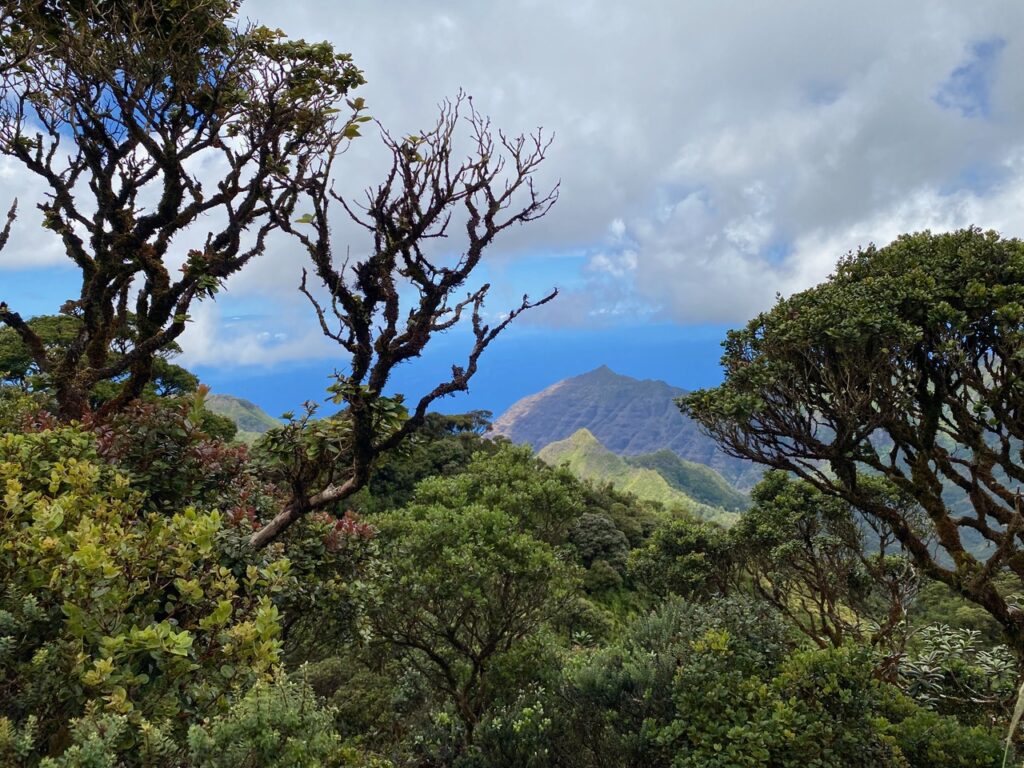
Today, they can be found in the wild only in the misty forests on the highest volcanic mountains or in laboratories where they are raised in captivity in plastic boxes as scientists try to figure out how to keep them from vanishing forever.
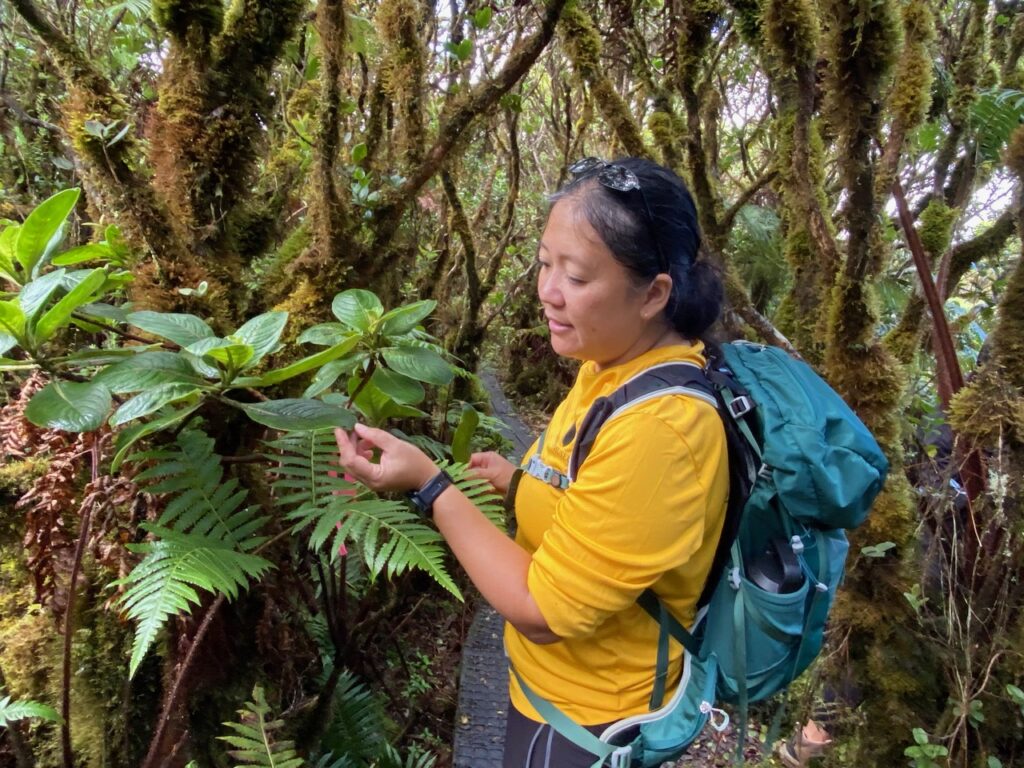
On Friday, Kenneth Hayes, director of Bishop Museum’s Pacific Center for Molecular Biodiversity, and museum malacology curator Norine Yeung took a small group of us up to a forest at the 4,000-foot level in the Waiʻanae mountains to see what the museum is doing in partnership with the state and the federal government to save the snails.
“They are a little animal with an outsized impact on the environment,” said Hayes.

Ideas showcases stories, opinion and analysis about Hawaiʻi, from the state’s sharpest thinkers, to stretch our collective thinking about a problem or an issue. Email news@civilbeat.org to submit an idea or an essay.
More than half of the original population of 760 species has been lost to extinction.
Without intense intervention Hayes and Yeung and their colleagues predict in next decade another 100 species could disappear forever.
After evolving successfully for millions of years, they are rapidly vanishing: decimated by rats, Jackson chameleons and the carnivorous rosy wolf snail, an alien species brought to Hawaii by the territorial government in 1955 to kill African snails. Also climate change is threatening to dry up the humidity necessary for the understory of native forests in which the snails live.
Yeung and Hayes’ work is scientific but it also involves becoming evangelists to spread the word to encourage all of us to care about snails.
That is part of the reason they invited us on the day long expedition to see the snails in their wilderness homes.
Snails can be a hard sell, It can be tricky to entice the public to care about them, especially when a lot of people know snails only as pests who eat their garden plants and need to be exterminated by pouring salt on their bodies
The rare Hawaiian land snails are different. They are polite. They do not eat the plants they live on but rather help them stay healthy by eating the fungi and algae that darken their leaves.
“They are they are our number one recyclers,” says Yeung.
There was no such thing as native earth worms in Hawaiian forests, she says, so the snails became the critical farmers to regenerate the soil and keep it rich with nutrients.
The Hawaiian snail species that live on the ground eat dead leaves, breaking down the plant matter into forest nutrients. In the trees and shrubs, the snails with their their rows of tiny teeth chomp on the fungi on leaves and poop it out to fertilize rare native plants.
Besides their work to keep forests healthy, there is their beauty. They enhance the landscape with their different colors and shapes. Native birds and caterpillars feast on them for food.
As we were walking through the forest, Samantha Shizuru said when she started studying the snails, she was amazed by the diversity of the different groups and their tenacity.
“Looking at how hard endangered snails are working just to hang on makes me want to do what I can to help save them,” she said.
Shizuru is collections manager at the museum’s Center for Molecular Biodiversity.
Once the Hawaiian land snails were so plentiful they were described in journals of early settlers as dangling off forest trees like grapes.
They were honored in ancient Hawaiian chants and worn by hula dancers as adornments.
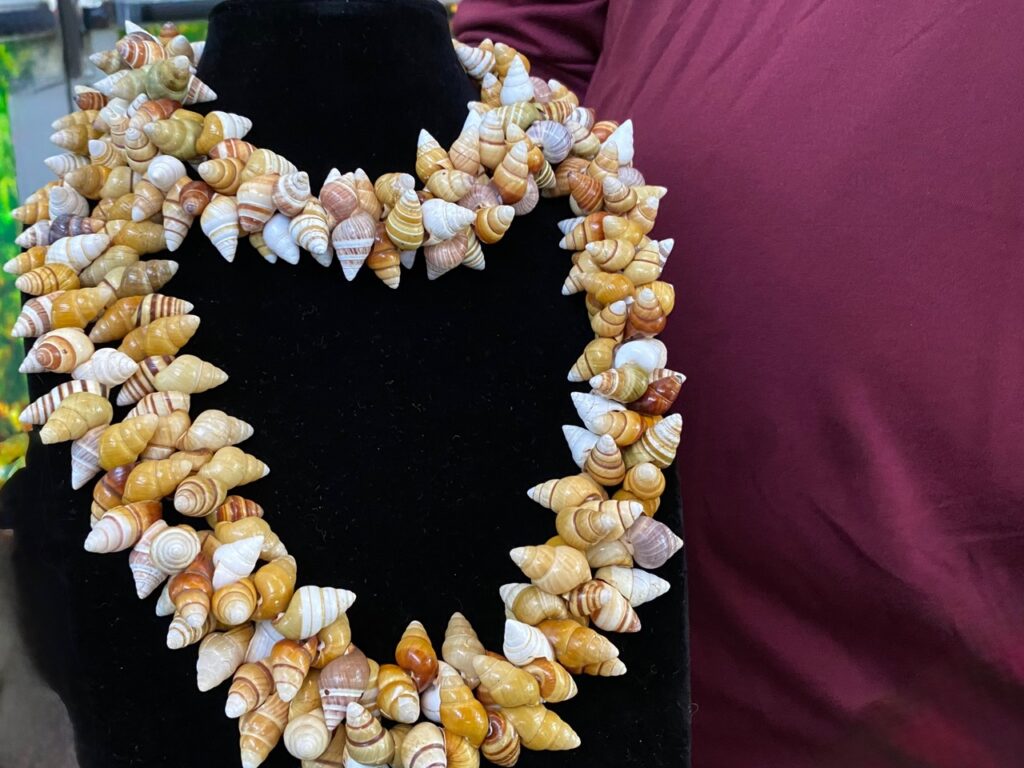
Queen Liliʻuokalani dazzled her subjects by showing up at formal events wearing a lei made of many different colored land snails.
During a visit to Oʻahu in 1786, British captain George Dixon was given a land snail lei. When he took the lei back to England it caused such a sensation that it was broken up with each shell selling for more than $40, according to a report in the December 1978 issue of “Natural History” magazine.
When I was young in Territorial Hawaiʻi in the 1950s, tree snails — as we called them — were still easy to find. Hikers scraped them off plant leaves for collections they kept in drawers at home or even in jewel boxes. Snail collecting in those days was a popular hobby like collecting stamps.
I became interested early on by seeing the snail collections of my school friends’ parents and grandparents.
Also, in those days, at summer camp we heard the stories about the Hawaiian snails in the trees, singing a haunting melody.
Yeung says she has never heard the snails’ song but there are theories that when the snails were abundant, the winds sweeping through the trees would blow their shells together to make a kind of music or the crickets that lived beside them were actually doing the singing.
I’m sticking with the notion that the snails sing. It is such stories that make them distinctive and valuable and worth saving. They sing.
One of the key missions of Hayes and Yeung and dozens of other scientists is addressing besides preventing more of the snails from going extinct is getting out the word to the public about why they matter.
As mentioned, getting snails to be seen as worthy can be a hard sell.
“Young kids, say in the first, second, third, fourth and even fifth grades, are amazed by the snails. They say, ‘Oh they are so cool.’ They want to play with them. But when they get to the sixth and seventh grade, they say ‘Eww, they are gross. They are slimy,’” said Hayes, showing us snails in the forest.
“It is important to start early with children to change that perception,” he said.
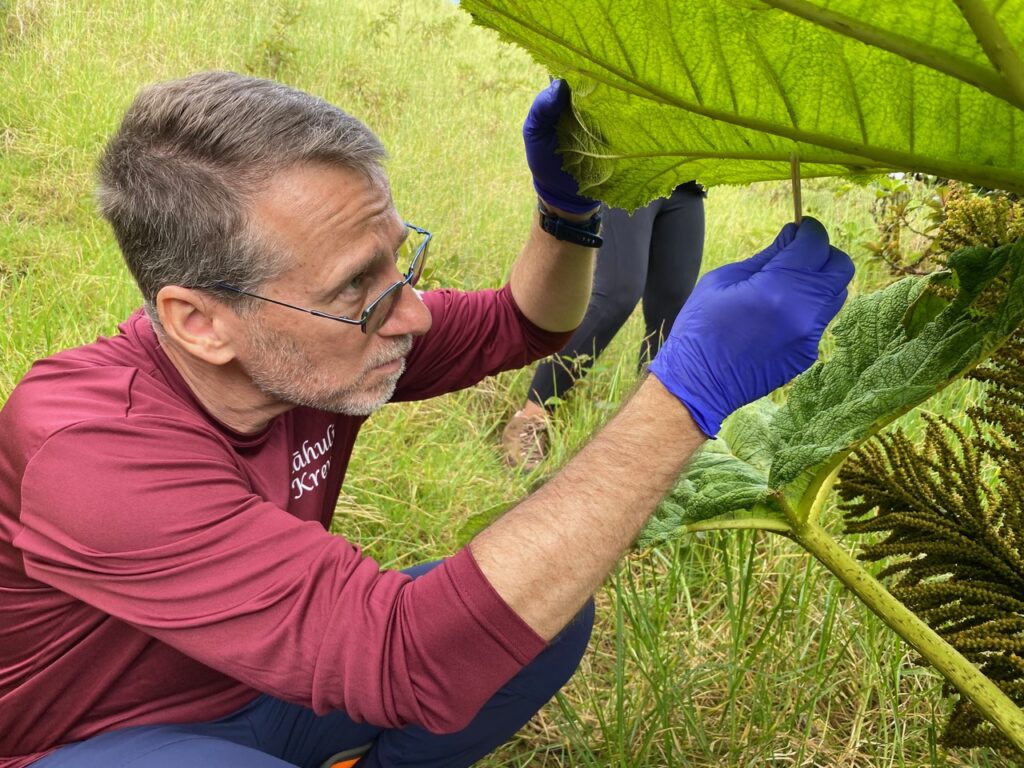
Unfortunately a budget cut by the Trump administration this year ended $600,000 in federal funding Bishop Museum received every three years for its successful program to teach interested Hawaiʻi’s public and private school teachers in grades K-12 how to bring Hawaiian land snail studies into their curriculum.
“Why should a teacher have a guinea pig in their classroom to interest children in animal behavior when I could bring them a wine cooler filled with native snails for the students to study?” said Yeung.
Bishop Museum has underway the first comprehensive review of Hawaiian land snails in 60 years to update earlier findings of how many land snails are still alive on all the major islands and where they are concentrated in the wild.
In their survey, researchers discovered 30 species that had never been described.
Now the museum’s researchers are focused on trying to find exactly what kind of food, climate conditions and forest ecosystems will ensure the snails’ survival into the future.
They are experimenting with new foods and environments for the snails, kept in plastic boxes in captive rearing programs in their labs. So far, they have released 20,000 snails back out into protected enclosures in the wild.
The museum is doing this work in conjunction with the Snail Extinction Prevention Program — a collaboration between the state Department of Land and Natural Resources, the University of Hawaiʻi, the U.S. Fish and Wildlife Service and private individuals and nonprofits.
But the scientific studies alone are not enough to save the snail. A buy-in from the public is also critical. Hayes and Yeung began writing about the importance of public involvement in scientific journals more than three decades ago.
Most U.S. funding to protect endangered Hawaiian species today goes to the Hawaiian hoary bat, the nēnē, the Hawaiian crow and the monk seal, so-called cute creatures. Not the tiny snail
“Our goal is to get information out about the snail to make people understand why they matter. When they know more about snails, they will want to take care of them,” Hayes said.
Hayes and Yeung made this very plea in formal language in a 1990 scientific journal article: “Shifting the general view of snails from being ‘icky’ and ‘slimy’ things that one pours salt on in the garden, to one of understanding and appreciating for their intrinsic beauty and importance as an integral part of nature is critical if we hope to save most species. Several emerging studies indicate that this shift is possible and that scientific information can and does drive such changes.”
Since then, they have never given up. Nor should we.
 Sign up for our FREE morning newsletter and face each day more informed.

Local reporting when you need it most
Support timely, accurate, independent journalism.
Honolulu Civil Beat is a nonprofit organization, and your donation helps us produce local reporting that serves all of Hawaii.
ContributeAbout the Author