Kirstin Downey: Historic Preservation Division Is Woefully Understaffed
A single state archeologist is juggling about 300 projects on Oʻahu, from reviewing development proposals to responding when laws are violated.
August 22, 2025 · 8 min read


About the Author

In a state loaded with heiau, world-famous battlefield sites and ancient burials hidden in the sand, many vulnerable to threats of all kinds, Hawaiʻi’s State Historic Preservation Division employs only one archeologist to oversee the entire island of Oʻahu.
Historic preservation experts worry that the archeologist handling all of the City and County of Honolulu, some 597 square miles, is juggling hundreds of project reviews single-handedly, including incidents that appear to involve intentional destruction of historic structures or human remains.
In the past year, real estate developers successfully lobbied to extract drastic revisions to historic preservation laws so that, they said, they can speed up the development of affordable housing. They said the laws needed to be changed because SHPD was taking too long doing the work of reviewing their plans. In testimony, developers and their advocates said that it was taking SHPD an average of 94 days to review projects.
The resulting legislation has permitted the most sweeping cutback of historic preservation processes in state history. Senate Bill 15 was signed into law by Gov. Josh Green despite unanimous opposition by the nine-member Oʻahu Historic Preservation Commission.

Ideas showcases stories, opinion and analysis about Hawaiʻi, from the state’s sharpest thinkers, to stretch our collective thinking about a problem or an issue. Email news@civilbeat.org to submit an idea or an essay.
At a commission meeting in late June, Susan Lebo, SHPD’s archeology branch chief, ruefully acknowledged the gravity of the situation.
“The delays aren’t because it takes this robust review time but because there is one archeologist trying to do the role of five or six,” she told the commission. “So the delays aren’t in the review, they are sitting in the queue.”
Later she added: “We should have four or more archeologists for Oʻahu and we have one.”
A Slim Line Of Defense
According to the SHPD website, the sole archeologist for Oʻahu is Samantha Hemenway, who graduated from the University of Hawaiʻi. Her LinkedIn profile says she joined the division six years ago.
In addition to being asked to process permit paperwork that can run into the hundreds of pages, Hemenway also is expected to take action when something outrageous occurs.
In May, for example, Hemenway was summoned to the scene of a North Shore construction project after human bones were found there. The division issued a stop-work order. After she left the premises, the bones were pulverized into dust, allegedly by errant construction equipment, sparking an investigation by the state attorney general.

This came on top of other recent debacles, including the destruction of the once-charming house on the property that inspired the song “Aloha Oe” and the gutting of the Marconi telegraph station in Kahuku, a national landmark that was once the largest wireless communications center in the world.
Meanwhile, the city has no archeologists on staff at all.
Officials at the Department of Land and Natural Resources, the parent agency to SHPD, said they were unable to comment because SHPD’s administrator was on leave and unavailable for comment. They said they did not know how long the state had been operating with only one archeologist for Oʻahu.
The SHPD website indicates that Hawaiʻi island has three archeologists, Maui has two and Kauaʻi has one.
This all raises the question: How many do we actually need, on the state and city level, to protect sites that everyone claims to love? For a future column, I will try to find out by asking experts about best practices and calling historic preservation departments around the country to ask how many archeologists they employ.
But it seems notable that even some red states appear to be hiring more and doing more to protect their treasured sites than Hawaiʻi.
Supporters of historic preservation, adopted into state law in 1976 as Section 6E, said the chronic understaffing by state and city leaders plays into the hands of real estate interests, including both large developers and smaller projects, where underground digging is increasingly likely to inadvertently turn up human remains, known in Hawaiian as iwi kūpuna.
“I personally believe that it works in the interest of those who see chapter 6E as a hindrance and an obstacle for their development,” said Makoa Caceres, the newly appointed chair of the Oʻahu Island Burial Council. “It’s in their interest that SHPD is understaffed. Whether or not it’s intentional I can’t really say, but I know that it allows for the desecration of our iwi kūpuna in large, large substantial amounts and ultimately expedites the process for development projects.”
Some preservation advocates have questioned whether the SHPD backlog has resulted in projects going forward that deserved more scrutiny by specialists.
Burial Ground In A Parking Lot
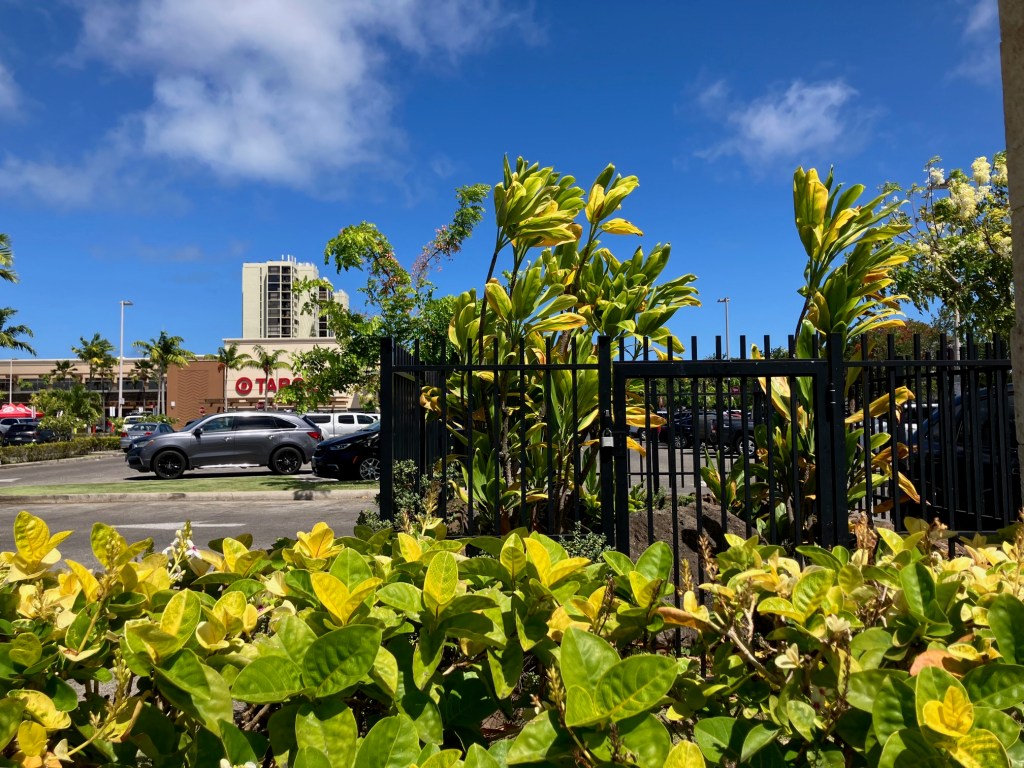
Archeologist Nick Belluzzo, president of the Society for Hawaiian Archaeology, told the commission that the city’s Department of Planning and Permitting allowed Target in Kailua to dig trenches on its property without review, even though the site has long been recognized as a burial ground. In 2012, human remains were found at the site, located on Hanani Street — once a Holiday Mart and later a Don Quijote store — while it was being developed.
Target and state officials eventually reached an agreement that provided for three burial areas located in the parking lot, shaded by ti plants and sequestered behind iron railings. Construction was delayed by a year and the building was completed in 2014.
Belluzzo said construction is also underway now at Kawaiahaʻo Church in downtown Honolulu, without SHPD review. That venerable place of worship, a national historic landmark completed in 1842, has long been one of the most contentious archeological sites in the islands because more than 600 bodies were found there when construction for a multi-purpose center was begun in 2006.
Historic preservationists and Native Hawaiians say that problems become worse and costs rise when human remains or ruins are discovered after construction is underway rather than catching problems early before they result in major delays and create complex reburial problems.
Lebo told the historic preservation commission that SHPD should be reviewing more projects than it is able to do now, rather than being called in to help address a crisis after archeological discoveries are made.
“The biggest problem we have is having to be reactive rather than proactive,” she said.

Help May Be On The Way
Some more staffing help may be on the way, according to city officials. The city has funded five new positions, including for an archeologist, an architectural historian, a planner who will do permit review and an office assistant, according to Michael Kat, acting administrator for the Oʻahu Historic Preservation Commission. The fifth slot will be Kat’s, as he will officially become the commission’s administrator on Sept. 1.
“We recognize the challenges SHPD faces with limited staffing and heavy review workloads, and we remain committed to supporting their role in the process,” Kat said in a statement. He added that the city is improving its permitting system to better align with the state’s system.
More state workers may soon be hired as well. On Aug. 1, Jessica Puff, SHPD administrator, told the state Historic Places Review Board that she had recently been able to hire two archeologists to serve on Maui. She said that state human resources officials had given her clearance to hire for two architecture branch jobs and that she expected three archeologist slots to open soon.
That was three weeks ago. As of Thursday afternoon, no archeologist positions were listed on the state’s hiring website. The two architecture branch jobs were listed under the non-civil service category, without any salary information.
Long hiring delays are customary at the State Historic Preservation Division, and many workers who are recruited from the continent stay only a brief period of time.
On the federal level, Puff said no historic preservation funding had been cut to the state, at least so far, and that in fact Hawaiʻi may get extra money this year because of the Maui fire and the devastation of the historic sites there.
Preservationists welcome the news that more jobs will be added soon.
But according to historian Ross Stephenson, former keeper of the Hawaiʻi Register of Historic Places, it is problematic that workers are being hired without civil service protections, which leaves them vulnerable when they try to confront powerful real estate developers.
“If you say something that ticks off the wrong person, your job is in jeopardy,” he said. “It becomes a self-censoring activity.”
He said long hiring delays are customary at SHPD, and that many workers who are recruited from the continent stay only a brief period of time.
“We lose a lot of people who are hired from say, Tennessee,” he said. “They have no idea of the cost of living and they leave after six months or a year.”
He said the under-hiring has been a problem now for more than a decade.
“It’s almost deliberate,” he said.
 Sign up for our FREE morning newsletter and face each day more informed.

Local reporting when you need it most
Support timely, accurate, independent journalism.
Honolulu Civil Beat is a nonprofit organization, and your donation helps us produce local reporting that serves all of Hawaii.
ContributeAbout the Author